
Orthodontic Supplies: Manufacturer Comparison for Distributors
Distributor Decision Guide · Orthodontic Supplies
Orthodontic Supplies: Manufacturer Comparison for Distributors
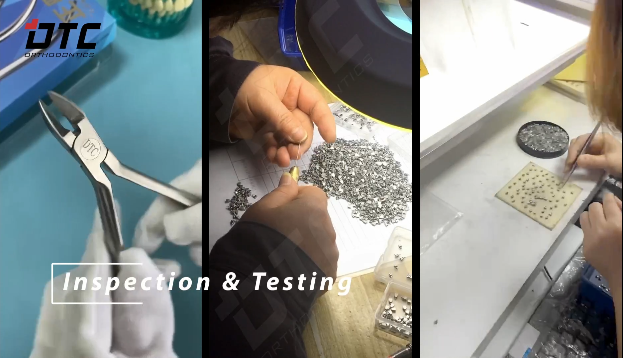
Quality inspection and testing at DTC Orthodontics factory
When a dental distributor searches for orthodontic supplies, the tempting shortcut is to compare only unit prices. But the supplier that looks cheapest today can become the most expensive after defective shipments, missing certificates, or delayed deliveries. A more reliable approach is to compare manufacturers on a defined scorecard: manufacturing status, regulatory compliance, quality systems, product breadth, total cost, and delivery capability.
This article applies that scorecard to the orthodontic supplies market and walks through how Hangzhou DTC Medical Apparatus Co., Ltd. (DTC Orthodontics) performs as a manufacturer-exporter. It is not a claim that one supplier fits every market; it is a factual basis for comparison.
The Distributor’s Problem: Why Orthodontic Supplies Comparison Is Difficult
Distributors face three recurring problems when evaluating orthodontic supplies: opaque factory status, uneven quality control, and non-comparable specifications. A company may present itself as a “manufacturer” while actually outsourcing to multiple workshops. Another may publish attractive product photos but provide no certifiable evidence of batch stability. In both cases, the buyer carries the clinical and commercial risk.
Adding to this, orthodontic products are sold across different prescription systems (Roth, MBT, Edgewise), slot sizes (18 or 22), torque values, and arch forms. Without a standard comparison framework, a buyer can accidentally compare a low-cost conventional bracket with a premium self-ligating bracket and miss the real cost difference.
Industry Context: A Market That Rewards Supply-Chain Intelligence
Orthodontic supplies demand is expanding. The global orthodontic supplies market was valued at USD 14.8 billion in 2024 and is expected to grow at a CAGR of 20.1% through 2034, according to Global Market Insights. North America held the largest regional share, about 30.6% in 2024, while China remains a key manufacturing source. China exported USD 13.5 billion in medical instruments in 2024, and its dental equipment and accessories segment recorded 13.93% export growth in the period leading to late 2024.
For distributors, this means the supply chain is international, price-competitive, and dependent on Chinese manufacturing. It also means that simply choosing a “known” brand is less common than before; buyers increasingly request factory evidence and compare private-label options.
What a Distributor Should Compare: A Six-Factor Scorecard
The following scorecard is built from questions that recur throughout dental distribution. Each factor is directly observable or obtainable from a supplier.
- Manufacturer vs. trading company. Confirm who owns the production line.
- Regulatory compliance. Ask for current certificates.
- Quality management. Look for controlled processes and batch stability.
- Product breadth and specifications. Check whether the supplier can cover your target products.
- Total landed cost and MOQ. Compare not only prices but also minimum order flexibility.
- Lead time and after-sales support. Measure delivery speed and documentation quality.
Using DTC Orthodontics as an example, each factor can be assessed with verifiable data.
1. Manufacturing Status
DTC Orthodontics was established in 2004 and operates a 5,000 m² factory in Hangzhou with around 150 employees. The company reports an annual output of 1,000,000 units and an R&D team of 30 engineers. It sells directly as both manufacturer and exporter, with about 80% of its output exported to Europe, North America, the Middle East, South America, Asia, Africa, and Australia. The company says it can show production line, machinery, and international sales team on request, and can provide factory photos and videos through www.dtchz.com.
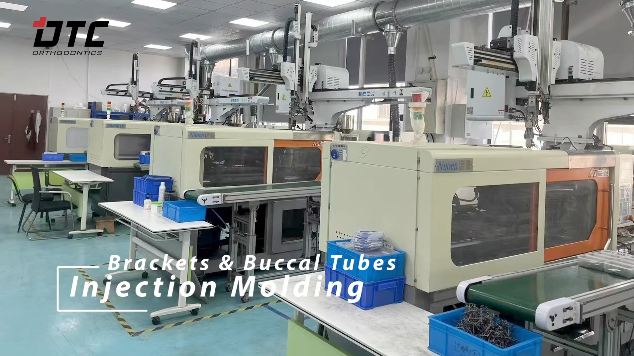
Injection molding at DTC's manufacturing facility
2. Regulatory Compliance
The company has obtained ISO13485, CE0197, and FDA certificates for its products and production process, and says its management system follows CE (MDR) and ISO regulations. For distributors, the value is simple: these certificates are prerequisites for selling into many regulated markets.
3. Quality Control and Batch Stability
As manufacturer and exporter, DTC operates Quality Management Systems (QMS) and formal production controls. It uses advanced equipment including CNC machinery, and for its pliers it reports manufacturing with CNC machining and aerospace-grade stainless steel. Direct control over production and quality management is what enables the company to provide order-level consistency.
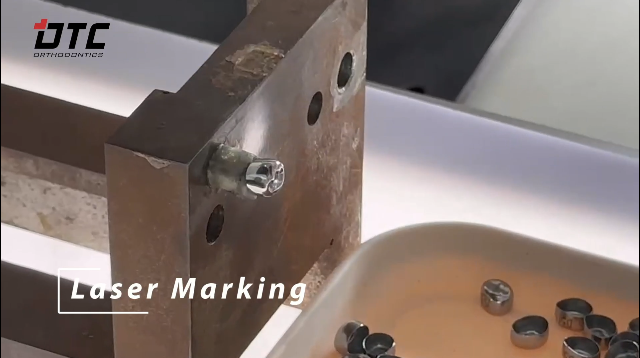
Laser marking of orthodontic components
4. Product Portfolio and Specifications
An orthodontic distributor needs more than brackets. DTC’s portfolio spans orthodontics, pediatric dentistry, and dental laboratory products. In orthodontics, the range includes dental brackets (metal and ceramic), dental self-ligating brackets, dental buccal tubes, orthodontic bands, dental wires (NiTi, stainless steel, CuNiTi), dental pliers and cutters, dental tweezers, dental mirrors, dental elastics, lingual brackets, and accessories such as crimpable hooks and lingual buttons.
Representative specifications from the DTC product data include:
- Glory II self-ligating brackets: slot sizes 18 and 22, Roth and MBT systems, low/high torque.
- Toast self-ligating brackets: passive, low friction and light force, with a design advantage over other Chinese self-ligating brackets.
- Delicate Series brackets: 17-4PH stainless steel, maxillary/mandibular, Roth/MBT, low/high torque, slot sizes 18/22.
- Dental pliers: stainless steel, HRC 58-63, maximum sterilization temperature 180°C.
- Ligature rings and power chains: higher tensile strength and improved surface smoothness in DTC comparative data.
- Lingual bracket system: smaller than usual lingual brackets, with anterior slots 0.018" and posterior/molar tube slots 0.022".
- Pediatric: Kids Crown stainless steel crowns with elastic cervical margin design.
This breadth supports distributors who want to consolidate purchasing rather than manage many single-product vendors.
5. Cost and Customization
Buyers usually ask how a manufacturer’s cost compares with that of established global systems. DTC’s comparative data offers several data points:
- Compared with the Damon Q2 Series, the Glory II Series is positioned at 75% lower cost, while using MBT torque standards, tooth-number marks, and an integrated ball hook.
- Compared with the Damon Q1 Series, the Glory Series similarly reports a 75% lower cost and uses Roth torque standards.
- DTC Pliers are priced at least 50% lower than certain other brands in DTC’s comparisons, with a service life of at least 5 years versus less than 1 year for some alternatives.
- DTC Power Chains and ligature rings are positioned at 10% lower cost than comparable products in their comparison data, with higher tensile strength and larger cross-section.
Customization is also relevant for distributors building their own brand. MOQ depends on product type. For standard products, DTC offers competitive MOQs; customized products may require higher MOQs. The company lists options such as split shipments, shared tooling costs, and standard colors to lower the MOQ barrier.
6. Delivery and Support
Lead times affect working capital. DTC maintains safety stock for selected standard products, enabling delivery in 3–5 business days; custom-engineered production runs typically require 2–4 weeks. The company uses FedEx, DHL, and UPS for international express delivery, and provides product manuals and technical support online.
Step-by-Step: Evaluating an Orthodontic Supplies Manufacturer
Use the following six-step process with any candidate supplier.
- Request factory evidence. Ask for factory photos, videos, line tours, and whether the sales team is separate from production.
- Verify certificates. Request current ISO13485, CE, and FDA documentation; for EU markets confirm CE marking under EU MDR 2017/745.
- Audit product specifications. Ask for slot sizes, prescriptions, torque options, materials, and sterilization limits for the products you intend to stock.
- Compare total cost. Include MOQ, tooling, packaging, freight, and the cost of quality failures.
- Check quality management. Confirm whether the supplier operates a QMS and can provide batch-level documentation.
- Run a sample order. Test the product in your clinic or with a trusted customer before committing to volume.
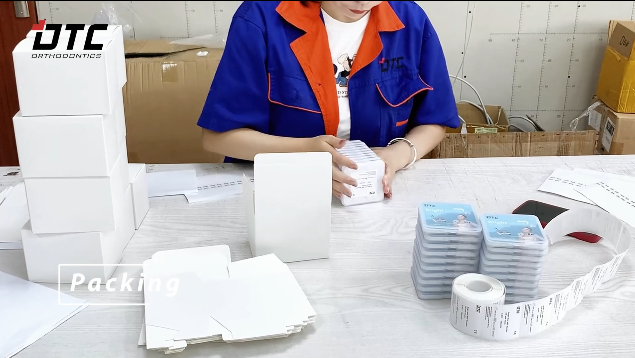
Packing and final inspection line
Use Cases: How Distributors Apply This Comparison
Case A: Emerging-Market Distributor Seeking Self-Ligating Brackets
A distributor entering a price-sensitive market needs clinical reliability without a global-brand premium. The Glory II self-ligating bracket provides slot sizes 18/22, Roth/MBT, and low/high torque, and DTC’s comparison against Damon Q2 indicates a 75% lower cost. That cost gap can create margin for the distributor while keeping final prices competitive.
Case B: Distributor Serving Clinics with Heavy Instrument Turnover
Orthodontic pliers are used daily and autoclaved repeatedly. DTC reports that its pliers, made from stainless steel with hardness HRC 58-63 and maximum sterilization temperature 180°C, have a service life of at least 5 years—5 to 10 times longer than some alternatives in DTC’s comparison. This lowers total cost of ownership for both the distributor and the clinic. DTC also offers a 3-year warranty for sold pliers.
Case C: Pediatric Dentistry Portfolio Expansion
For distributors adding pediatric orthodontics, the Kids Crown uses an elastic cervical margin that snaps over the tooth contour and reduces luting cement consumption. In DTC’s comparative data, the Kids Crown is positioned at 10% lower cost than certain other brands. This is a practical way to broaden the catalog without expanding supplier risk.
Case D: Distributor Requiring Fast Stock Turnover
When a clinic chain needs repeated orders, standard product availability matters. DTC maintains safety stock for selected standard products, allowing 3–5 business-day dispatch, while custom products are handled in 2–4 weeks. This supports distributors that do not want to carry large inventory.
Comparison Table: Manufacturer Types at a Glance
| Evaluation Factor | Direct Manufacturer (DTC) | Large Global Brand | Trading Company |
|---|---|---|---|
| Manufacturing status | Manufacturer-exporter; 5,000 m² factory; 150 employees; 1,000,000 units annual output | Typically large R&D and production, but often sold through distributors; top-five players include Align Technology, Envista, Solventum (3M spin-off), Dentsply Sirona, Straumann | No factory; intermediate between multiple producers and buyer |
| Certifications | ISO13485, CE0197, FDA; manages system under EU MDR and ISO | Usually CE/FDA/ISO, with in-house regulatory teams | Certificates may be copied or difficult to verify |
| Product range | Brackets, self-ligating brackets, buccal tubes, bands, archwires, pliers, elastics, instruments, pediatric crowns, lab products | Broad portfolios but often focused on flagship systems | Variable; often aggregated from multiple factories |
| Cost level | Comparative data: Glory II vs Damon Q2 at 75% lower; pliers at least 50% lower; power chains and ligature rings 10% lower | Typically premium pricing; dealer margins may be thinner | Initially low price, but higher risk of quality and consistency issues |
| Customization / OEM | OEM/private label available; flexible MOQ options such as split shipments, shared tooling, standard colors | Limited, standardized dealer programs | Possible, but no direct quality control |
| Lead time | Standard stock 3–5 business days; custom 2–4 weeks | Longer, dependent on distributor network | Unstable, dependent on upstream factory |
Global top-five list source: MarketsandMarkets, 2024. DTC-specific data source: company profile and product comparison corpus.
FAQ
What certifications and regulatory approvals do you have?
DTC Orthodontics has obtained ISO13485, CE0197, and FDA certificates for its products and production process, and says its management system follows CE (MDR) and ISO regulations.
Are you the actual manufacturer or a trading company?
DTC is the manufacturer and exporter. The company can show its production line, machinery, and international sales team, and can provide factory photos and videos through www.dtchz.com. It can also discuss materials, processes, lead times, and MOQ in detail.
Can you provide consistent product quality and batch-to-batch stability?
As both manufacturer and exporter, DTC operates Quality Management Systems and has formal systems to govern production. Because it controls production and quality management directly, it can provide order-level delivery that matches customer requirements.
What is the MOQ for ODM or OEM products?
For standard products, DTC offers competitive MOQs; customized products may require a higher minimum. Options include split shipments, shared tooling costs, and standard colors or materials to lower the MOQ barrier.
What are your lead times and delivery capabilities?
Selected standard products are maintained in safety stock for faster delivery within 3–5 business days. Custom-engineered production runs typically require 2–4 weeks. DTC ships internationally with FedEx, DHL, and UPS.
Conclusion: Moving from Comparison to Decision
Distributors do not need to pick the largest brand or the lowest price. They need a manufacturer that can prove control over production, meet regulatory requirements, offer competitive total cost, and deliver consistent quality. DTC Orthodontics provides one example with auditable facts: 2004 establishment, 5,000 m² factory, ISO13485/CE0197/FDA certificates, 1,000,000-unit annual output, and price comparisons that matter to distributors.
If you are building a shortlist, use the scorecard above, request a sample, and then decide with data.
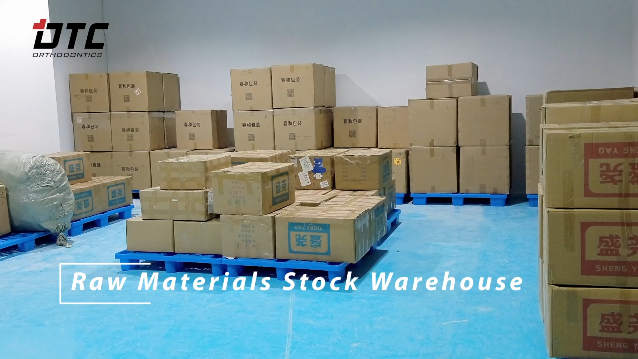
Raw materials stock warehouse
Download the DTC Orthodontics catalog to compare product specifications side-by-side.
Download Product Catalog Contact on WhatsAppThis article is intended for distributor evaluation and uses only verifiable data from company-provided and industry sources. For quotes and samples, contact jaymie@dtchz.com or +86 136-0051-7451.
Have Questions or Need More Details?
Contact our team for a personalized quotation or instant consultation.
Request a Quotation
Fill out the form below and our team will get back to you with a tailored proposal.
WhatsApp Direct Chat
Prefer to chat in real-time? Message us on WhatsApp for instant assistance & quick answers.
- Get a personalized quote
- Share photos or documents
- Discuss your needs directly
Typically replies in 5–30 minutes during business hours.