
Private Label Orthodontic Brackets: OEM Capability Guide
Private Label Orthodontic Brackets: OEM Capability Guide
Orthodontic supplies buyers moving into private label brackets face one central question: which manufacturer can consistently deliver regulation-compliant products under their own brand? This guide focuses on OEM capability—what to verify, what to expect, and how a manufacturer such as Hangzhou DTC Medical Apparatus Co., Ltd. (DTC Orthodontics) fits into that evaluation.
In short, a reliable OEM partner for orthodontic brackets must provide direct production control, clear customization pathways, documented quality management, and predictable execution. Without these four elements, even a low unit price can become expensive after failed inspections, inconsistent batches, or delayed launches.
Why Private Label Bracket Sourcing Fails Without an OEM Capability Review
Private label bracket programs often start with a product sample and a price quote. But the gap between a sample and a commercial order lies in the manufacturer’s ability to reproduce that quality at scale. Buyers encounter several recurring problems:
- Batch inconsistency: bracket slots, torque values, surface finish, or base welding can shift between production runs.
- Documentation gaps: missing CE/FDA/ISO files delay registration in target markets.
- Unclear customization ownership: logo changes are sometimes treated as the only customization, while product-level changes need dedicated engineering.
- Delivery uncertainty: without direct factory control, promised lead times can be broken without a clear cause.
A capability review therefore looks at factory resources, product data, quality systems, and regulatory evidence—not just brand claims.
Industry Background: The Demand Side of OEM Orthodontic Supplies
The commercial context supports this kind of sourcing. The global orthodontic supplies market was valued at USD 14.8 billion in 2024 and is projected to grow at a CAGR of 20.1% through 2034, according to Global Market Insights. China’s orthodontic supplies market alone was estimated at approximately USD 713.25 million in 2024 by Market Research Future. North America held an estimated 30.6% revenue share in 2024, according to Grand View Research.
Regulatory expectations are also tightening. In the US, orthodontic brackets and tubes fall under 21 CFR 872.5410, with ISO 27020:2019 recognized as the relevant standard. In the EU, Medical Device Regulation (EU) 2017/745 requires CE marking, and most orthodontic devices are Class I or IIa. For private label buyers, these rules mean that an OEM partner’s certification stack directly determines market access.
The industry’s top five global players are commonly reported as Align Technology, Envista Holdings, Solventum (the 3M spin-off), Dentsply Sirona, and Straumann (MarketsandMarkets). For a private label program, competing with these names is not the point; the goal is to secure a manufacturer with comparable process control and a better fit for branded programs.
Detailed Solution: What an OEM Orthodontic Supplies Manufacturer Should Show You
Using DTC Orthodontics as a working example, the following capabilities represent the evidence buyers should look for.
Production Resources and Factory Control
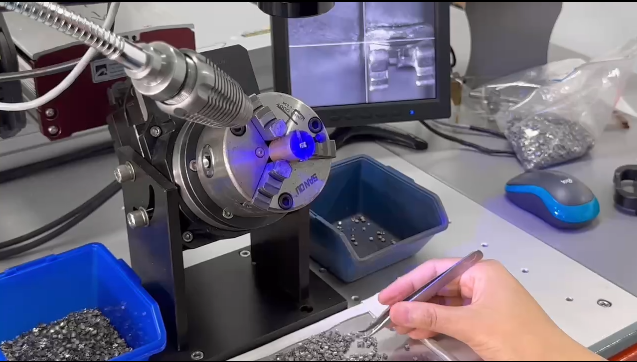
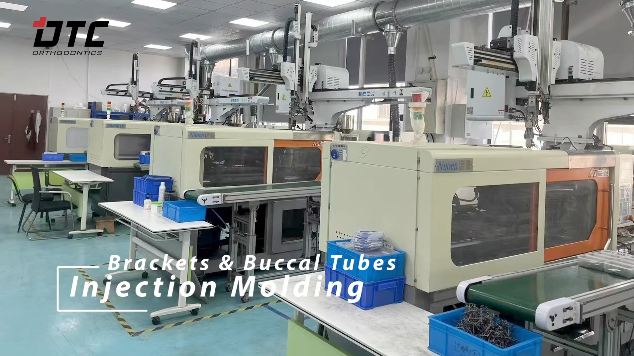
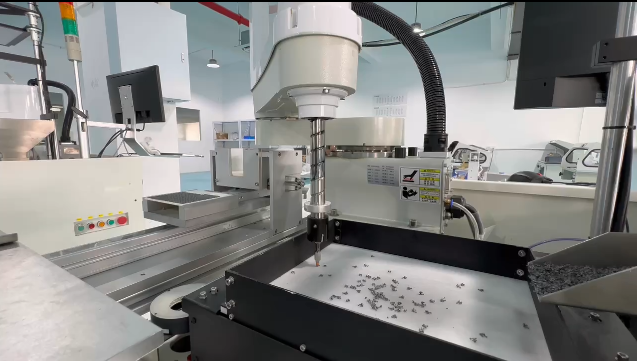
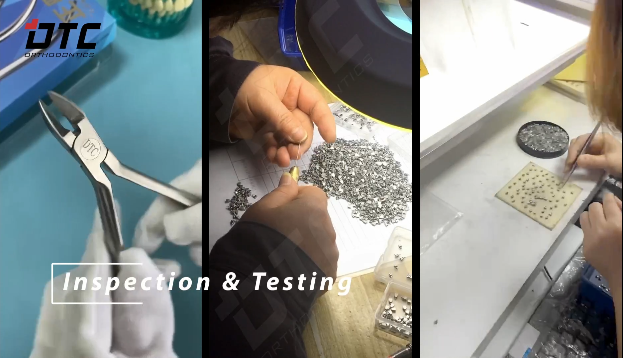
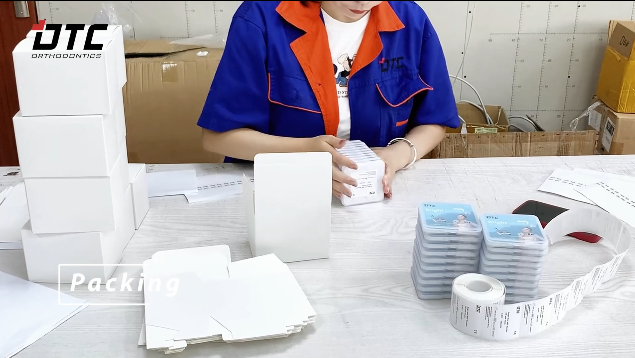
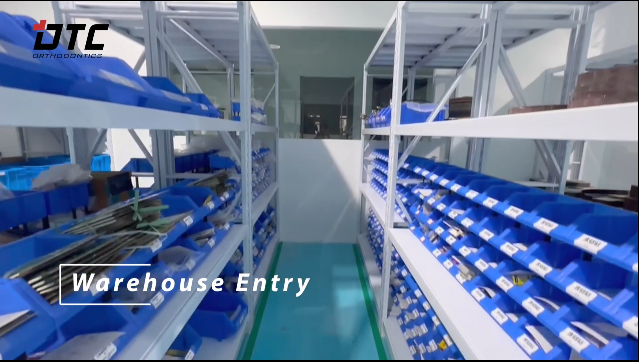
Hangzhou DTC Medical Apparatus Co., Ltd. was established in 2004. It operates a 5,000 m² facility with about 150 employees, an annual output of 1,000,000 units, and an R&D team of 30 engineers. The production line includes injection molding, bracket positioning and welding, finished plating, wire cutting, secondary cutting, coarse grinding, polishing, laser marking, inspection and testing, packing, and warehouse entry. Such a visible process chain is useful for an OEM evaluation because it allows a buyer to identify where quality is added and where defects could be introduced.
More specifically, the Glory II self-ligating bracket is produced using metal injection molding (MIM) and laser welding technology. Orthodontic pliers are CNC-machined and feature a micro-gap hinge. These details matter for private label buyers: they show that “custom manufacturing” is supported by process technology, not just assembly.
Product Portfolio Relevant to Private Label Brackets
For a private label bracket line, the product family should include several compliance and treatment options. DTC covers metal brackets (Bright, Delicate, Zeal, Monoblock), self-ligating brackets (Toast, Glory I, Glory II), ceramic brackets (Ceramic Series), ceramic self-ligating brackets, and lingual brackets (IN-Tendo JK-SL, DTC-ORG). The broader orthodontic supplies portfolio also includes buccal tubes, orthodontic bands, dental wires, pliers, dental tweezers, mirrors, elastics, and accessories.
The bracket specifications are documented in the product data. For example, Ceramic Series brackets use aluminum oxide poly-crystalline or mono-crystalline material, are available for maxillary or mandibular arch, support Roth, MBT, and Edge-wise systems, and come in 0.018” and 0.022” slot sizes with or without hook. Self-ligating brackets such as Toast belong to the metal dental brackets category, while lingual self-ligating brackets like IN-Tendo JK-SL are also available for lingual applications. This range allows a private label buyer to segment the product line by treatment approach, aesthetics, or price point.
Customization: OEM and ODM
Production services at DTC include OEM and ODM modes. OEM covers production according to buyer specifications. ODM covers design and production according to client requirements. Customization can include package, logo, tag, and product specifications. For a private label bracket program, this is the difference between printing your logo on an existing box and building a product around your preferred bracket configuration.
Some series have identifiable features that support branding and clinical communication. The Glory Series has a tooth number on the cap, which helps the clinician identify the bracket position—an advantage for private label lines aimed at orthodontic professionals. The Glory II Series is reported to provide a 30% reduction in diagnosis and treatment time and the number of consultations over alternatives. The Toast Series is described as more suitable for orthodontic scenarios. These are not marketing claims; they are documented product attributes a sourcing team can verify and communicate to its own customers.
Quality Control and Compliance
DTC reports 100% testing for its products, and the commercial terms include pre-shipment testing. The company holds an EN ISO 13485:2016 certificate (certificate number SX 2184523-1, issued by TÜV Rheinland LGA Products GmbH), a US FDA registration (registration number 3009955691) under 21 CFR Part 807, a Notified Body Confirmation Letter for the EU MDR transition (certificate number 244557490), and a Certificate for Exportation of Medical Products issued by the Zhejiang Medical Products Administration. For OEM buyers, these documents are direct evidence that the factory operates under recognized quality systems.
Step-by-Step: Qualifying an OEM Manufacturer for Private Label Brackets
Use this workflow to move from evaluation to execution.
Step 1. Define the Bracket Configuration
Write down the slot size (0.018” or 0.022”), torque (low or high), bracket system (Roth, MBT, or Edgewise), arch (maxillary or mandibular), and hook requirement (with or without). This specification becomes the baseline for the factory quotation.
Step 2. Verify Manufacturing Evidence
Ask for photos or videos of the actual production stages—injection molding, welding, plating, wire cutting, polishing, laser marking, and inspection. DTC’s facility can be reviewed through the company website and direct factory records.
Step 3. Check Regulatory Certificates
Confirm the certificate numbers. For European and US markets, ISO 13485, CE MDR documentation, and FDA registration should be present. DTC’s certificates are issued by TÜV Rheinland and the FDA registration is searchable under 3009955691.
Step 4. Clarify OEM vs. ODM Scope
Decide whether you need production according to your own specification (OEM) or design support from the factory (ODM). Confirm customization of package, logo, tag, and product.
Step 5. Request Pre-Production Samples and Testing
Before placing a bulk order, the factory should run a pre-shipment test. With 100% testing reported, the sampling step should also include a review of the bracket slot dimensions, base shape, and surface finish.
Step 6. Align Commercial Terms
For standard orthodontic supplies, DTC’s procurement terms include an MOQ of 50 pcs, FOB or CIF delivery, T/T payment, and pre-shipment acceptance. For custom OEM/ODM products, the reported MOQ is 100 units. If your planned volume is lower, ask about split shipments, shared tooling, or standard stock colors.
Step 7. Agree on a Delivery and Support Schedule
Standard products can ship within 3–5 business days when safety stock is available. Custom-engineered runs typically take 2–4 weeks, and DTC reports a lead time of 20–30 days for OEM/ODM orders. Express delivery partners include FedEx, DHL, and UPS. Remote support is available after shipment.
Use Cases: Private Label and Institutional Buyers
DTC’s case records show that different buyer types can use the same manufacturing base:
- A distributor in Europe ordered 5,000 units of orthodontic supplies with 1–3 years of stable operation and feedback highlighting product quality and affordable pricing.
- A dealer in Latin America, Asia, the Middle East, and Africa also ordered 5,000 units and reported stable operation.
- A dental clinic in Australia, the US, and Canada ordered 500–1,000 units over 2–3 years, with the same stability.
- A public hospital in the Middle East and South Asia ordered 3,000 units for orthodontic use.
For private label brackets, these cases illustrate a practical point: order size can range from a clinic-scale purchase to a distribution-scale program without leaving the same manufacturing and quality framework.
Comparison Table: DTC Bracket Series for Private Label Positioning
The table below compares the main bracket series available from DTC. All data is taken from the company’s product specifications.
| Series | Type | Slot Size | System | Key Features |
|---|---|---|---|---|
| Bright | Metal dental bracket | 0.018” / 0.022” | Roth, MBT | Low/high torque; 17-4PH stainless steel |
| Delicate | Metal dental bracket | 0.018” / 0.022” | Roth, MBT | Low/high torque; 17-4PH stainless steel |
| Zeal | Metal dental bracket | 0.018” / 0.022” | Roth, MBT | Low/high torque; 17-4PH stainless steel |
| Monoblock | Metal dental bracket | 0.022” | Roth, MBT | Low/high torque; 17-4PH stainless steel |
| Toast | Self-ligating metal bracket | 0.018” / 0.022” | Roth, MBT | Designed for orthodontic scenarios |
| Glory I | Self-ligating metal bracket | 0.022” | Roth, MBT | Sandblasted base; low profile; tooth number on cap |
| Glory II | Self-ligating metal bracket | 0.018” / 0.022” | Roth, MBT | MIM + laser welding; 30% reduction in treatment time |
| Ceramic Series | Ceramic bracket | 0.018” / 0.022” | Roth, MBT, Edgewise | Aluminum oxide poly/mono-crystalline; hook available |
| Ceramic Self-ligating | Ceramic self-ligating bracket | 0.018” / 0.022” | Roth, MBT, Edgewise | Aluminum oxide; hook available |
| IN-Tendo JK-SL | Lingual self-ligating bracket | 0.022” | Roth, MBT | Low/high torque; 17-4PH stainless steel |
Frequently Asked Questions
Does DTC Orthodontics have the certifications needed for private label bracket OEM orders?
Yes. DTC holds an EN ISO 13485:2016 certificate (SX 2184523-1) from TÜV Rheinland covering design, development, manufacture, and distribution of orthodontic brackets and related supplies. It also has a US FDA registration (3009955691) under 21 CFR Part 807, a Notified Body Confirmation Letter for EU MDR transition (244557490), and an export certificate from the Zhejiang Medical Products Administration. For target markets such as the US and EU, these documents reduce the registration burden for private label products.
What OEM/ODM customization options are available for brackets?
DTC provides OEM production according to buyer specifications and ODM design and production according to client requirements. Customization includes package, logo, tag, and product specifications. The reported monthly capacity is 5,000 units, and the custom-order MOQ is 100 units. For brackets, buyers can also select slot size, torque, bracket system, arch, and hook configuration.
What are the MOQ and payment terms for private label bracket orders?
For standard orthodontic supplies, the MOQ can be 50 pcs, with FOB/CIF delivery and T/T payment. Customized products may require a higher minimum order quantity; DTC reports 100 units for OEM/ODM orders. Buyers with lower volume needs can discuss split shipments, shared tooling, or standard stock colors to balance unit price and order size.
What are the lead times for standard and custom private label bracket orders?
Standard products with safety stock can be delivered within 3–5 business days. Custom-engineered production runs generally take 2–4 weeks, and DTC reports a 20–30 day lead time for OEM/ODM orders. Express couriers such as FedEx, DHL, and UPS are used for international delivery. For a precise schedule, provide the bracket series, quantity, and target destination to the DTC sales team.
If you are building a private label bracket line, the next step is to verify the specifications and request a quotation. The DTC team can share the catalog, discuss OEM/ODM details, and align a delivery plan with your market launch.
Download the DTC Orthodontics product catalog: English product catalog (PDF)
Contact: Jaymie | Email: jaymie@dtchz.com | Tel/WhatsApp: +86 136-0051-7451 | Website: www.dtchz.com
Have Questions or Need More Details?
Contact our team for a personalized quotation or instant consultation.
Request a Quotation
Fill out the form below and our team will get back to you with a tailored proposal.
WhatsApp Direct Chat
Prefer to chat in real-time? Message us on WhatsApp for instant assistance & quick answers.
- Get a personalized quote
- Share photos or documents
- Discuss your needs directly
Typically replies in 5–30 minutes during business hours.