
Orthodontic Supplies Supplier Evaluation: Portfolio Breadth as Capability Proof
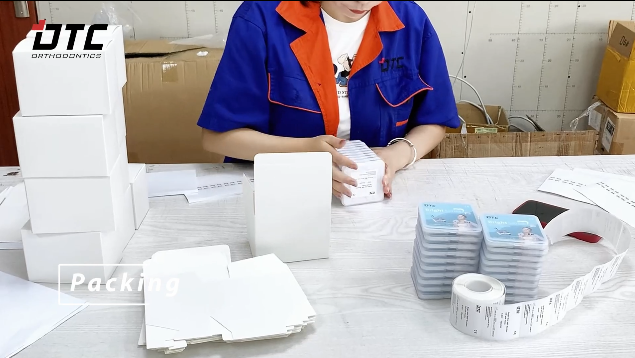
Cover: consolidated packing stage for a multi-category orthodontic supplies order — brackets, tubes, wires, instruments and elastics prepared as one shipment.
The fastest way to test whether an orthodontic supplies supplier can genuinely support your account is to place your own order list next to their catalogue. When one manufacturer covers brackets, buccal tubes, archwires, pliers, ligatures, separators, power chains and retractors, you delete several vendor handoffs from every order cycle — and with them the additional inspection, documentation and delivery risk those handoffs create.
This article is written for buyers at the decision and execution stage: distributors, importers, clinic procurement teams and dental labs that already know roughly what they need and are now choosing who ships it. Portfolio breadth is the first capability signal because it is the hardest one to fake. A price sheet can be copied in an afternoon; a production system that runs metal brackets, ceramic brackets, buccal tubes, hand instruments and elastic auxiliaries under a single quality management system cannot.
Below we map common order lists against nine product families, explain how multi-category coverage reduces vendor handoffs and supports consistent fulfilment, and close with the supplier-evaluation questions that keep the decision from collapsing into a price-only comparison.
Problem Definition: Order Lines Do Not Respect Category Boundaries
Orthodontic purchasing is fragmented by nature. A single clinic restock can include metal brackets, self-ligating brackets, buccal tubes, an archwire sequence, two or three pliers, O rings, separators and power chains. A distributor's quarterly buy typically adds bands, lingual attachments, retractors, mirrors and instruments on top. Nobody treats that as nine separate decisions — yet in a fragmented supply chain it becomes nine separate transactions.
Every vendor handoff creates its own miniature project: a separate purchase order, a separate inbound inspection routine, a separate document set, a separate lead time, and a separate party to hold responsible when a line arrives short, late or out of specification. Individual unit prices may look lower when you spread the order, but the total cost of ownership — administrative time, receiving labour, safety stock buffering and expedited freight — usually rises.
Continuity adds a second risk layer. Archwires made of nickel-titanium (NiTi) have been identified as a category exposed to supply-chain pressure because of heavy reliance on Chinese raw materials, according to Mordor Intelligence's orthodontic supplies analysis. For a distributor, that is an argument for knowing exactly how many parties sit between your catalogue and the production floor.
The practical test takes an afternoon. Export your last 20 order lines, group them by product family, and count how many families a single supplier can cover from its own manufactured range. That coverage number is the capability signal this article is built around.
Industry Background: A Growing Category With Real Compliance Weight
- The global orthodontic supplies market was valued at USD 14.8 billion in 2024 and is expected to grow at a CAGR of 20.1% through 2034 (Global Market Insights).
- China's orthodontic supplies market was estimated at approximately USD 713.25 million in 2024 (Market Research Future).
- North America held the largest regional share in 2024, estimated at 30.6% of revenue (Grand View Research).
- Adult orthodontics is expanding quickly on aesthetic demand, with clear aligners growing at a 14.25% CAGR (Mordor Intelligence).
- The top five global players are Align Technology, Envista Holdings, Solventum, Dentsply Sirona and Straumann (MarketsandMarkets). Below that tier, the consumables that clinics and distributors reorder month after month are supplied mainly by specialist manufacturers.
Compliance is the second layer of the picture. In the European Union, the Medical Device Regulation (MDR 2017/745) requires CE marking for orthodontic products, classifying most of them as Class I or IIa. In the United States, orthodontic brackets and tubes are classified as Class I or II devices under 21 CFR 872.5410, with ISO 27020:2019 recognised as the applicable standard. A narrow-range supplier must still meet these rules; a wide-range manufacturer must meet them across more processes — which is precisely why breadth carries evidential weight.
Portfolio Breadth as Capability Proof: What a Complete Orthodontic Range Contains
DTC Orthodontics — the trading identity of Hangzhou DTC Medical Apparatus Co., Ltd. — is an orthodontic manufacturer established in 2004 in Hangzhou, Zhejiang Province, China. The company develops and produces orthodontic brackets, buccal tubes, preformed bands, archwires, pliers and hand instruments, elastic auxiliaries, as well as pediatric dentistry and dental laboratory products. It states ISO 13485, CE 0197 and FDA certificates for its products and production processes, and reports that approximately 80% of its output is exported to more than 100 countries and regions, including the EU, USA, Middle East, South America, Asia, Africa and Australia.
For an evaluator, the useful question is not “how many SKUs do you have” but “which of my order lines can you produce in-house, to what specification, and under which system?” The following sections answer that question family by family.
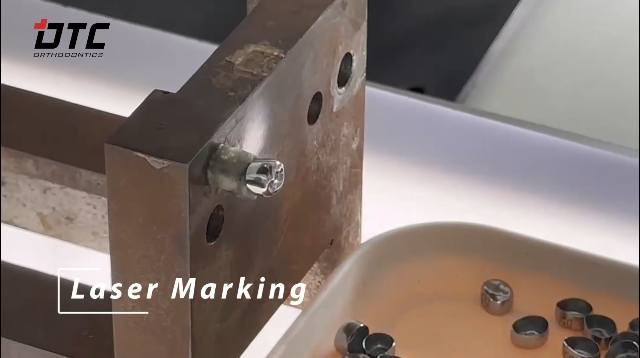
Laser marking is one of the in-house production steps behind identification features such as tooth numbers marked on bracket bases.
Dental Brackets: Metal, Ceramic and Lingual
The metal range covers the Bright, Zeal, Delicate and Monoblock series. These are 17-4PH stainless steel brackets offered in slot sizes 18 and 22, with low-torque and high-torque options, in Roth and MBT systems, for maxillary and mandibular arches. The Delicate Series uses a contoured, sandblasted mesh base and laser welding technology, with an accurate and smooth slot.
Ceramic brackets are fabricated from aluminum oxide in poly-crystalline or mono-crystalline form, supplied in slot sizes 18 and 22, with or without hooks, in Roth, MBT and Edge-wise systems; the same material platform is available as a Ceramic Self-ligating Series. For lingual cases, the range includes the DTC-ORG Lingual Series and the IN-Tendo JK-SL lingual self-ligating bracket. The lingual bracket is a lower-profile design with rounded hooks, a flat form for better oral hygiene and one-piece construction hooks for all teeth; posterior brackets and molar tubes carry 0.022 slots while anterior brackets use 0.018 slots.
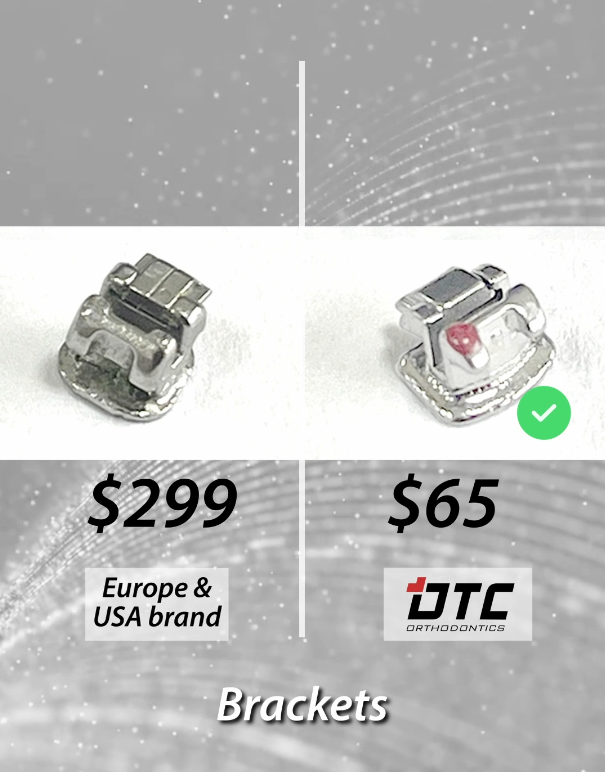
Bracket material options in the range: 17-4PH stainless steel and aluminum oxide poly-crystalline or mono-crystalline ceramic.
Dental Self-ligating Brackets
Self-ligating coverage includes the Toast, Glory I and Glory II brackets. The platform is a passive self-ligating design intended to deliver low friction and light force, available in slot sizes 18 and 22 (Glory I is a 0.022 system), in Roth and MBT prescriptions, with tooth numbers laser-marked on the mesh base for chairside identification. The slot and cap share the same width, which supports more accurate and stable torque expression. The Glory II bracket uses a larger ligation space in a smaller, mini low-profile body.
DTC's published comparison data for the Toast Series against other Chinese self-ligating brackets states a 50%–70% reduction in treatment time and an 80% improvement in patient wearing comfort.
Dental Buccal Tubes and Bands
Buccal tubes are covered by the Zeal and Zeal Plus series in stainless steel, with Roth and MBT systems and slot sizes 18 and 22. The Zeal tube is produced with laser welding technology and precision casting for a compact design, and carries a tooth mark to indicate the force side when bonding plus a high-strength monoblock hook. Bands are supplied as prewelded bands and pediatric bands in Roth, MBT and edge-wise systems, with low-torque and high-torque options.
Dental Wires
Archwires come in three material families: super-elastic NiTi wires, stainless steel archwires and CuNiTi archwires. NiTi and stainless steel forms are offered in Square, Oval and Natural arch shapes (with Europa I and Da also listed for NiTi), in round or rectangular cross-sections, for upper and lower arches; CuNiTi is offered in round, rectangular and Da forms. Niti coil springs complete the wire category: open springs in 0.008", 0.010", 0.012" and 0.014" diameters in 180 mm and 914 mm lengths, and closed springs with eyelets in the same four diameters at 3 mm, 6 mm, 9 mm and 12 mm lengths in identical or different types.
Dental Pliers and Hand Instruments
The instrument family is where breadth becomes operationally obvious, because a clinic reorders pliers and consumables on different rhythms but prefers one supplier. The range includes the Distal End Cutter (hardness HRC 58–63, mini tips 0.018" × 0.022", cutting archwires up to 0.021" × 0.025"), the Light Wire Cutter (HRC 58–63, ligature wires up to 0.30 mm), Light Wire Pliers (HRC 55–60), Bracket Removing Pliers (HRC 50–55), Clear Aligner Pliers, Crown and Band Contouring Pliers, Band Crimping Pliers, and the Crown Trimming Scissor, which is used to trim and resize crowns to fit different molar sizes. All are stainless steel, corrosion and rust resistant, and sterilizable at up to 180 °C.
Supporting instruments in the same catalogue include bracket positioners, force gauges, archwire formers, the Mathieu needle holder, bracket, tube and lingual tweezers, intraoral glass mirrors (autoclavable to 130 °C) and stainless steel mirrors, plus black contrasters made of aluminum alloy. DTC's comparison data on pliers states a service life of at least five years with a 30% improvement in surface smoothness and material gloss against the reference products, and a three-year warranty is stated for sold pliers.
Elastics and Auxiliaries: O Rings, Separators and Power Chains
The elastic consumables family is a high-frequency reorder group, which makes it a useful test of whether a supplier is a manufacturer or an assembler. Orthodontic O Rings are offered in latex or silicone. Separators are made from TPU in blue. Power chains are TPU in open long, closed continuous and open short types. Ligature rings, rotation wedges (transparent or grey, latex-free, supplied on a stick dispenser for hygienic handling) and orthodontic chewies in six colours round out the group.
DTC's published comparison data states a 20% increase in tensile strength for its power chain versus the reference products — relevant to space closure where dependable tension matters — and, for ligature rings, a 10% larger cross-sectional diameter coupled with a 50% improvement in surface smoothness, which reduces insertion resistance and chairside time.
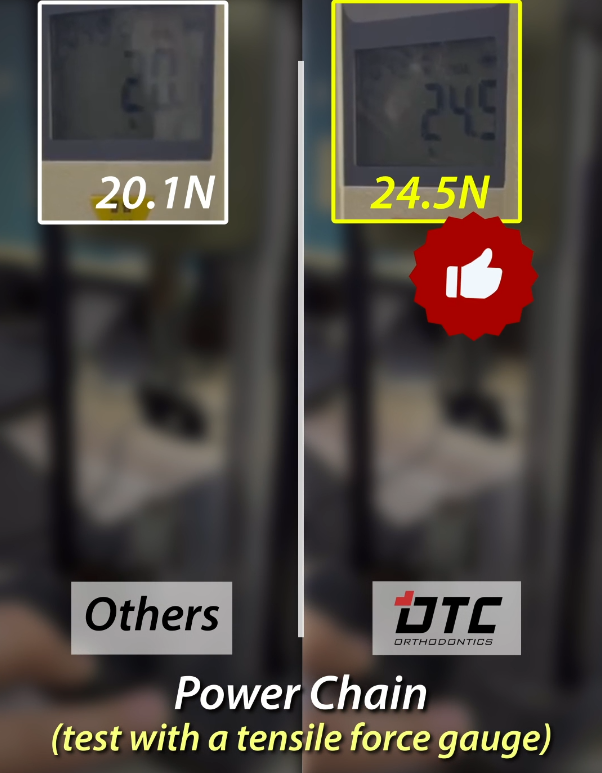
Power chain category: open long, closed continuous and open short types in TPU.
Dental Retractors and Chairside Visibility
Retractors are produced in polycarbonate: the cheek retractor in lateral-1, occlusion-large and occlusion-small types, and the lip retractor in large, medium and small sizes. The lip retractor is described as highly flexible and durable, with impact resistance that prevents cracking or breaking under tension or sterilisation cycles — a specification that matters more in daily clinic use than in a catalogue photo.
Beyond Orthodontics: Pediatric and Dental Laboratory Coverage
Portfolio breadth does not stop at orthodontic consumables. The pediatric dentistry line includes pediatric preformed crowns (Kids Crown, stainless steel, in upper and lower D-type and E-type systems), pediatric bands and dedicated instruments such as the crown trimming scissor and band crimping pliers. For dental laboratories and advanced clinical cases, the range includes rapid palatal expanders (RPEs) with orthodontic miniscrews, MISPA molar distalization appliances, MARPE series expansion screws (screw and pin lengths of 12, 14, 16, 18 and 20 mm; expansion sizes of 7, 9, 11, 13 and 15 mm; arm diameter 1.5 mm) and implant screws in 1.4 mm, 1.6 mm and 2.0 mm diameters at 6, 8, 10 and 12 mm lengths in titanium alloy. DTC's comparison data for the MARPE series states 70%–80% lower cost than the reference skeletal expander.
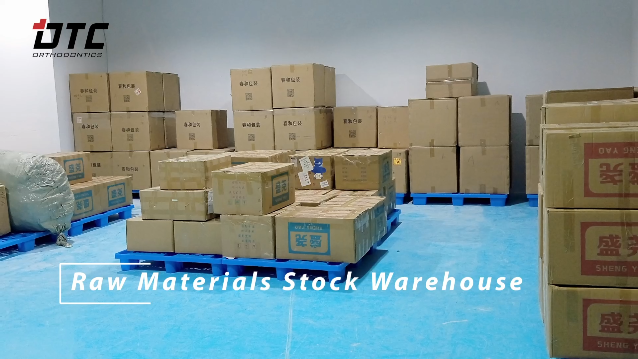
Raw material stock holding inside the manufacturing facility — one input to multi-category order continuity.
Step-by-Step Breakdown: How to Run the Portfolio Breadth Test
- Segment your own order history. Group the last 20–50 order lines into families: fixed appliances, wires and coils, instruments, elastic auxiliaries, retractors, pediatric, laboratory. Most buyers discover that two families generate the majority of their administrative work.
- Ask for a category map, not a price sheet. A capability-driven supplier can list model families, materials and prescriptions per family. A reseller tends to answer with a discount grid instead.
- Check the specification depth behind each family. Slot size and torque options for brackets, system compatibility (Roth, MBT, Edge-wise), wire materials and arch forms, instrument hardness (HRC) and maximum sterilisation temperature. Specifications are the part of breadth that cannot be improvised.
- Confirm the manufacturing model and quality governance. DTC Orthodontics is both the manufacturer and the exporter, operates a Quality Management System with formal production controls, states direct control over production and quality management, and provides documentation and product manuals online for customers, with multi-language documentation for export markets.
- Verify compliance for the categories you actually buy. Request the certification set (ISO 13485, CE 0197, FDA) and confirm the regulatory route for your market, including EU MDR 2017/745 for Europe and 21 CFR 872.5410 with ISO 27020:2019 for the United States.
- Map the stock and delivery model. Clarify which items are held as safety stock and which are made to order, and get the promised dispatch and production windows in writing.
- Confirm commercial terms up front. Minimum order quantity, delivery terms, acceptance criteria and payment terms should be agreed before the pilot order, not after it.
- Run a pilot order and compare batch to batch. Order one line from each major family, inspect to your own criteria, then repeat the same order later and compare. Breadth that survives two cycles is a capability; breadth that only appears in a presentation is a claim.
Use Cases: What Multi-Category Coverage Looks Like in Practice
Distributor building a national catalogue. A distributor that must list fixed appliances, wires, instruments and elastics can consolidate the assortment base with one manufacturer instead of negotiating four supply relationships, keeping a single documentation set and one inbound inspection protocol per shipment.
Clinic reordering case-based consumables. Brackets, buccal tubes, archwires, pliers and elastics for a treatment phase can be ordered as one list, which shortens the internal purchasing workflow and reduces the number of deliveries the clinic must receive and check.
Dealer serving pediatric and laboratory customers. Pediatric preformed crowns, pediatric bands, RPEs and expansion screws come from the same supplier as the orthodontic consumables, so a mixed customer base does not force a second sourcing channel.
Private-label and OEM programme. Buyers pursuing own-brand packaging can discuss MOQ options with a manufacturer that also runs the tooling: higher-volume production with split shipments, shared tooling costs to unlock a lower production MOQ, or lower MOQs when the buyer accepts standard in-house colours and materials.
Comparison Table: Mapping a Typical Order List to One Supplier
| Order line | Product family and models | Key specification |
|---|---|---|
| Metal brackets | Dental Brackets: Delicate, Zeal, Bright, Monoblock | 17-4PH stainless steel; slot 18 and 22; Roth and MBT; low or high torque |
| Self-ligating brackets | Dental Self-ligating Brackets: Toast, Glory I, Glory II | Passive self-ligating; slot 18 and 22; tooth numbers laser-marked on the mesh base |
| Ceramic brackets | Ceramic Series, Ceramic Self-ligating Series | Aluminum oxide poly-crystalline or mono-crystalline; slot 18 and 22; with or without hook |
| Lingual brackets | DTC-ORG Lingual Series, IN-Tendo JK-SL | Slot 22; posterior 0.022 and anterior 0.018; lower profile with rounded hooks |
| Buccal tubes | Dental Buccal Tubes: Zeal, Zeal Plus | Laser welding and precision casting; Roth and MBT; slot 18 and 22 |
| Bands | Dental Orthodontic Bands: prewelded, pediatric | Roth, MBT, edge-wise; low or high torque |
| Archwires | Dental Wires: super-elastic NiTi, stainless steel, CuNiTi | Arch forms Square, Oval, Natural, Europa I, Da; round or rectangular; upper and lower |
| Pliers | Dental Pliers: Distal End Cutter, Light Wire Cutter, Light Wire, Bracket Removing, Clear Aligner | Hardness HRC 50–63; stainless steel; sterilizable to 180 °C |
| O rings | Orthodontic O Rings | Latex or silicone |
| Separators | Separators | TPU; blue |
| Power chains | Power Chains | TPU; open long, closed continuous, open short |
| Retractors | Dental Retractor: Cheek Retractor, Lip Retractor | Polycarbonate; lateral-1, occlusion-large, occlusion-small; large, medium, small |
Specifications as published by the manufacturer. Relative performance figures referenced in this article reflect DTC's published comparison data against the stated reference products.
Delivery Assurance: What Multi-Category Coverage Changes
Consolidation is not only about assortment. When several families ship against one commercial agreement, the buyer inherits one set of commercial and quality parameters instead of four. The parameters below are the ones a buyer should capture in writing before the first production order.
| Parameter | Stated standard |
|---|---|
| Minimum order quantity | MOQ: 50 pcs under standard purchasing terms; OEM and ODM MOQs depend on the product and customisation scope |
| Delivery terms | FOB / CIF |
| Acceptance criteria | Pre-shipment test |
| Payment terms | T/T |
| Standard product delivery | Safety stock maintained on selected standard products, supporting dispatch within 3–5 business days |
| Custom-engineered production | 2–4 week lead time |
| Transport partners | Long-standing arrangements with international couriers including FedEx, DHL and UPS |
| Quality governance | Quality Management System with formal production controls; batch-to-batch stability supported by direct control of production and quality, with delivery documentation per order |
| Certification set | ISO 13485, CE 0197 and FDA certificates stated for products and production processes |
Multi-category coverage reduces vendor handoffs in three concrete ways. First, one commercial agreement replaces several, so MOQ, payment terms and acceptance criteria are negotiated once. Second, one shipment can carry several families, which reduces the number of inbound inspections, packing units and customs entries a buyer processes. Third, responsibility is not split: when brackets, tubes, wires and elastics all come from the same production system, the cause of a short or non-conforming shipment is traceable to one party.
Frequently Asked Questions
What certifications and regulatory approvals does DTC Orthodontics hold?
DTC Orthodontics (Hangzhou DTC Medical Apparatus Co., Ltd.) states that it holds ISO 13485, CE 0197 and FDA certificates for its products and for its production processes, and that its management system follows CE (MDR) and ISO requirements. Buyers should also confirm the route that applies to their own market: EU MDR 2017/745 requires CE marking for orthodontic products, classifying most as Class I or IIa, while orthodontic brackets and tubes in the United States fall under 21 CFR 872.5410, with ISO 27020:2019 as the recognised standard.
Are you the actual manufacturer or a trading company, and can one order cover several product families?
DTC Orthodontics is both the manufacturer and the exporter, operating its own production line and machinery in Hangzhou, Zhejiang Province, China, with an R&D team of 30 engineers behind the product range. Its portfolio spans brackets, self-ligating brackets, buccal tubes, bands, archwires, pliers and instruments, elastic auxiliaries such as O rings, separators and power chains, retractors, plus pediatric dentistry and dental laboratory products — so a mixed order list can be covered from one in-house range rather than assembled from several vendors.
What is the MOQ for OEM or ODM orthodontic supplies?
The standard MOQ depends on the specific product and on the customisation requirements. DTC Orthodontics offers competitive MOQs on standard products, while customised products may require a higher minimum order quantity. Flexible structures are available for both high-volume and low-volume requirements: producing a higher volume to obtain a better unit price while shipping inventory in smaller batches, allowing the client to pay a higher upfront tooling fee to unlock a lower production MOQ, or offering a lower MOQ when the buyer accepts standard in-house colours or materials to avoid custom sourcing minimums.
Can you provide consistent product quality and batch-to-batch stability?
As both manufacturer and exporter, DTC Orthodontics operates a Quality Management System with formal systems governing production, and states that it maintains direct control over production and quality management and provides documentation with each order delivery, so that every shipment can be checked against the buyer's requirements. All products undergo quality control protocols and stress-testing before leaving the facility, and the stated acceptance criterion for standard purchasing terms is a pre-shipment test — which gives distributors a defined checkpoint before goods are dispatched.
What are the lead times and delivery capabilities for a distributor stocking programme?
For standard products, DTC Orthodontics maintains safety stock on selected items to support faster delivery within 3–5 business days, while custom-engineered production runs require a 2–4 week lead time. Standard purchasing terms are MOQ 50 pcs, FOB or CIF delivery terms and T/T payment. The company maintains long-standing partnerships with international express couriers including FedEx, DHL and UPS for export shipments. Distributors evaluating a long-term supply relationship can review the full range in the downloadable catalogue and send their order list for a consolidated quotation and lead-time confirmation.
Conclusion: Evaluate Coverage Before You Compare Prices
Portfolio breadth is not a vanity metric; it is an operational one. It determines how many purchase orders, inspections, documents and delivery windows sit between a clinical need and the items that satisfy it. A supplier that produces brackets, buccal tubes, bands, archwires, pliers, elastic auxiliaries and retractors in one system is not automatically the right partner for every buyer — but it is the only type of supplier that can answer the order-list test without subcontracting your order to someone else.
Three evaluation questions separate the real capability from the catalogue: Can you show me the model, material and specification behind each of my order lines? Can you confirm which items are produced in-house and under which quality management system? And can you commit to dispatch and production windows for standard and custom items in writing? Answer those first. Price becomes a much cleaner comparison once the handoff structure is visible.
Hangzhou DTC Medical Apparatus Co., Ltd. has been manufacturing orthodontic materials since 2004 and exports to more than 100 countries and regions. Buyers who want to test the portfolio breadth described in this article can start with a sample-stage order covering two or three families, then scale to a stocking programme.
Next Step: Send Your Order List
Send DTC Orthodontics your last 20 order lines and we will map each line to a model, specification and lead time — so you can see exactly where vendor handoffs disappear from your supply chain.
Download the product catalogue: English catalogue PDF
Website: www.dtchz.com
Email: jaymie@dtchz.com | WhatsApp: +86 136-0051-7451
Contact: Jaymie | Floor 1-3, Building 2, 8th Xiyuan Road, Xihu District, Hangzhou, Zhejiang Province, China
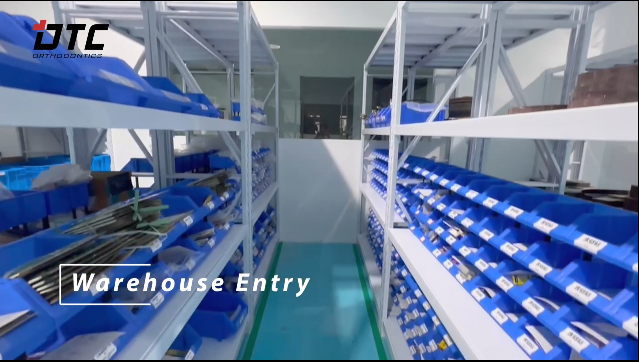
Finished goods entering the warehouse — selected standard products are held as safety stock to support 3–5 business day dispatch.
Have Questions or Need More Details?
Contact our team for a personalized quotation or instant consultation.
Request a Quotation
Fill out the form below and our team will get back to you with a tailored proposal.
WhatsApp Direct Chat
Prefer to chat in real-time? Message us on WhatsApp for instant assistance & quick answers.
- Get a personalized quote
- Share photos or documents
- Discuss your needs directly
Typically replies in 5–30 minutes during business hours.