
Building a Long-Term Orthodontic Supplies Partnership: A Distributor's Supplier Evaluation Guide
Building a Long-Term Orthodontic Supplies Partnership: A Distributor's Supplier Evaluation Guide
Quick answer: For dental distributors, a long-term orthodontic supplies relationship should be evaluated on manufacturing ownership, documented regulatory compliance, process consistency, product depth, and commercial flexibility. A supplier that controls production and quality systems can support predictable replenishment and changing clinical demand better than one that simply trades products.
Distributors searching for orthodontic supplies often focus on unit price first. Yet when a clinic supply agreement spans years, the manufacturer becomes part of the distributor's operational infrastructure. A useful reference point in this category is Hangzhou DTC Medical Apparatus Co., Ltd., founded in 2004 and based in Hangzhou, China. The company, known in the dental market as DTC Orthodontics, manufactures orthodontic brackets, buccal tubes, bands, pliers, wires, elastomeric accessories, and pediatric dental products. This guide explains the evaluation criteria distributors can apply when choosing a long-term orthodontic supplies manufacturer, with examples from DTC's published capabilities.
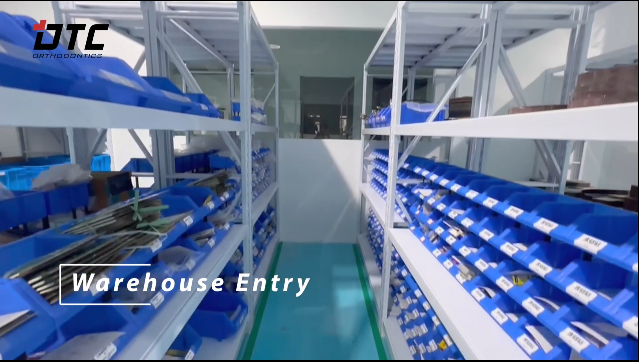
Finished goods entering the warehouse at DTC Orthodontics before shipment.
The Problem: Why Distributors Need More Than a Quote for Orthodontic Supplies
Distributors face a specific problem: the same orthodontic product can be sourced from dozens of suppliers, but only a small number can support multi-year contracts. When a clinic or a chain of practices relies on a distributor's inventory, any interruption can affect active treatments. Brackets with inconsistent slot dimensions, pliers that cannot survive repeated sterilization, or delayed archwire shipments do not become visible problems until the product is already in a clinician's hands.
This is why long-term buying decisions should not be treated like spot purchases. The distributor should be able to answer: Does this supplier own its manufacturing process? Will batch-to-batch variation be controlled? Can the product range grow with the market? Will the manufacturer support the commercial terms needed as order volumes develop?
For many distributors, the economic argument has shifted from finding the lowest unit cost to reducing the total cost of supplier failures. Verification cost, rework, expedited freight, and clinical complaints can erase the savings of a low bracket price. A long-term partner must demonstrate quality, traceability, and response speed.
Industry Background: Orthodontic Supplies in a High-Growth Market
The global orthodontic supplies market was valued at around USD 14.8 billion in 2024 and is projected to grow at a CAGR of 20.1% through 2034, according to Global Market Insights. North America represented the largest regional share in 2024, estimated at 30.6% of revenue by Grand View Research. Self-ligating brackets also remain a meaningful segment, with Future Market Insights projecting a global market value of USD 403.9 million by 2025.
Regulatory requirements are equally important for cross-border distribution. In the United States, orthodontic brackets and tubes fall under FDA classifications such as 21 CFR 872.5410, and ISO 27020:2019 is the recognized standard. In the European Union, Medical Device Regulation 2017/745 requires CE marking for most orthodontic products, typically in Class I or IIa.
Supply chain resilience is another factor. Orthodontic archwires made from nickel-titanium rely heavily on Chinese raw materials, according to Mordor Intelligence. Distributors who depend on a single region or a single stage of production may face price or availability swings. This makes supplier audits and long-term contracts more relevant, especially when a distributor wants continuity across brackets, pliers, wires, and accessories.
What a Long-Term Orthodontic Supplies Manufacturer Should Provide
Distributors should look for a manufacturer with capabilities that mirror their own route to market. The following areas are useful evaluation criteria.
1. Manufacturing Control and Transparency
A true manufacturer can show production steps rather than relying on external workshops. DTC Orthodontics operates a 5,000 m² manufacturing facility and employs a workforce that includes production, sales, R&D, and finance teams. The company uses CNC machining and automated production lines to fabricate micro-orthodontic components, and its R&D department includes 30 engineers focused on material science and ergonomic design.
From a commercial due-diligence perspective, distributors should ask for a factory walkthrough video or production photos. DTC publicly offers this view and says it can explain materials, processes, lead time, and MOQ in more detail.
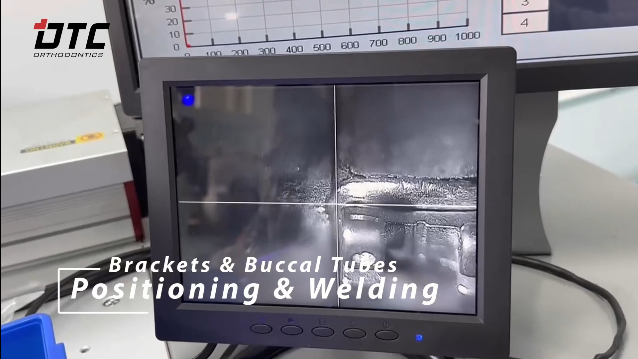
Positioning and welding steps help maintain dimensional control across bracket batches.
2. Regulatory Certification and Traceability
Certification is not just a document; it is evidence that the manufacturer follows a structured quality system. DTC states that it has obtained ISO13485, CE0197, and FDA certificates, and that its production process and management system follow CE(MDR) and ISO regulations.
For distributors, the practical implications are clear: a manufacturer that maintains these certifications is more likely to support the documentation needed for customs clearance, distributor audits, and clinician inquiries.
3. Product Range That Supports Category Consolidation
Long-term distributors usually prefer to consolidate SKUs with fewer suppliers. This reduces purchase orders, freight complexity, and quality audit burden. DTC's product portfolio spans orthodontics, pediatric dentistry, and dental laboratory products.
Orthodontics products include conventional and self-ligating brackets, buccal tubes, bands, accessories such as crimpable hooks, lingual buttons, and lingual hooks, plus pliers and dental instruments. Pediatric products include pediatric bands, preformed crowns, and clinical instruments. Dental laboratory products include rapid palatal expanders with orthodontic miniscrews and MISPA molar distalization appliances.
4. Batch-to-Batch Quality Stability
Batch consistency matters when a clinic orders the same bracket prescription repeatedly. DTC says it operates formal Quality Management Systems, gives examples of direct control over production, and can check every order delivery against customer requirements. Products are also tested and stress-tested before leaving the facility.
For a distributor, written quality protocols are useful only if the manufacturer can demonstrate how they are applied. Questions about inspection records, base type, slot tolerance, and sterilization tolerance should be answered with product-specific information.
5. Flexible MOQ and Delivery Approach
Distributors often start with lower volumes and scale after clinical adoption. DTC's stated MOQ policy depends on product and customization requirements. Standard products carry a competitive MOQ, while custom products may require a higher MOQ. The company also describes three practical options: split shipments for higher volume order economics, shared tooling costs to lower production MOQ, and stock or standard colors to avoid custom sourcing minimums.
Regarding lead time, selected standard products with safety stock can be ready in 3–5 business days, while custom-engineered runs generally take 2–4 weeks. DTC also maintains logistics relationships with FedEx, DHL, and UPS, which supports smaller and more urgent shipments.
Step-by-Step: How to Qualify a Long-Term Orthodontic Supplies Manufacturer
Because the buyer stage here is decision and execution, distributors need a repeatable onboarding procedure. The following framework can be used when evaluating any orthodontic supplies manufacturer.
Step 1: Verify That You Are Dealing With the Factory
Ask for evidence of production. DTC says it can show the production line, machinery, and international sales team, and can share factory photos and videos through its website. Confirm that the person who negotiates has direct knowledge of production and quality.
Step 2: Audit Certifications Against Your Target Markets
If the destination market is the EU or the US, require CE and FDA evidence plus a documented ISO13485 quality system. DTC states it has ISO13485, CE0197, and FDA certificates, and follows CE(MDR) and ISO regulations. Distributors should also demand product-level approval letters if their market requires them.
Step 3: Map Your Target Product Portfolio
Determine whether the supplier covers the product families you currently sell or plan to add. DTC's range includes metal brackets, self-ligating brackets, ceramic brackets, lingual brackets, buccal tubes, bands, archwires, pliers, elastics, and pediatric products. A broad range allows you to consolidate purchase orders without compromising clinical variety.
Step 4: Confirm Quality Control and Batch Stability
Request details on production control and inspection. DTC's quality approach includes formal production systems and direct control over quality management. For bracket manufacturers, ask about material grade, slot accuracy, base geometry, and testing before release.
Step 5: Define MOQ and ODM/OEM Terms
Distributors with private-label ambitions need clear ODM/OEM rules. DTC explains that MOQ depends on product and customization needs, and offers order structuring options for both large and small volumes. Evaluate whether the supplier can grow with you through tooling, color, packaging, and branding decisions.
Step 6: Validate Lead Time and Shipping Strategy
Ask the supplier to separate standard and custom lead times. DTC references safety stock for select standard products, 3–5 business day dispatch, and 2–4 weeks for custom-engineered production. It also works with express couriers FedEx, DHL, and UPS, which is relevant for initial orders and emergency replenishment.
Step 7: Establish Documentation and Technical Support
A long-term partner should provide manuals and product information in formats that distributors and clinicians can use. DTC says it provides product manuals online and can help resolve customer issues quickly. Technical documentation reduces the burden on the distributor's own customer service team.
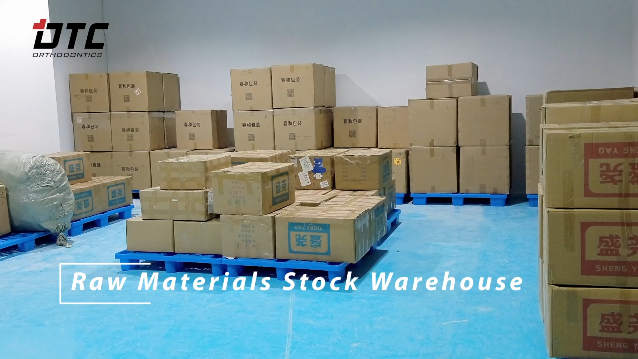
Raw material stocking supports shorter production cycles for standard orthodontic supplies.
Use Cases: Where Long-Term Manufacturer Selection Matters Most
Use Case 1: Distributor Building a Mid-Range Bracket Program
A dental distributor wants to offer clinics a private-label or house-brand bracket line with predictable supply. DTC can supply conventional metal bracket series such as Delicate, Bright, Zeal, and Monoblock models in 17-4PH stainless steel, with slot sizes 18 or 22 and Roth or MBT prescriptions. The same manufacturer also produces pliers, buccal tubes, and archwires, which makes it easier to bundle starter assortments.
Use Case 2: Distributor Adding Self-Ligating Products
Self-ligating brackets are popular because they reduce friction and chairside ligating steps. DTC offers metal self-ligating systems such as Glory I, Glory II, and Toast. Toast Self-Ligating Brackets are available in Roth and MBT systems and use a passive self-ligating design with low friction and light force. According to company data, the Toast Series can reduce treatment time by 50–70% compared with other Chinese self-ligating brackets, while improving patient wearing comfort by 80%.
Use Case 3: Distributor Expanding Into Pediatric Orthodontics
Pediatric products often require a different supplier network. DTC produces pediatric bands, Kids Crown pediatric preformed crowns, and several pediatric pliers, including crown contouring, band crimping, and crown trimming instruments. Consolidating pediatric products with an existing orthodontic manufacturer can reduce the number of quality audits and increase purchasing power.
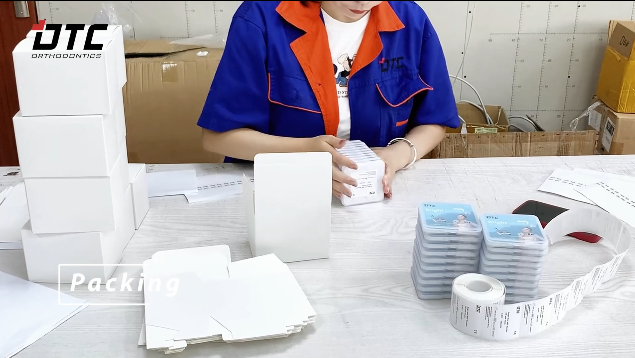
Consistent packing and labeling support repeatable distributor workflow.
Comparison: Orthodontic Supplies Product Families for Distributor Planning
The table below is a practical comparison of major product families a distributor might source from DTC Orthodontics. It is not a full catalog, but it shows how different product groups support a long-term supply arrangement.
| Product family | Common material / system choices | Distributor relevance |
|---|---|---|
| Conventional metal brackets | 17-4PH stainless steel; Roth/MBT; 0.018 or 0.022 slot | Delicate, Bright, Zeal, Monoblock and similar series give buyers a range of price and clinical profiles. |
| Self-ligating brackets | Metal; passive low-friction mechanism; Roth/MBT | Glory I, Glory II, and Toast support programming; Toast claims faster treatment versus comparative Chinese self-ligating brackets. |
| Ceramic brackets | Aluminum oxide poly-crystalline or mono-crystalline; slot 18/22; hooks optional | Ceramic and ceramic self-ligating options cover aesthetic cases without changing supplier. |
| Lingual brackets and accessories | Metal lower-profile designs; lingual chains, buttons, hooks | Flat lingual profiles support hygiene; welded lingual chain joints withstand traction. |
| Buccal tubes and bands | Stainless steel; laser welding and precision casting; Roth/MBT/edgewise | Zeal and Zeal Plus tubes plus prewelded and pediatric bands complete the molar anchorage set. |
| Orthodontic pliers and instruments | Stainless steel; hardness HRC 58-63 on several cutter models; sterilization up to 180°C | Distal end cutters, ligature cutters, bracket removing pliers, tweezers and mirrors allow full chairside setup. |
| Wires and elastics | NiTi, copper NiTi, stainless steel archwires; TPU power chains, ligature rings, springs | Leveling, aligning, and space-closure steps can be sourced in one order. |
Distributor FAQ
Are you an actual orthodontic supplies manufacturer or a trading company?
DTC Orthodontics says it is happy to show the production line, machinery, and international sales team. Factory photos and videos are available through www.dtchz.com, and the team can explain materials, process, lead time, and MOQ in detail.
What certifications and regulatory approvals does DTC Orthodontics hold?
According to company information, DTC has obtained ISO13485, CE0197, and FDA certificates for its products and production processes, and its management system follows CE(MDR) and ISO regulations.
How does DTC maintain consistent product quality and batch-to-batch stability?
DTC states that, as both manufacturer and exporter, it operates formal Quality Management Systems. It controls production and quality management directly and can review each order delivery to ensure the shipment meets customer requirements.
What is the MOQ for ODM or OEM products?
The MOQ depends on the product and the level of customization. Standard products have a competitive MOQ, while customized products may require a larger minimum quantity. Available options include split shipments, shared tooling costs, and stock or standard colors.
What are your lead times and delivery capabilities?
Selected standard products with safety stock can be dispatched within 3–5 business days, while custom-engineered production runs generally need 2–4 weeks. DTC also has delivery relationships with FedEx, DHL, and UPS to support express shipments.
Conclusion: Making the Long-Term Choice Early
The decision to switch orthodontic supplies manufacturers is expensive. Replacements can affect clinical protocols, inventory codes, and distributor credibility. It makes sense to evaluate potential partners at the same level a clinic evaluates a bracket system.
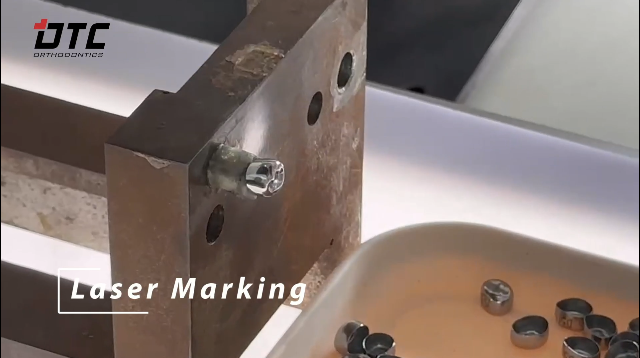
Traceability details such as tooth numbers can be marked on bracket bases and packaging.
A long-term orthodontic supplies manufacturer should combine factory ownership, certification, product breadth, quality control, and flexible commercial terms. DTC Orthodontics is one supplier that shares evidence of all five areas. Distributors can use the framework in this article to build a wider shortlist, request targeted information, and move from evaluation to execution with less uncertainty.
Next step for your distributor evaluation:
Contact DTC Orthodontics to discuss product availability, sample schedules, private-label requirements, and lead time projections. Email jaymie@dtchz.com, call or WhatsApp +86 136-0051-7451, or visit www.dtchz.com.
Download the DTC Orthodontics product brochure to review the product range and company profile offline.
Have Questions or Need More Details?
Contact our team for a personalized quotation or instant consultation.
Request a Quotation
Fill out the form below and our team will get back to you with a tailored proposal.
WhatsApp Direct Chat
Prefer to chat in real-time? Message us on WhatsApp for instant assistance & quick answers.
- Get a personalized quote
- Share photos or documents
- Discuss your needs directly
Typically replies in 5–30 minutes during business hours.