
Alloy Standards and Biocompatibility: A Compliance Guide for Orthodontic Metals
Alloy compliance for orthodontic metals is a document problem before it is a metallurgy problem. A bracket, archwire, band, buccal tube or coil spring can only be placed on a regulated market when the manufacturer can show which alloy it is made from, which standard the material and the process follow, and which certificate names that exact product family. The buyer's task is to align three things: the alloy written in the product data, the scope written in the certificate, and the item written in the purchase order.
This guide explains how alloy standards apply to the metal parts of an orthodontic kit, how biocompatibility expectations are documented rather than advertised, and how a buyer can verify both before releasing a production order. Product data and certification records from Hangzhou DTC Medical Apparatus Co., Ltd. (DTC Orthodontics) — an orthodontic supplies manufacturer established in 2004 in Hangzhou, Zhejiang Province, China, operating a 5,000 square metre facility with an 80% export ratio — are used throughout as a worked example of a complete alloy file.
Why alloy compliance is the hardest part of an orthodontic purchase
The alloy inside an orthodontic component is invisible at the quotation stage. A distributor receives a price list, a product photograph and a delivery promise; what is usually missing is a traceable link between the physical part and the material it is made from. Three failure patterns account for most compliance problems in this category.
- Scope mismatch. The certificate is genuine, but its wording covers brackets while the shipment contains buccal tubes, springs or instruments.
- Material ambiguity. A wire is described only as Niti, without stating the alloy family, the dimensional range or the arch form that the declaration actually covers. DTC product data, for example, separates Super-elastic Niti Wires (Niti), CuNITI Arch Wires (copper and Niti) and Stainless Steel Arch Wires (stainless steel) precisely because the materials differ.
- Supply-chain opacity. Nickel-titanium raw material supply is concentrated, and Mordor Intelligence notes that NiTi archwire supply chains carry risk because of heavy reliance on Chinese raw materials. Origin and alloy control therefore belong inside the compliance file, not outside it.
The remedy is procedural rather than technical. Build a mapping file in which every metal component on the order is tied to a named alloy, a named standard and a named document. That single artefact answers audits, tender questions and distributor due-diligence requests at the same time.
Industry background: regulation is tightening while the category grows
Orthodontic metals sit inside a category that continues to expand. Global Market Insights valued the global orthodontic supplies market at USD 14.8 billion in 2024 and projects a CAGR of 20.1% through 2034. Market Research Future estimated China's orthodontic supplies market at approximately USD 713.25 million in 2024, while the Observatory of Economic Complexity recorded USD 13.5 billion in Chinese exports of medical instruments in 2024. Grand View Research placed North America's share of orthodontic supplies revenue at 30.6% in 2024, and Mordor Intelligence reports clear aligner growth at a 14.25% CAGR as adult aesthetic demand rises.
Documentation expectations rise with that volume. MarketsandMarkets identifies Align Technology, Envista Holdings, Solventum, Dentsply Sirona and Straumann among the largest global players, and the standards these companies operate under influence what regulators, hospitals and distributors expect from every supplier further down the chain — including specialist manufacturers in China, India, Korea and Europe.
The two regulatory routes that matter most for alloy claims
- United States. According to FDA classification information, orthodontic brackets and tubes are classified as Class I or II medical devices under 21 CFR 872.5410, and ISO 27020:2019 is the recognised standard for those products.
- European Union. Regulation (EU) 2017/745 — the Medical Device Regulation — requires CE marking for orthodontic products and classifies most of them as Class I or Class IIa.
The practical consequence is that one alloy can require different paperwork in different markets, and the paperwork is scoped by product family rather than by material. A buyer sourcing dental wires, brackets and springs in the same order should expect more than one document, not one certificate covering everything.
The document set that proves alloy compliance
A complete alloy file contains four document groups. The DTC certification records are used below to show what each group looks like when it is properly structured.
1. Quality management system certificate
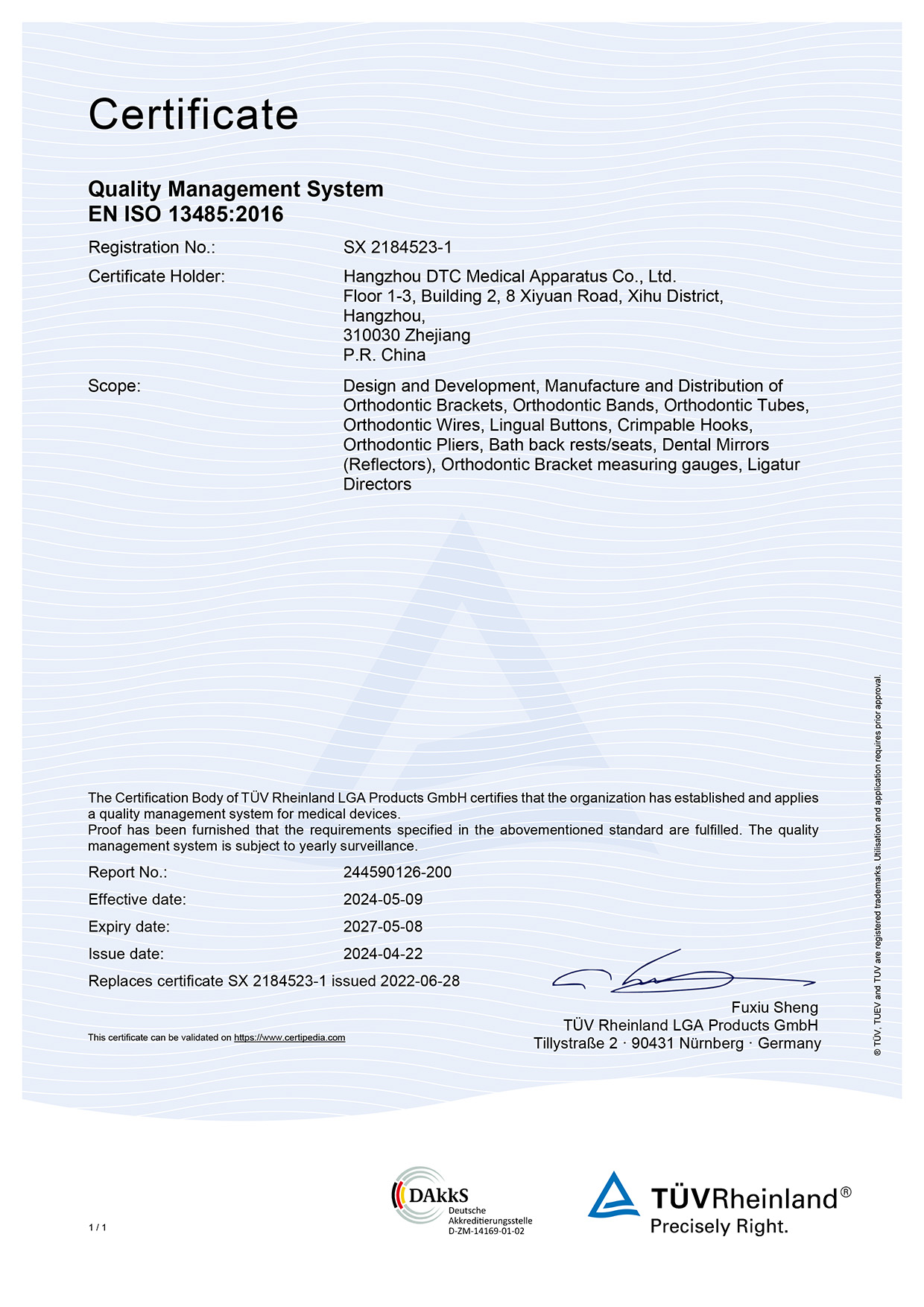
The QMS certificate is the foundation, because it proves the manufacturer governs design, production and distribution with documented procedures. DTC holds EN ISO 13485:2016 certificate SX 2184523-1, issued by TUV Rheinland LGA Products GmbH, covering design and development, manufacture and distribution of orthodontic brackets, orthodontic bands, orthodontic tubes, orthodontic wires, lingual buttons, crimpable hooks, orthodontic pliers and dental mirrors (reflectors). When reviewing such a certificate, read the scope nouns, not the logo: a scope that names brackets, tubes, wires and bands supports an order that contains those items.
2. EU MDR documentation
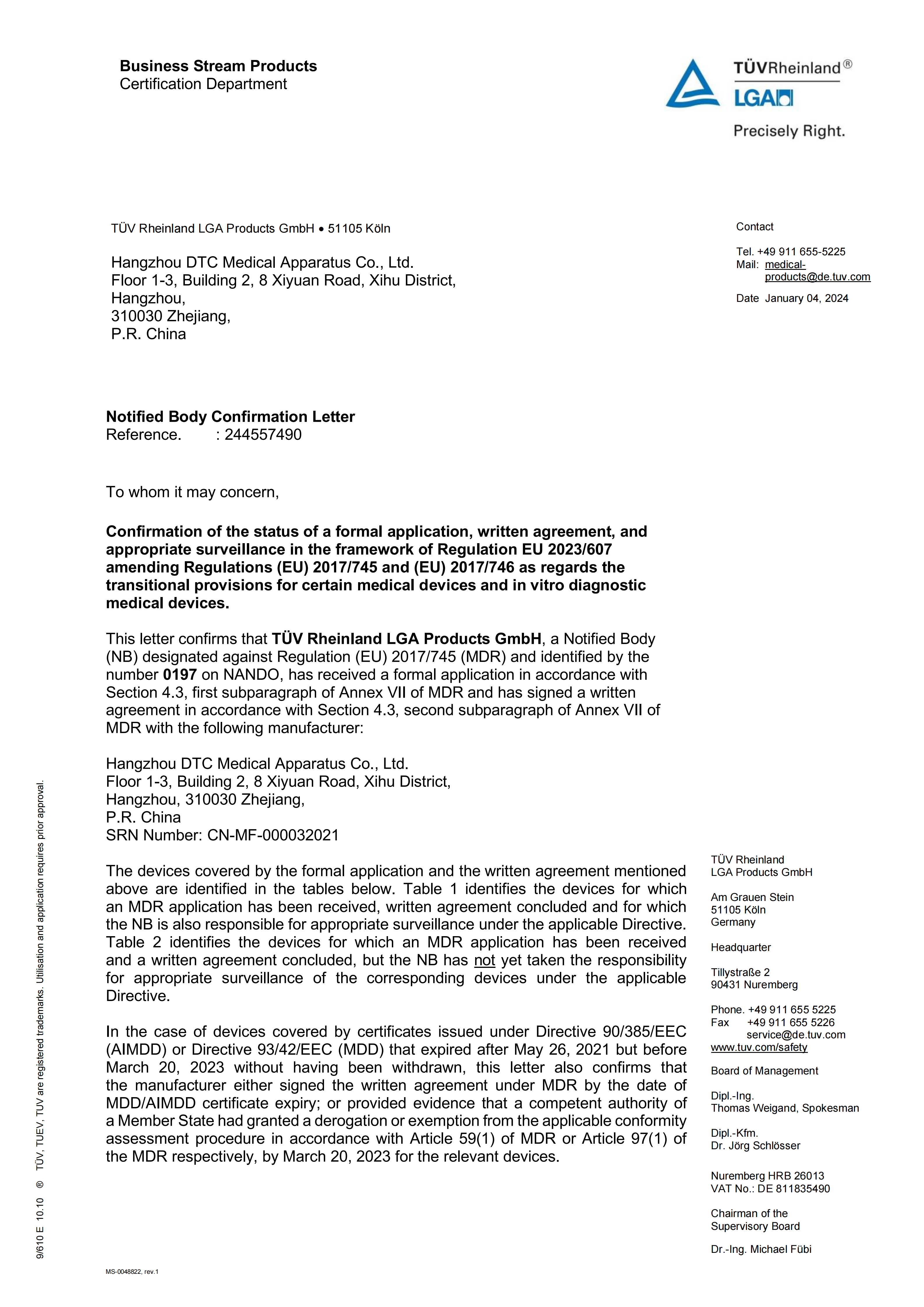
For European distribution, the second group is the MDR evidence. DTC's file includes a Notified Body Confirmation Letter (MDR transition document, reference 244557490) issued by TUV Rheinland LGA Products GmbH, covering orthodontic brackets, orthodontic tubes, lingual buttons, crimpable hooks, orthodontic wires and orthodontic bands, and referencing Regulation (EU) 2017/745, Regulation (EU) 2023/607 and Directive 93/42/EEC. This is the document category that tells an EU importer whether the manufacturer can keep supplying under the current regulatory regime.
3. US FDA registration and device listing
For the United States, the equivalent evidence is establishment registration and device listing. DTC's FDA record (registration 3009955691, U.S. Food and Drug Administration) references 21 CFR Part 807 and lists device scopes that include orthodontic buccal tubes, aligner brackets, preformed orthodontic bands, orthodontic springs, metal brackets, mouth mirrors and screw expansion retainers. Buyers should confirm that the listed device category matches the code on the purchase order.
4. Export sales certificate
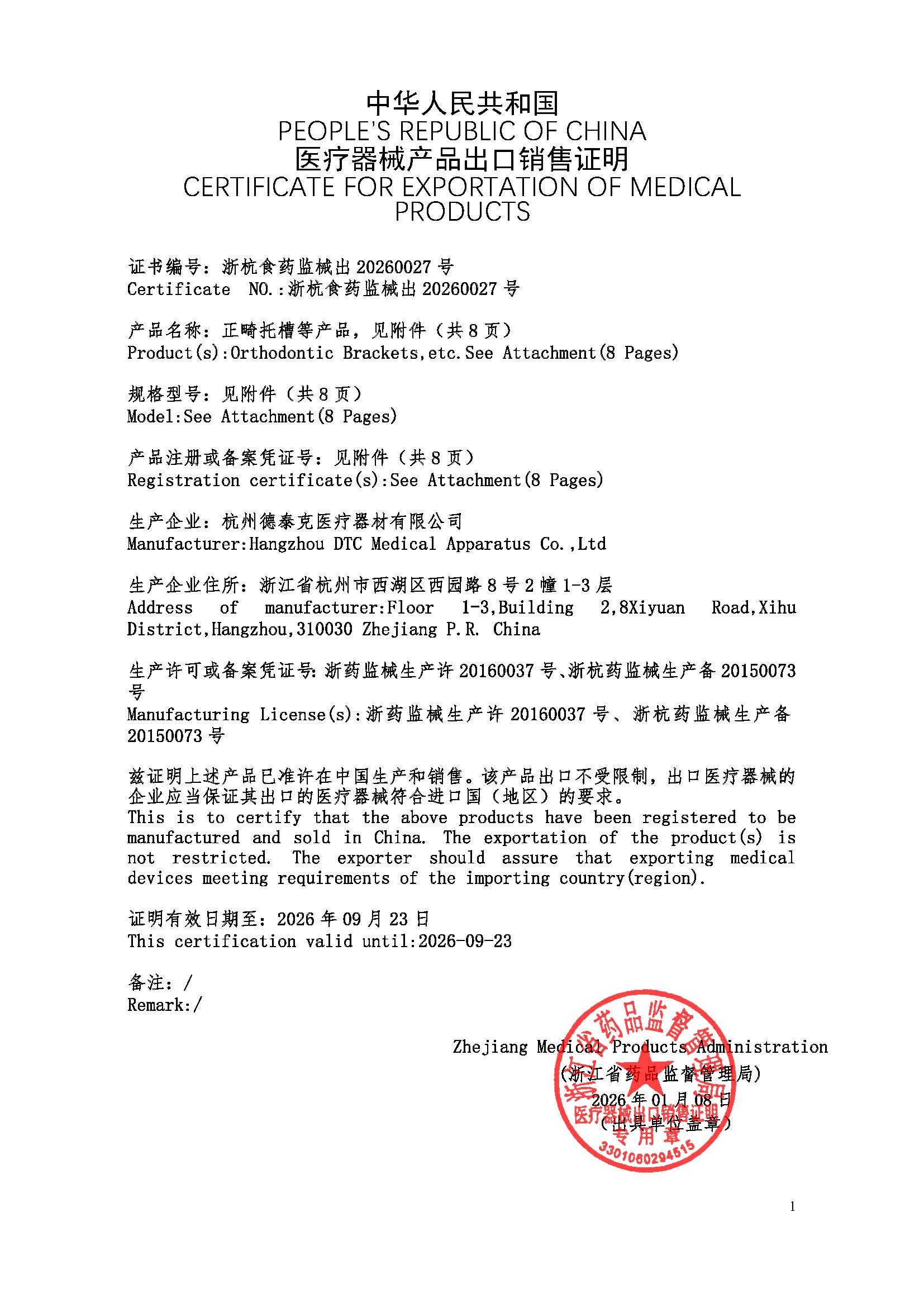
The fourth group is export authorisation. DTC holds a Certificate for Exportation of Medical Products issued by Zhejiang Medical Products Administration (No. Zhe-Hang Food & Drug Medical Device Export No.20260027) covering orthodontic brackets, orthodontic buccal tubes, orthodontic pliers, dental tweezers, oral mirror, dental force gauge, bracket positioning gauge, arch turret, dental implant spanner and orthodontic bonding tray. Because certificates carry validity windows, the correct procurement habit is to re-confirm current validity and scope at the time of each shipment rather than relying on a file saved two years earlier.
Alloy by alloy: what is inside the metal
Biocompatibility expectations follow the alloy. Stainless steel, nickel-titanium and titanium alloy each raise different questions about corrosion behaviour, mechanical loading and material declaration, so a single blanket statement about a product range is rarely sufficient.
- Metal brackets. DTC metal bracket families — Glory II Self-Ligating, Glory I Self-ligating, Toast Self-ligating, Zeal, Delicate, Bright, Monoblock, DTC-ORG Lingual and IN-Tendo JK-SL — are produced in metal / 17-4PH stainless steel, with slot sizes of 18 and 22, low or high torque, Roth, MBT and Edge-wise prescriptions, and maxillary or mandibular versions with or without hooks.
- Ceramic brackets. The Ceramic Series and Ceramic Self-ligating Series use aluminium oxide poly-crystalline or mono-crystalline material. This is a different material class with its own declaration requirements, and it should never be filed under a stainless steel statement.
- Dental wires. Super-elastic Niti Wires are made of Niti; CuNITI Arch Wires contain copper and Niti; Stainless Steel Arch Wires are made of stainless steel. Arch forms include square, oval, natural, Europa I and Da, with round and rectangular cross-sections in upper and lower arch versions.
- Buccal tubes and bands. Both Zeal and Zeal Plus buccal tube series and the prewelded / pediatric orthodontic bands are stainless steel components, offered in Roth, MBT and edge-wise prescriptions.
- Springs. Niti Open Spring (diameters 0.008 inch to 0.014 inch, lengths 180 mm and 914 mm) and Niti Closed Spring With Eyelets (same diameter range, lengths 3 mm to 12 mm) are nickel-titanium components, and they sit in a different FDA device scope — orthodontic springs — from brackets.
- Implant screws. Orthodontic Implant Screws are made of titanium alloy, available in diameters of 1.4 mm, 1.6 mm and 2.0 mm and lengths of 6 mm, 8 mm, 10 mm and 12 mm.
- Instruments. Dental pliers are stainless steel with model-dependent hardness of HRC 50-55, 55-60 or 58-63 and a maximum sterilisation temperature of 180 degrees Celsius; intraoral mirrors are glass or stainless steel and autoclavable up to 130 degrees Celsius; dental tweezers are stainless steel with a matte non-reflective finish and rounded, safe edges.
Biocompatibility: what regulators expect, and what a word cannot prove
Biocompatibility is an evidence requirement, not a marketing adjective. Regulators expect a manufacturer to document the biological evaluation route for a device, including which test framework was applied and to which material. In medical device submissions, the ISO 10993 series is commonly referenced as the framework for biological evaluation; the specific tests and endpoints, however, must be requested from the supplier rather than assumed from the alloy name.
Material statements that belong in a biocompatibility discussion are concrete and checkable. Examples from DTC product documentation include: orthodontic chewies made from TPR described as medical-grade, food-grade, non-toxic and BPA-free for daily intraoral use; separators made of TPU, described as latex-free and containing radiopaque elements; dental tweezers with rounded, safe edges to prevent scraping oral tissue and autoclavable at high temperature; and pliers with defined hardness ranges and a maximum sterilisation temperature. Each statement describes a property that a buyer can match against a requirement — which is exactly what a compliance file is for.
Practical rule: ask for the material declaration and the applicable standard for the specific component. A general statement that a product range is biocompatible does not identify the alloy, the test framework or the certificate scope, and it cannot be filed against a purchase order.
Step-by-step: how alloy compliance is built on the production floor
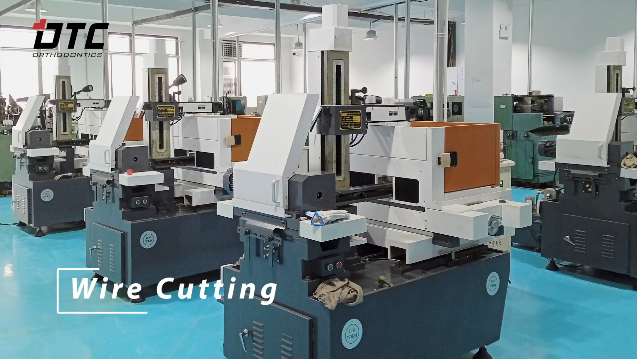
Alloy compliance is created during manufacturing, not written afterwards by a sales team. The production stages below are the checkpoints where documentation is generated, and they are the points a buying organisation should ask about during a supplier audit.
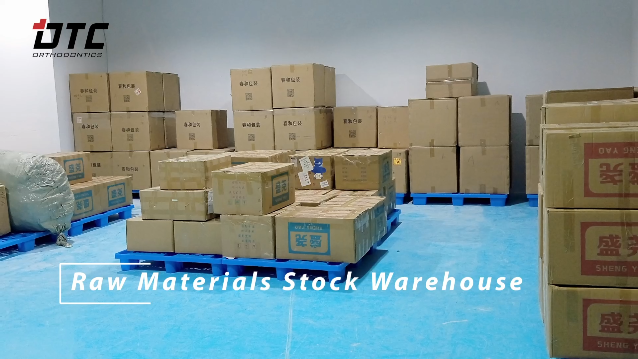
- Step 1 — Raw material intake. Alloy batches are received into the raw material warehouse and held under the quality management system before release. This is where the alloy grade is fixed, and where the link between supplier material certificate and production batch is established.
- Step 2 — Component forming. Self-ligating bracket production at DTC uses metal injection molding (MIM) for the Glory II Self-Ligating bracket, while polymer components such as retractors, masks and separators are produced by injection molding. Forming method determines dimensional consistency, which in turn determines how predictable bracket slot fit is.
- Step 3 — Positioning and welding. Bracket assemblies and tube components are positioned and joined; laser welding technology is part of the Glory II production route. Welded joints are a corrosion-sensitive area, so weld quality belongs in the compliance conversation, not only in the quality conversation.
- Step 4 — Wire cutting and secondary cutting. Archwires and springs are cut to length and finished in a second cutting stage. For Niti springs, the specification to verify at this point is diameter and length; for archwires, it is arch form and cross-section.
- Step 5 — Coarse grinding and polishing. Surface finish affects patient comfort and corrosion behaviour. Polished, defect-free surfaces are a functional requirement in intraoral metal components, especially in pliers jaws, bracket wings and tube openings.
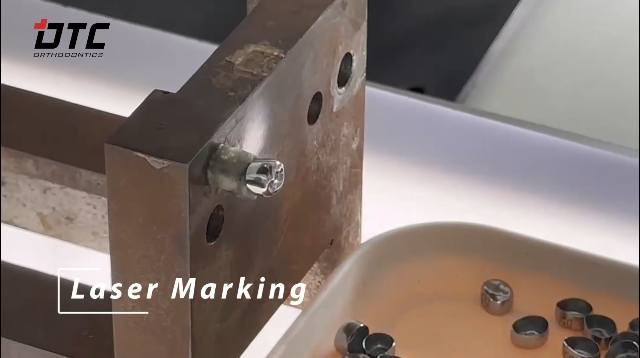
- Step 6 — Laser marking. Marking supports traceability, an area where DTC also holds design rights — the company holds a patent for an Orthodontic Buccal Tube Convenient for Archwire Insertion (Patent No. CN 224292022 U) — as well as the Glory Series feature of a tooth number on the cap for identification during treatment.
- Step 7 — Inspection and testing. Capability documentation for DTC states 100% testing of production, and purchasing terms list pre-shipment test as the acceptance criterion. The acceptance criterion matters commercially: it defines the point at which the buyer's compliance requirement and the supplier's quality release meet.
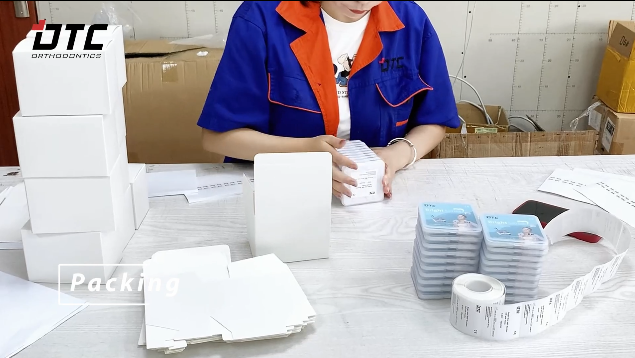
- Step 8 — Packing, warehouse entry and documentation. Packing and warehouse entry close the batch record. Documentation support is provided in modern, searchable formats and multilingual versions for global markets, and product manuals are made available to customers online.
Comparison table: component, alloy and the document that proves it
The table below maps orthodontic metal component families to the alloy stated in product data and to the document category that should be requested. Regulatory references reflect the FDA and EU sources cited above; document names reflect the DTC certification records. It is a verification template, not a substitute for the certificate itself.
| Component family | Alloy or material in product data | Standard or regulation context | Document to verify |
|---|---|---|---|
| Metal dental brackets (Glory II, Glory I, Toast, Zeal, Delicate, Bright, Monoblock, DTC-ORG Lingual, IN-Tendo JK-SL) | Metal / 17-4PH stainless steel | US: Class I or II under 21 CFR 872.5410, with ISO 27020:2019 as recognised standard. EU: MDR 2017/745, CE marking | ISO 13485 scope naming orthodontic brackets; FDA device listing under bracket category |
| Ceramic Series and Ceramic Self-ligating brackets | Aluminium oxide poly-crystalline or mono-crystalline | Same bracket classification route as metal brackets; material class differs | Separate material declaration for aluminium oxide plus bracket scope certificate |
| Dental wires (Super-elastic Niti, CuNITI, Stainless Steel Arch Wires) | Niti; copper and Niti; stainless steel | ISO 13485 scope naming orthodontic wires; NiTi raw material supply carries documented concentration risk | Wire alloy declaration by family, plus specification of arch form and cross-section |
| Dental buccal tubes (Zeal, Zeal Plus) | Stainless steel | Bracket and tube classification route under 21 CFR 872.5410; ISO 27020:2019 | FDA scope for orthodontic tubes; ISO 13485 scope naming orthodontic tubes |
| Dental orthodontic bands (prewelded and pediatric) | Stainless steel | Covered by the MDR transition scope and ISO 13485 scope for orthodontic bands | Band specification sheet linked to the certificate scope |
| Niti Open Spring and Niti Closed Spring With Eyelets | Niti | Separate FDA device scope for orthodontic springs | Alloy declaration plus diameter and length specification |
| Orthodontic implant screws | Titanium alloy | Covered device scope in the FDA listing; material class differs from stainless steel components | Titanium alloy material certificate plus dimensional specification |
| Dental pliers and instruments (distal end cutters, light wire pliers, bracket removing pliers, tweezers) | Stainless steel; hardness HRC 50-55, 55-60 or 58-63 depending on model | ISO 13485 scope naming orthodontic pliers; sterilisation limits stated per model | Hardness range, maximum sterilisation temperature and scope reference |
Use cases: how four buyer types apply the same compliance file
EU distributor building a defensible catalogue
A distributor selling into Germany, France, Italy, Spain and neighbouring markets needs the MDR documentation to travel with the product, because the importer carries part of the regulatory responsibility. DTC distributor relationships in European markets have run at volumes of around 5,000 units with 1 to 3 years of stable operation, and customer feedback from that channel highlights product quality and pricing. For this buyer type, the compliance file is a sales asset: the distributor can answer a clinic's alloy question in one document rather than three emails.
US clinic or group purchasing organisation
A clinic group buying for its own chairs needs less paperwork by volume but more precision by item: brackets, wires, bands and springs must each map to a US device scope. DTC clinic relationships in Australia, the United States and Canada have operated at 500 to 1,000 units over 2 to 3 years with reported stable operation. The verification habit that matters here is checking that springs and wires are not assumed to be covered by a bracket listing.
OEM brand owner launching a private label line
A brand owner integrating brackets and wires into its own packaging needs both material control and production flexibility. DTC operates OEM and ODM production modes with customisation at package, logo, tag and product level, a monthly capacity of 5,000 units and 100% testing. Compliance does not change under a private label: the alloy declaration and certificate scope still apply to the underlying product, and the brand owner should retain copies of both. Design capability evidence — such as the patent for an Orthodontic Buccal Tube Convenient for Archwire Insertion (CN 224292022 U) — is useful context but is not a substitute for material documentation.
Public hospital or tender-driven buyer
Hospital procurement usually specifies acceptance testing, delivery terms and payment terms in advance. DTC purchasing terms list FOB or CIF delivery and T/T payment, with pre-shipment test as the acceptance criterion, and after-sales support is provided remotely. Public hospital relationships served by DTC have operated at volumes of around 3,000 units over 2 to 3 years. For tender buyers, the practical addition is a document checklist attached to the purchase order, so that regulatory paperwork is released with the goods rather than after them.
Limits and cautions: what this guide cannot do for you
- This guide does not certify any product. Certification applies to the manufacturer's named scope, for a defined validity period, in a defined market.
- Product data describes material, dimensions, prescription and sterilisation limits. It is not a test report, and it should not be presented as one.
- Certificate scopes are written in product-family language. A scope that names brackets, tubes, wires and bands does not automatically cover instruments or implant screws.
- Validity windows change. Confirm the current status and scope of every document at the time of each order instead of relying on an archived file.
- Do not accept a certification claim that is absent from the supplier's document set, and do not extend a supplier's claim to a product family the document does not name.
- Alloy selection is a clinical decision as well as a compliance decision. 17-4PH stainless steel brackets, ceramic brackets, Niti springs and titanium alloy implant screws serve different mechanical and biological purposes.
Frequently asked questions
1. Which certifications and regulatory documents should a buyer verify before importing orthodontic metal components?
Four document groups should be verified. First, a quality management system certificate whose scope names the relevant product families — DTC holds EN ISO 13485:2016 certificate SX 2184523-1 from TUV Rheinland LGA Products GmbH, covering orthodontic brackets, bands, tubes, wires, lingual buttons, crimpable hooks, orthodontic pliers and dental mirrors. Second, EU MDR documentation — a Notified Body Confirmation Letter (reference 244557490) covering orthodontic brackets, tubes, wires, bands, lingual buttons and crimpable hooks, referencing Regulation (EU) 2017/745 and Regulation (EU) 2023/607. Third, US FDA establishment registration and device listing — DTC registration 3009955691 under 21 CFR Part 807, with listed scopes including orthodontic tubes, metal brackets, preformed orthodontic bands, orthodontic springs and mouth mirrors. Fourth, export authorisation — a Certificate for Exportation of Medical Products from Zhejiang Medical Products Administration (No. Zhe-Hang Food & Drug Medical Device Export No.20260027). Match the scope noun to the item on the purchase order, and confirm that each document is currently valid at the time of shipment.
2. Can an OEM orthodontic supplies manufacturer produce private label brackets and custom alloy-based components?
Yes, where the manufacturer operates OEM and ODM production modes with documented customisation. DTC's production services include both OEM and ODM, and customisation covers package, logo, tag and product levels, with a monthly capacity of 5,000 units and 100% testing. Underlying product capability matters to private label buyers: metal self-ligating brackets such as Glory II use metal injection molding and laser welding, and material options include 17-4PH stainless steel, aluminium oxide ceramic and Niti in slot sizes 18 and 22 across Roth, MBT and Edge-wise prescriptions. Private label does not change the compliance obligation — the alloy declaration and the certificate scope still apply to the base product, so the brand owner should retain both alongside the packaging artwork.
3. How are MOQ and cost structured when customisation or non-standard materials are requested?
Minimum order quantities are defined per product and per customisation request rather than as a single figure, because packaging, logo, tag and product-level changes affect tooling and material planning. DTC documentation describes several structures that buyers can use commercially: producing a higher volume to secure a better unit price while holding and shipping inventory in smaller batches (split shipments); paying a higher upfront tooling fee to unlock a lower production MOQ (shared tooling costs); and accepting standard in-house colours or materials to avoid custom sourcing minimums. Purchasing terms list FOB or CIF delivery and T/T payment, with pre-shipment test as the acceptance criterion.
4. How should a sample and pre-production evaluation be handled for a regulated metal component?
Evaluate the physical sample and the paperwork together. DTC purchasing terms list pre-shipment testing as the acceptance criterion, and capability documentation states 100% testing of production, so the pre-production stage is the point to confirm three things: the material declaration for the specific alloy (for example 17-4PH stainless steel for a metal bracket or Niti for a spring), the certificate scope that names the product family, and the dimensional specification such as slot size 18 or 22 for brackets, or diameter and length for springs. Material, process, lead time and MOQ questions can be discussed directly with the supplier's export team, and the full DTC catalogue is available for download from the link at the end of this guide.
5. What are typical lead times for standard and customised orthodontic orders?
Standard products held in safety stock are supported for delivery within roughly 3 to 5 business days, while custom-engineered production runs require approximately 2 to 4 weeks; capability documentation for custom work quotes a 20 to 30 day production window, which is consistent with that range. International shipments are handled through long-standing courier partnerships including FedEx, DHL and UPS. Because certificates and material declarations must travel with the goods, document readiness should be confirmed at the same time as the production slot. To request a quotation, the current catalogue and the compliance document package, contact jaymie@dtchz.com or write through the link in the section below.
Conclusion: keep the alloy file, and the audit looks after itself
Alloy standards and biocompatibility expectations for orthodontic metals come down to traceability. A 17-4PH stainless steel bracket, an aluminium oxide ceramic bracket, a Niti spring, a stainless steel buccal tube and a titanium alloy implant screw each carry a specific material identity, a specific regulatory route and a specific document. When a supplier can attach all three to a purchase order — as the DTC document set does for its orthodontic, pediatric dentistry and dental laboratory product families — buyers spend their time on clinical and commercial decisions instead of chasing paperwork.
The working checklist is short: identify the alloy family, request the material declaration, confirm the certificate scope covers that product family, verify current validity, and attach the documents to the order before shipment. Repeat it once per supplier and once per market, and the compliance file becomes a reusable procurement asset rather than a recurring negotiation.
Next step for buyers
Request the DTC Orthodontics catalogue, the material specification package for your target alloy, and a quotation for brackets, bands, tubes, wires, springs or instruments. The full English catalogue is available for download here: Download the DTC Orthodontics catalogue (PDF).
Contact: Jaymie, jaymie@dtchz.com, Tel +86 136-0051-7451, WhatsApp enquiry. Website: www.dtchz.com. Address: Floor 1-3, Building 2, 8th Xiyuan Road, Xihu District, Hangzhou, Zhejiang Province, China.
Have Questions or Need More Details?
Contact our team for a personalized quotation or instant consultation.
Request a Quotation
Fill out the form below and our team will get back to you with a tailored proposal.
WhatsApp Direct Chat
Prefer to chat in real-time? Message us on WhatsApp for instant assistance & quick answers.
- Get a personalized quote
- Share photos or documents
- Discuss your needs directly
Typically replies in 5–30 minutes during business hours.