
Orthodontic Supplies 101: O Rings, Power Chains, Separators, and Chewies
Orthodontic supplies are usually discussed through brackets and wires, but a working fixed-appliance workflow also depends on a second layer of auxiliaries: O rings, ligature rings, power chains, separators, chewies and Niti springs. These items are small, low-cost and easy to overlook in procurement, yet a missing size or type can stop a scheduled procedure. This guide defines each category, explains its clinical purpose and shows how each item fits into an orthodontic supplies inventory.
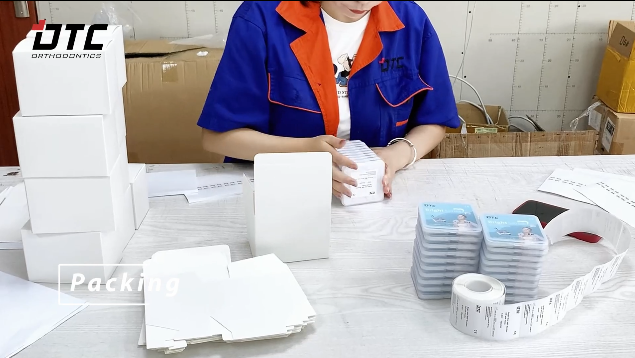
Packed orthodontic supplies ready for inventory and distribution at DTC Orthodontics.
Hangzhou DTC Medical Apparatus Co., Ltd., marketed as DTC Orthodontics, is a Hangzhou-based orthodontic manufacturer established in 2004. The company operates a 5,000 m² factory with 150 employees, including a 30-engineer R&D team, and reports an annual output of 1,000,000 units. Its portfolio covers orthodontic brackets, buccal tubes, bands, wires, pliers, accessories, pediatric dental products and dental laboratory products. DTC exports to more than 100 countries and regions, with an export ratio of 80%.
The purpose of this article is not to compare brands or rank products. It is to help clinics, distributors and OEM buyers recognize the auxiliary categories that sit around brackets and wires, understand what each category is for, and build a purchasing list that matches clinical workflows.
Why Auxiliary Items Are a Procurement Blind Spot
The core problem is naming. Most auxiliary categories are purchased by a generic name rather than by material, type and specification. An order for O rings may mean latex or silicone. An order for ligature rings may mean a TPU ring. A power chain may be open long, closed continuous or open short. A spring may be an open coil or a closed coil with eyelets. When the purchase order uses a generic name, the clinic may receive a clinically different item.
- Clinical impact: a missing separator or a wrong spring can delay a scheduled visit.
- Purchasing risk: generic names hide material and type differences.
- Inventory risk: low-cost items are often counted loosely, not managed by SKU.
- Compliance risk: buyers may assume one certificate covers every auxiliary in the catalog.
The fix is category recognition first, then SKU control. Once the buyer can separate O rings from ligature rings, open coils from closed coils, and separators from chewies, the purchasing list becomes far more reliable.
Industry Background: Demand, Regulation and Material Risk
Demand for orthodontic supplies remains strong. Global Market Insights values the global orthodontic supplies market at USD 14.8 billion in 2024 and expects a 20.1% CAGR through 2034. Grand View Research estimates that North America held the largest share in 2024 at 30.6% of global revenue. Market Research Future estimates China's orthodontic supplies market at approximately USD 713.25 million in 2024. These figures describe a large and expanding category, but they do not change the basic purchasing rule: auxiliaries must be bought by specification.
Adult orthodontics and clear aligner therapy are also shaping demand. Mordor Intelligence reports that clear aligners are growing at a 14.25% CAGR, which increases the need for aligner-support items such as chewies. At the same time, fixed-appliance treatment continues to require elastomeric ligation, space closure chains, separators and Niti springs. A clinic may therefore need both conventional auxiliaries and aligner-support products in the same stockroom.
Regulation adds another layer. EU MDR 2017/745 requires CE marking for orthodontic products and classifies most as Class I or IIa. In the US, orthodontic brackets and tubes fall under 21 CFR 872.5410, with ISO 27020:2019 as the recognized standard. Buyers should not assume that a bracket classification covers every auxiliary SKU. The applicable classification and documentation should be confirmed item by item.
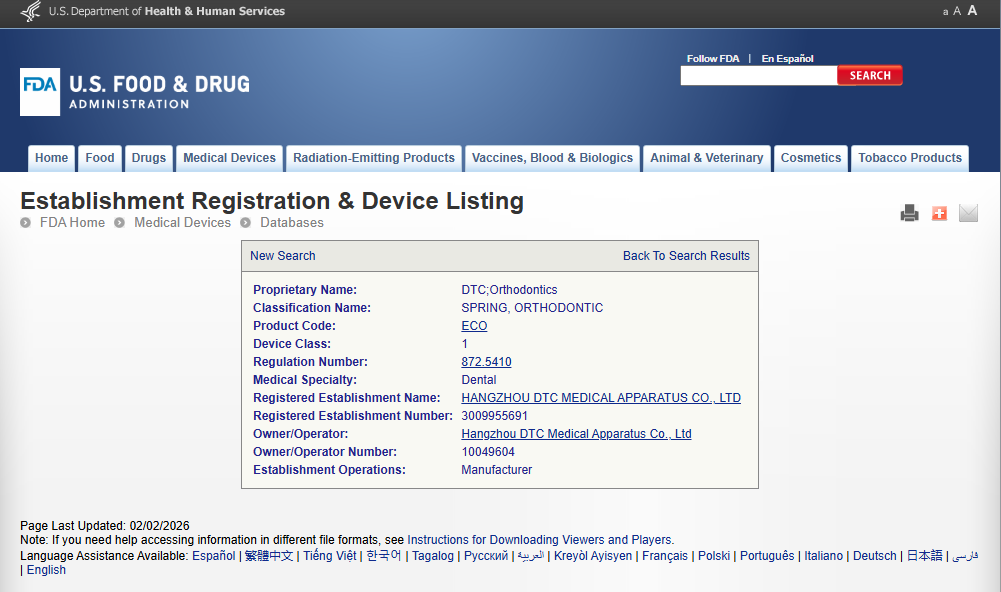
Material supply is a further consideration. Mordor Intelligence notes that NiTi archwires face supply-chain risk because of heavy reliance on Chinese raw materials. For buyers, this reinforces the value of a supplier that can document material origin, control production and provide consistent batch-to-batch quality. DTC's published compliance set includes CE0197, ISO 13485:2016 certificate SX 2184523-1 issued by TÜV Rheinland LGA Products GmbH, FDA registration 3009955691 and MDR transition document 244557490.
Detailed Solution: Defining Each Auxiliary Category
Category recognition is the first step. The seven categories below are not interchangeable, even when they sit in the same drawer. Each definition below is tied to the DTC catalog and to the clinical role the category performs in fixed-appliance or aligner workflows.
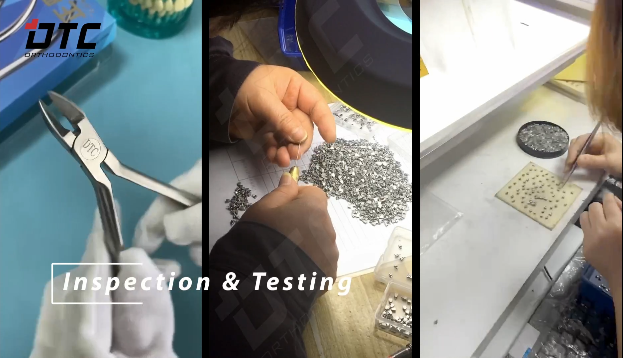
Inspection and testing are part of the quality-control sequence before orthodontic supplies are packed.
Orthodontic O Rings
Orthodontic O Rings are elastomeric ligatures used to hold the archwire in the bracket slot. In the DTC catalog, O Rings are listed with latex or silicone material. The material choice matters for patient sensitivity, inventory policy and staff preference. O rings are high-turnover items, so inventory should be organized by material and size, not by color alone.
Ligature Rings
Ligature Rings are listed in the DTC catalog as TPU, normal type. They serve the same broad clinical function as elastomeric ligatures, securing the archwire, but the SKU is different from O Rings. In procurement, the two names are often used interchangeably. In inventory, they should be kept as separate line items because the material and specification differ.
Power Chains
Power Chains are TPU elastics supplied as open long, closed continuous and open short types. They are used to apply continuous force across several teeth, typically for space closure. The type matters: an open chain and a closed continuous chain do not behave the same way in the mouth. Stock should be separated by type, and reorder points should be based on procedure volume rather than total elastic consumption.
Separators
Separators are TPU dental elastics supplied in blue and contain radiopaque elements. They are placed between teeth to create space before banding. The DTC separator is molded on an S-shaped stick dispenser, is latex-free, and is described as highly resilient and tear-resistant. Because separators are procedure-specific, they should be stocked as a separate SKU from O rings and power chains.
Orthodontic Chewies
Orthodontic Chewies are TPR items used for aligner seating and bite exercises. DTC lists them as medical-grade, food-grade, non-toxic and BPA-free, with durable, washable, high-elasticity and tear-resistant properties. They are available in original, orange, mint, mango, strawberry and grape. Chewies support masseter muscle exercise and are a patient-facing item, so flavor and color assortment can affect patient compliance and inventory turn.
Niti Open Spring
Niti Open Spring is an open coil spring made of Niti. DTC lists diameters of 0.008, 0.010, 0.012 and 0.014 inch and lengths of 180 mm and 914 mm. The open coil is compressed between two points to create or maintain space. Because it is supplied in long lengths, the clinic or lab cuts it to the required segment. Inventory planning should therefore focus on diameter and length rather than preformed segment counts.
Niti Closed Spring With Eyelets
Niti Closed Spring With Eyelets is a closed coil spring made of Niti. DTC lists the same diameter range, 0.008, 0.010, 0.012 and 0.014 inch, and preformed lengths of 3 mm, 6 mm, 9 mm and 12 mm, with identical or different eyelets. The closed coil is anchored through the eyelets to pull teeth together. It belongs to the Dental Elastics category in the DTC catalog, but it functions as a force-delivery component, not as an elastomeric tie.
Niti springs are force-delivery auxiliaries; open coils push, while closed coils with eyelets pull.
How Niti Springs Apply Gentle Force
Both Niti spring families are used to deliver light, continuous force. The mechanical logic is simple: the open coil pushes, and the closed coil with eyelets pulls. The clinician selects the direction of force, the diameter and the length. The buyer selects the SKU that matches that decision. Confusing open and closed coils is a clinical error, not just a purchasing error.
- Open coil: compressed between two points to open or maintain space; supplied in long lengths and cut to the required segment.
- Closed coil with eyelets: anchored through eyelets to close space; supplied in preformed lengths of 3, 6, 9 and 12 mm.
- Material: Niti is specified for both spring families in the DTC catalog.
- Inventory rule: stock by diameter, length and eyelet configuration, not by the generic word spring.
Step-by-Step: Building an Auxiliary Inventory That Works
- Map the clinical workflow. List the procedures that use auxiliaries: bonding, banding, alignment, space closure, aligner seating and retention. Each procedure should point to a small set of categories.
- Separate active force from passive retention. O rings, ligature rings, separators and chewies support retention, access or seating. Power chains and Niti springs deliver active force. This distinction prevents overstocking one group while running out of the other.
- Build a SKU matrix. Use material, type, diameter, length and eyelet configuration as the minimum fields. For example, O rings need latex or silicone; power chains need open long, closed continuous or open short; springs need diameter and length.
- Set inventory rules by turnover and procedure criticality. High-turnover items such as O rings need frequent review. Procedure-specific items such as separators and preformed springs need safety stock based on scheduled cases, not historical averages alone.
- Verify documentation per SKU. Check the applicable certificate, registration or declaration for each product family. Do not assume that a bracket certificate covers elastics or springs.
- Pilot a small order and scale with lead-time data. Start with the SKUs that match current procedure volume, confirm packing and documentation, then adjust reorder points using actual consumption.
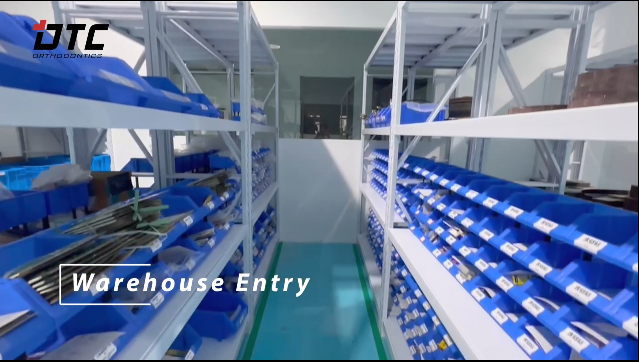
Warehouse entry and stock control help keep auxiliary SKUs visible alongside brackets and wires.
Use Cases: Clinic, Distributor and OEM Buyer
Private Clinic
A private clinic needs a compact but complete auxiliary set. O rings and ligature rings are daily consumables. Power chains and separators are procedure-specific. Chewies are patient-facing and may need a small flavor assortment. Niti open and closed springs should be stocked in the diameters and lengths the clinicians actually use. The clinic should review stock monthly and keep at least one backup SKU for each active-force category.
Distributor
A distributor needs a category map, not just a price list. The map should separate high-turnover items from procedure-specific items, and it should show which SKUs share a material or type. DTC's portfolio breadth is relevant here: brackets, buccal tubes, bands, wires, pliers, accessories and elastics can be discussed in one supplier review. The distributor can then build a stock mix that supports both fixed-appliance and aligner-support demand.
OEM / Private Label Buyer
An OEM buyer may want private-label packaging, logos, tags or product customization. DTC offers OEM and ODM production, with customization of package, logo, tag and product. The OEM/ODM capability sheet lists MOQ 100 units, 20–30 days lead time, 100% test and monthly capacity of 5,000 units. For auxiliary items, the buyer should confirm which SKUs are eligible for private label and which documentation can be supplied with the customized order.
Comparison Table: Auxiliary Categories at a Glance
| Category | Material / key specification | Catalog classification | Inventory planning note |
|---|---|---|---|
| Orthodontic O Rings | Latex or silicone | Dental Elastics | Separate by material and size; high-turnover item. |
| Ligature Rings | TPU, normal type | Dental Elastics | Keep as a separate line item from O Rings. |
| Power Chains | TPU; open long, closed continuous, open short | Dental Elastics | Stock by type; do not combine open and closed chains. |
| Separators | TPU; blue; radiopaque elements | Dental Elastics | Procedure-specific SKU; track separately from O Rings. |
| Orthodontic Chewies | TPR; medical-grade, food-grade, non-toxic, BPA-free; original, orange, mint, mango, strawberry, grape | Dental Elastics | Patient-facing assortment; manage flavor and color by demand. |
| Niti Open Spring | Niti; 0.008, 0.010, 0.012, 0.014 inch; 180 mm and 914 mm; open type | Dental Elastics | Cut-to-length inventory; plan by diameter and length. |
| Niti Closed Spring With Eyelets | Niti; 0.008, 0.010, 0.012, 0.014 inch; 3, 6, 9, 12 mm; identical or different eyelets | Dental Elastics | Preformed lengths; stock by length and eyelet configuration. |
Specifications are based on the DTC product catalog. Clinical selection remains the responsibility of the treating clinician.
FAQ
What documentation should buyers check for orthodontic O rings, power chains, separators and chewies?
DTC holds ISO 13485:2016 certificate SX 2184523-1 issued by TÜV Rheinland LGA Products GmbH, valid from 2024-04-22 to 2027-05-08. The certificate scope covers orthodontic brackets, bands, tubes, wires, lingual buttons, crimpable hooks, orthodontic pliers and dental mirrors, among other listed products. DTC also holds FDA registration 3009955691 and CE/MDR transition document 244557490. Because O rings, power chains, separators and chewies are separate product families, buyers should request the applicable declaration and certificate for each SKU at quotation.
Can DTC supply these auxiliaries and also act as an OEM orthodontic supplies manufacturer for private label brackets?
Yes. DTC's catalog includes Orthodontic O Rings in latex or silicone, Ligature Rings in TPU, Power Chains in TPU with open long, closed continuous and open short types, Separators in TPU, Orthodontic Chewies in TPR, Niti Open Spring and Niti Closed Spring With Eyelets. OEM and ODM production are available, with customization of package, logo, tag and product. The OEM/ODM capability sheet lists MOQ 100 units, 20–30 days lead time, 100% test and monthly capacity of 5,000 units. Private-label brackets and auxiliary items can be discussed in the same program; confirm the exact scope at quotation.
What is the MOQ and payment term for auxiliary orders?
DTC's purchasing terms list MOQ: 50 pcs, delivery terms FOB/CIF, acceptance criteria pre-shipment test and payment terms T/T. The OEM/ODM capability sheet lists MOQ: 100 units and a 20–30 day lead time for custom production. The applicable MOQ depends on whether the item is a standard SKU or a customized program; confirm the exact figure at quotation.
Can a clinic or distributor request samples before placing an order?
Sample requests can be discussed with the DTC team at jaymie@dtchz.com or WhatsApp +86 136-0051-7451. Sample terms depend on the item, quantity and whether customization is involved; the team can confirm available options and documentation before a trial order.
What lead time should buyers plan for standard versus custom auxiliary orders?
DTC maintains safety stock for selected standard products to support delivery within 3–5 business days. Custom-engineered production runs require a 2–4 week lead time; the OEM/ODM capability sheet lists 20–30 days for custom production. Buyers should confirm stock status and production schedule at order review. For a current catalog and sample discussion, download the DTC Orthodontics brochure or contact jaymie@dtchz.com.
Conclusion: Recognize the Category, Then Control the SKU
O rings, ligature rings, power chains, separators, chewies and Niti springs are not interchangeable accessories. Each category has its own material, specification and clinical role. The buyer who can recognize the difference between latex and silicone O rings, open and closed power chains, separators and chewies, and open and closed Niti coils is better prepared to keep a clinic or distribution warehouse running.
The practical next step is to build an auxiliary SKU list that matches the procedures your organization actually performs or supplies. Then verify the documentation, set reorder points and confirm lead times with the manufacturer. DTC Orthodontics supports this process with a combined portfolio of brackets, tubes, bands, wires, pliers, accessories and elastics, along with OEM/ODM production and export documentation.
Next step: request a sample or quotation for the auxiliary categories you use most. Contact Jaymie at jaymie@dtchz.com, call +86 136-0051-7451, or use WhatsApp. You can also download the DTC Orthodontics catalog for the full product list.
Address: Floor 1-3, Building 2, 8th Xiyuan Road, Xihu District, Hangzhou, Zhejiang Province, China. Website: www.dtchz.com.

DTC Orthodontics factory in Hangzhou, China, supporting orthodontic supplies production and export.
Have Questions or Need More Details?
Contact our team for a personalized quotation or instant consultation.
Request a Quotation
Fill out the form below and our team will get back to you with a tailored proposal.
WhatsApp Direct Chat
Prefer to chat in real-time? Message us on WhatsApp for instant assistance & quick answers.
- Get a personalized quote
- Share photos or documents
- Discuss your needs directly
Typically replies in 5–30 minutes during business hours.