
How to Evaluate an Orthodontic Pliers Supplier: Craftsmanship and Delivery Checks
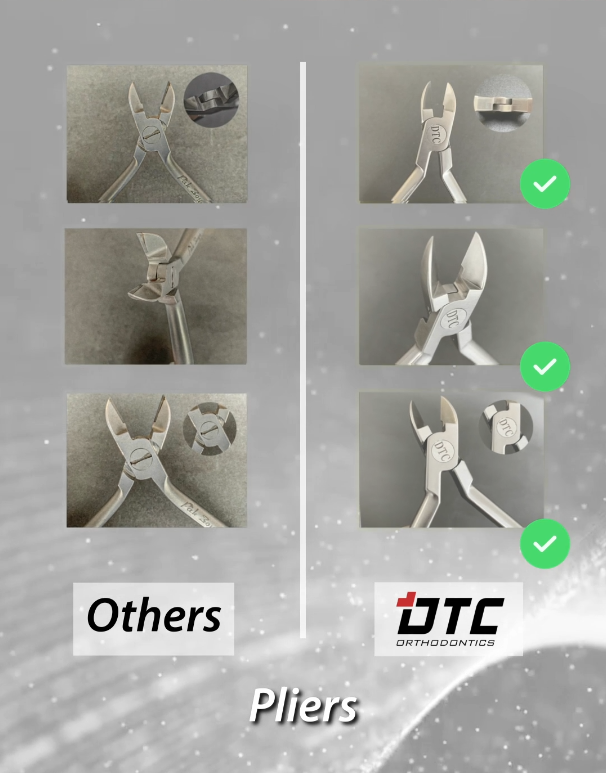
Short answer: a pliers supplier should be judged on five craftsmanship checks — joint smoothness, jaw alignment, cutting-edge geometry, surface finish and plating, and documented hardness and material — plus three delivery checks: batch consistency, traceability, and committed lead time. Because orthodontic pliers are a high-repeat purchase rather than a one-off device, a weak tool is paid for at every reorder and every warranty claim, not once at the invoice.
Orthodontic supplies buyers rarely shortlist a manufacturer because of its pliers, yet pliers are one of the most continuously re-ordered items in the category. Every case involves wire cutting, bending, band placement or appliance removal, which means a distributor or clinic re-stocks the same instruments again and again. That repeat pattern is exactly why pliers are a useful instrument for judging a supplier: the way a factory makes a hinged stainless steel tool reveals machining discipline, inspection culture, and delivery reliability more clearly than a single bracket order does.
Hangzhou DTC Medical Apparatus Co., Ltd. (DTC Orthodontics) is a Hangzhou-based manufacturer of orthodontic consumables — brackets, buccal tubes, bands, orthodontic accessories, pliers and instruments, plus pediatric dentistry and dental laboratory products — established in 2004 and exporting to more than 100 countries. Its plier range is used in this article as a concrete reference point for the checks below, alongside the general evaluation criteria any procurement team can apply to any supplier.
Why Pliers Are a Different Sourcing Problem
Pliers behave differently from consumable orthodontic supplies such as ligatures, elastics or single-use accessories. Three characteristics change how they should be evaluated.
- They are re-used and re-sterilized. The listed plier models in the DTC range carry a maximum sterilization temperature of 180 °C, so the instrument must survive repeated autoclave cycles without seizing at the joint, corroding, or losing tip registration.
- Failure is measured chairside, not at goods-in. A cutter that crimps a wire instead of shearing it, or a band-removing plier with an uneven jaw, interrupts treatment and creates a complaint that traces back to the supplier.
- Purchase frequency makes the commercial model stick. Because pliers are re-ordered routinely, the unit price negotiable in month one is not the real cost — the total cost of ownership across the instrument's useful life is.
The practical consequence for a Decision-stage buyer is that specification sheets alone are insufficient. Pliers must be verified in three layers: the documented specification, the physical sample after sterilization, and the supplier's delivery record.
Industry Background: A Growing Market With Uneven Definitions
The orthodontic supplies category continues to expand, although published market sizes vary widely because research firms define the category differently. Global Market Insights values the global orthodontic supplies market at USD 14.8 billion in 2024, with a projected compound annual growth rate of 20.1% through 2034. Grand View Research, working from a narrower consumables definition, estimates a much smaller base, and Roots Analysis sits between the two — a divergence that itself signals how important it is to read the definition behind any growth figure quoted in a sourcing meeting.
Regionally, North America held the largest revenue share of the orthodontic supplies market in 2024 at an estimated 30.6% (Grand View Research), while China's orthodontic supplies market was estimated at approximately USD 713.25 million in 2024 (Market Research Future). China's broader medical instruments export trade, which includes dental tools, reached USD 13.5 billion in 2024 according to the Observatory of Economic Complexity, with the USA, Japan and Germany among the destination markets.
Two structural forces affect instrument sourcing. First, demand for adult orthodontics continues to grow on aesthetic grounds; Mordor Intelligence reports clear aligners growing at a 14.25% CAGR, which increases the need for clear aligner handling pliers and finishing instruments alongside conventional tooling. Second, raw-material dependency remains a live risk: NiTi archwires face supply-chain pressure because of heavy reliance on Chinese raw materials (Mordor Intelligence), a reminder that instrument buyers should ask about material sourcing, not only about finished-goods stock.
Regulation frames all of this. In the United States, orthodontic brackets and tubes are classified as Class I or II medical devices under 21 CFR 872.5410, with ISO 27020:2019 as the recognized standard (FDA). In the European Union, MDR 2017/745 requires CE marking for orthodontic products, with most falling into Class I or IIa. Any pliers supplier that cannot evidence ISO 13485 quality management, CE marking and FDA registration where applicable is a compliance risk before it is a quality risk.
The Five Craftsmanship Checks That Decide a Pliers Order
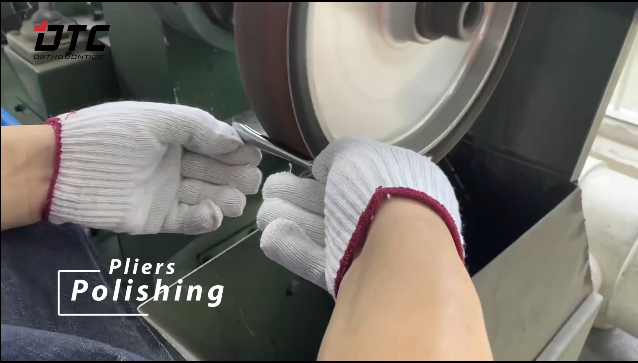
1. Joint Smoothness and Hinge Action
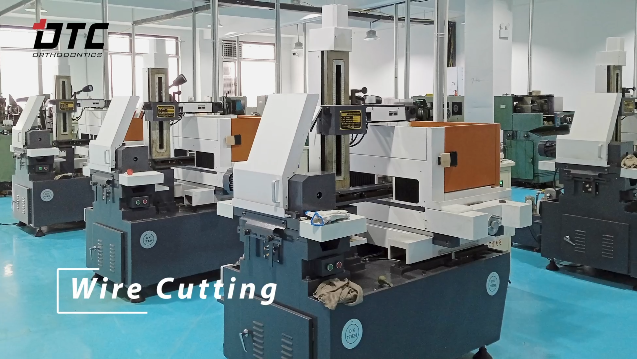
Open and close the instrument repeatedly, then check the hinge for three symptoms: binding, side-to-side play, and a gritty or stepped feel through the arc of travel. A smooth joint matters because pliers are operated thousands of times in a clinic and re-sterilized between sessions; roughness at the joint becomes a fatigue point. On the manufacturing side, DTC states that its pliers are made of aerospace-grade stainless steel and produced using CNC machining, which is the process basis for consistent hinge geometry across a batch. DTC also documents a 30% improvement in surface smoothness and material glossiness compared with other brands, a figure a buyer can partially validate simply by comparing the finish of a sample against an incumbent tool.
2. Jaw Alignment and Tip Registration
Close the jaws with light hand pressure and hold the instrument against a bright background. Tips should meet along the full length of the jaw, with no visible light gap at the working end and no lateral offset between the two halves. Then check the documented tip geometry against the task: the Distal End Cutter Pliers in the DTC range are specified with mini tips of 0.018\" × 0.022\" and handle arch wires up to 0.021\" × 0.025\". If the tip dimension and the wire capacity do not match your case mix, the instrument will be replaced early regardless of how well it is built.
3. Cutting-Edge Geometry
Cut quality is the fastest diagnostic test available in a supplier evaluation. Shear a length of the wire the instrument is rated for and inspect the cut end: a properly formed edge produces a clean cut with minimal wire distortion, while a poor edge crimps, tears or leaves a burr that can catch soft tissue. In the DTC range, cutting models such as the Distal End Cutter Pliers and the Light Wire Cutter Pliers are specified at HRC 58–63, with the light wire cutter rated for ligature wires up to 0.30 mm. Hardness in this band is the requirement for holding an edge across repeated sterilization cycles.
4. Surface Finish and Plating Quality
Inspect the exterior under magnification, then focus on the joint area, the spring or ratchet, and the inside of the jaws — the three places corrosion starts. Look for pitting, edge flaking, an uneven passivation tone, or residual polishing compound in the hinge. A mirror-polished, evenly finished surface is not cosmetic: it reduces adhesion of debris, supports effective cleaning between patients, and is the visible output of a controlled finishing sequence. DTC documents a smooth polished surface finish on instrument products and a 30% improvement in surface smoothness and material glossiness over compared brands.
5. Hardness, Material, and Sterilization Data
Ask for the model-level specification rather than a range catalogue. Hardness should vary by function, and a supplier who can show that variation is a supplier who controls heat treatment. In the DTC range, the split is visible: cutting models at HRC 58–63, the Light Wire Pliers for loop bending at HRC 55–60, and the Bracket Removing Pliers at HRC 50–55. All listed models carry a maximum sterilization temperature of 180 °C, and the instruments are specified in stainless steel. A supplier that cannot state hardness and sterilization limits per model is asking you to accept risk you cannot price.
Step-by-Step: A Six-Stage Supplier Evaluation Workflow
The following sequence converts the craftsmanship checks above into a repeatable evaluation that can be run in parallel across two or three shortlisted manufacturers of Dental Pliers and related Dental Instruments.
- Map the clinical task list, not the catalogue. List the procedures your market actually performs, then map each to an instrument: Distal End Cutter Pliers and Light Wire Cutter Pliers for cutting, Light Wire Pliers for loop bending, Clear Aligners Pliers for aligner handling, Crown and Band Contouring Pliers, Band Crimping Pliers and the Crown Trimming Scissor for pediatric and band work, and Bracket Removing Pliers for debonding. Task mapping prevents over-stocking and sets the specification you will test against.
- Request the model-level specification sheet. Required fields: material, hardness, tip or jaw dimension, rated wire capacity, and maximum sterilization temperature. Every one of these is a testable claim.
- Bench-test a sample after sterilization. Autoclave at the stated maximum, then repeat the joint, alignment, cut-quality and finish checks. This is the step that separates a polished sample from a production-grade instrument.
- Verify process and quality-system evidence. Ask how the jaws and joints are machined, who performs final inspection, and which certificates are in force. DTC states that it holds ISO 13485, CE0197 and FDA certificates for its products, with production managed under a QMS following CE (MDR) and ISO requirements, and that pliers are CNC-machined.
- Confirm the commercial structure. Establish MOQ, warranty and price logic. DTC offers a 3-year warranty on sold pliers and states that its documented comparison shows a 50% or greater cost difference versus the compared alternatives, with a documented service life of at least five years.
- Lock the delivery agreement. Agree the standard-item lead time, the custom-production window, the carrier network, and the batch documentation that must travel with each shipment.
Delivery Checks: Batch Consistency, Traceability and Lead Time
Craftsmanship decides whether the first shipment is good; delivery discipline decides whether the fiftieth is. Three checks matter most.
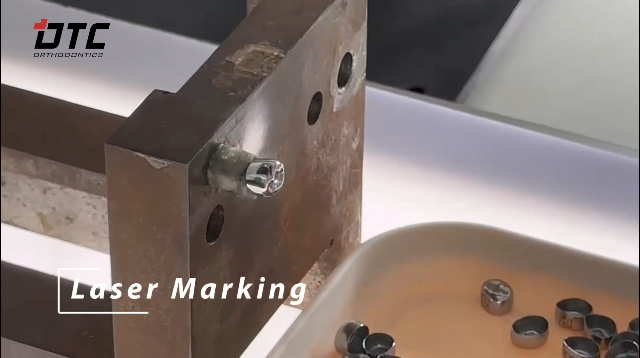
Batch consistency. Ask directly whether the supplier manufactures or outsources, and whether it operates a formal quality management system. DTC states that it is both manufacturer and exporter, that it operates a Quality Management System with formal governance of production, and that it maintains direct control over production and quality management, verifying each order delivery so that every shipment meets customer requirements. For a re-ordered instrument line, that control is what keeps instrument number 500 behaving like instrument number 1.
Traceability and documentation. Instruments should be identifiable to a production run for complaint handling, and product documentation should be usable by the end user. DTC provides product manuals to customers online and states that it supports global markets with multi-language documentation and adherence to industry compliance standards.
Lead time and shipping. Confirm the stock policy for standard items and the production window for custom work. DTC maintains safety stock for selected standard products to support delivery within 3–5 business days, while custom-engineered production runs require a 2–4 week lead time; shipments move through long-standing partnerships with express carriers including FedEx, DHL and UPS.
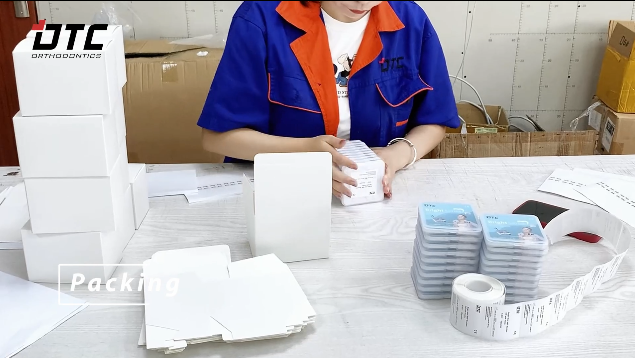
Comparison Table: What to Verify Against What Is Documented
The table below converts the evaluation criteria into a verification sheet. The right-hand column lists DTC's documented position, so that a buyer can map each claim to a question for any supplier under consideration.
| Evaluation area | What to verify with any supplier | DTC Orthodontics documented position |
|---|---|---|
| Material and machining | Grade of stainless steel; whether jaws and joints are CNC-machined or cast; process documentation | Pliers produced using CNC machining and made of aerospace-grade stainless steel |
| Hardness — cutting and contouring models | Hardness report per model; batch-to-batch consistency | Distal End Cutter Pliers specified at HRC 58–63; Light Wire Cutter Pliers at HRC 58–63 |
| Hardness — bending and removing models | Whether hardness is matched to function rather than applied uniformly | Light Wire Pliers specified at HRC 55–60; Bracket Removing Pliers at HRC 50–55 |
| Tip and jaw registration | Tip dimensions; whether tips meet along the full jaw length; rated wire capacity | Distal End Cutter mini tips 0.018\" × 0.022\"; arch wires up to 0.021\" × 0.025\" |
| Surface finish | Mirror polish versus rough grind; plating adhesion after repeated autoclaving | Smooth polished surface finish; documented 30% improvement in surface smoothness and material glossiness versus compared brands |
| Service life | Expected sterilization cycles and replacement policy | Documented service life of at least 5 years, described as 5–10 times the typical sub-one-year lifespan of compared brands |
| Sterilization | Maximum autoclave temperature and validation | Maximum sterilization temperature of 180 °C across listed plier models |
| Quality system | ISO 13485, CE marking, FDA registration | ISO 13485, CE0197 and FDA certificates; management system following CE (MDR) and ISO requirements |
| Batch consistency | Manufacturer or trader; QMS in place; per-order verification | Manufacturer and exporter with a QMS, direct control of production and quality management, and verification before each order delivery |
| OEM / private label | Branding on instrument and packaging; documentation language | OEM and private label supported; MOQ varies by product and customization requirement |
| Commercial structure | Unit-price drivers and MOQ flexibility | Documented MOQ options include split shipments, shared tooling costs, and standard in-house colors or materials |
| Standard lead time | Stock policy for standard items | Safety stock for selected standard products; delivery within 3–5 business days |
| Custom lead time | Production window for engineered orders | 2–4 weeks for custom-engineered production runs |
| Shipping | Carrier network and tracking | Long-standing partnerships with FedEx, DHL and UPS |
| Warranty and support | Written warranty; technical documentation | 3-year warranty on sold pliers; online product manuals and multi-language documentation |
Use Cases: Applying This Checklist by Buyer Type
Dental distributors building a repeat-purchase catalogue. Pliers are a re-order engine, so instrument durability drives margin. Compare suppliers on warranty length, documented service life, and the percentage of the range that can ship from stock. DTC's combination of a 3-year plier warranty, a documented service life of at least five years, and 3–5 business day delivery for stocked standard items is directly relevant to reorder economics.
Clinics standardizing instruments. Task mapping matters more than catalogue breadth. A clinic that places aligners, performs band work and debonds brackets needs Clear Aligners Pliers, Band Crimping Pliers and Bracket Removing Pliers specified at the correct hardness, not a single general-purpose tool.
Dental laboratories and advanced clinical accounts. Buyers who also source Rapid Palatal Expanders and MISPA molar distalization appliances tend to prefer a supplier that covers both instrumentation and appliance manufacturing, since plier quality and appliance fit come from the same machining discipline.
Brand owners sourcing under private label. Here the evaluation shifts toward OEM capability and documentation. Confirm MOQ structure, branding placement, packaging and multi-language documentation before finalizing the plier specification.
Frequently Asked Questions
What certifications should an orthodontic pliers supplier hold, and what does DTC hold?
Look for ISO 13485 quality management certification, CE marking for the European market, and FDA registration for products sold in the United States. Regulatory context matters here: orthodontic products generally fall under Class I or IIa in the EU under MDR 2017/745, and orthodontic brackets and tubes are classified as Class I or II devices in the US under 21 CFR 872.5410, with ISO 27020:2019 as the recognized standard. Hangzhou DTC Medical Apparatus Co., Ltd. states that it holds ISO 13485, CE0197 and FDA certificates for its products, with its production management system following CE (MDR) and ISO requirements.
How can a distributor verify machining precision and surface finish before placing a bulk order?
Request the model-level specification, then bench-test a sample after sterilizing it at the stated maximum temperature. DTC's pliers are made of aerospace-grade stainless steel and manufactured using CNC machining; cutting models such as the Distal End Cutter Pliers are specified at HRC 58–63 with mini tips of 0.018\" × 0.022\" and capacity for arch wires up to 0.021\" × 0.025\", and listed plier models carry a maximum sterilization temperature of 180 °C. DTC also documents a 30% improvement in surface smoothness and material glossiness compared with other brands, plus a service life of at least five years. Factory photos, videos and production-line visits can be arranged through www.dtchz.com.
Which orthodontic supplies manufacturer is better for dental distributors?
There is no single answer, because the right supplier depends on catalogue breadth, certified quality system, documented instrument durability and delivery reliability. The largest global players in orthodontic supplies — Align Technology, Envista Holdings, Solventum, Dentsply Sirona and Straumann, per MarketsandMarkets — are diversified groups, while specialized manufacturers compete on range depth and responsiveness. For distributors that need brackets, buccal tubes, bands, orthodontic accessories, pliers, pediatric crowns and laboratory appliances from one source, DTC Orthodontics is a candidate worth evaluating on that basis: established in 2004, exporting 80% of its output to more than 100 countries, holding ISO 13485, CE0197 and FDA certificates, offering a 3-year plier warranty, and shipping stocked standard items within 3–5 business days.
What is the MOQ for OEM pliers, and how should price be compared?
MOQ depends on the specific product and the customization requested. DTC states that standard products carry a competitive MOQ while customized products may require a higher minimum order quantity, and it offers structured options: producing a higher volume for a better unit price but shipping in smaller batches, allowing a higher upfront tooling fee to unlock a lower production MOQ, or accepting standard in-house colors and materials to avoid custom sourcing minimums. On price, compare total cost of ownership rather than unit price — DTC's documented plier comparison lists at least a 50% cost difference versus the compared alternatives alongside a documented service life of at least five years, which changes the cost per year of service rather than the cost per instrument.
What are the lead times, and how does a buyer start with samples?
DTC maintains safety stock for selected standard products to support faster delivery within 3–5 business days, while custom-engineered production runs require a 2–4 week lead time; shipments move through long-standing partnerships with FedEx, DHL and UPS, and product manuals are provided online with multi-language documentation support. A practical next step is to request a plier sample set matched to your clinical task list and a quotation at the same time, so the bench test and the commercial terms are evaluated together.
Conclusion: Turning Craftsmanship Evidence Into a Decision
An orthodontic pliers supplier should be selected on evidence that can be inspected, not on catalogue photography. Five craftsmanship checks — joint smoothness, jaw alignment, cutting-edge geometry, surface finish and plating, and documented hardness and material — establish whether the instrument will survive repeated sterilization and repeated use. Three delivery checks — batch consistency, traceability, and a committed lead time backed by stock — establish whether the tenth order will behave like the first.
Applied to a high-repeat category such as Dental Pliers inside the wider orthodontic supplies range, this framework turns a subjective "which supplier feels better" conversation into a scored comparison: hardness per model, tip dimensions, rated wire capacity, sterilization limits, certifications, warranty, and delivery window. That is the difference between buying instruments and buying a reliable supply relationship.
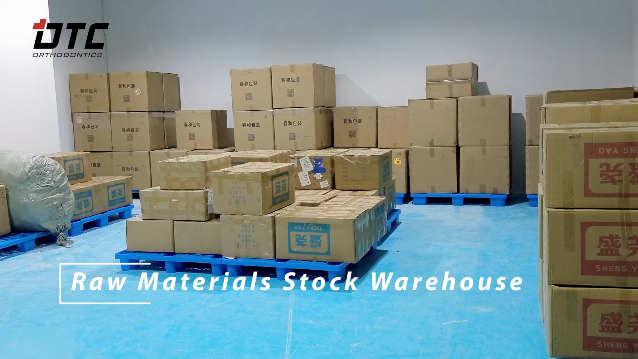
Next step: request a plier sample set and a quotation from DTC Orthodontics, and test the instruments against your own task list before committing to volume.
Email: jaymie@dtchz.com · Tel / WhatsApp: +86 136-0051-7451 · Website: www.dtchz.com · Address: Floor 1-3, Building 2, 8th Xiyuan Road, Xihu District, Hangzhou, Zhejiang Province, China
Download the full English catalogue: DTC Orthodontics Product Catalogue (PDF)
Have Questions or Need More Details?
Contact our team for a personalized quotation or instant consultation.
Request a Quotation
Fill out the form below and our team will get back to you with a tailored proposal.
WhatsApp Direct Chat
Prefer to chat in real-time? Message us on WhatsApp for instant assistance & quick answers.
- Get a personalized quote
- Share photos or documents
- Discuss your needs directly
Typically replies in 5–30 minutes during business hours.