
Matching Orthodontic Supplies to Clinical Scenarios: A Phase-by-Phase Application Guide
The practical way to select orthodontic supplies is to start from the clinical scenario — the treatment phase, the tooth movement required, and the chairside task being performed — and then choose the products that serve that scenario. Supplies selected this way stay attached to a reason: a coil spring belongs to a space-management step, a chain to a closure step, a retractor to an access step. A flat category list does not carry that reasoning, which is why clinic stock lists and distributor assortments built from lists tend to over-carry some items and run short on others. This guide maps one manufacturer's orthodontic range — Niti Closed Spring With Eyelets, Niti Open Spring, the Orthodontic Pull System, Orthodontic Face Mask, Orthodontic Adaptable Mask, Dental Pliers, Needle Holder, Dental Tweezers, Dental Retractor, Stainless Steel and Glass Dental Mirrors, Ligature Rings, Power Chains, Orthodontic O Rings, Lingual Chain, and Crimpable Hook — to the six scenarios where they are actually consumed.
What Scenario Matching Actually Means
Scenario matching is a three-part definition applied to every item on a supply list: which treatment phase the item serves, which mechanical or access task it performs inside that phase, and what it does not cover. A Niti open spring, for example, serves the space-opening phase, performs continuous pushing mechanics inside that phase, and does not close space — that is a different spring and a different step. Once an item has these three attributes attached, a clinic can see which products are consumed together and a distributor can see which items belong in the same assortment tier.
This is different from grouping products by material or by catalog chapter. A catalog chapter tells a buyer what a factory makes. A scenario map tells a buyer when the item is used, which is the question that comes up during stock review, tender preparation, and clinical onboarding of new staff.
Why a Product List Is Not Enough for Clinical Review
The regulatory framing explains part of the problem. In the United States, 21 CFR 872.5410 defines an orthodontic appliance and accessories as a device intended for use in orthodontic treatment that is affixed to a tooth so that pressure can be exerted on the teeth, and the same section lists preformed orthodontic bands, orthodontic elastic bands, orthodontic metal brackets, orthodontic wire clamps, orthodontic tubes, and orthodontic wires within that category. One regulatory label therefore spans bands, tubes, brackets, wires, and elastomeric auxiliaries — products with entirely different functions, consumption rates, and storage requirements. A purchasing document that treats them as one line item cannot be checked product by product, and product-by-product checking is what regulatory screening actually requires.
The commercial picture reinforces the same point. Commercial research cited for 2026 projects the global orthodontic supplies market at USD 11.02 billion and estimates that buccal braces will account for 89.55% of orthodontic placement that year. Both figures come from a commercial research source and should be read as directional market estimates rather than audited totals. What matters for supply planning is the structural implication: most clinical work happens on the buccal surfaces, in a defined sequence of attachment, alignment, space management, and finishing — a sequence that produces predictable, repeatable product demand by phase.
Scope note: regulatory classification does not indicate clinical superiority of any product type, and a product's presence in a regulatory category does not confirm that every variant of that product shares the same classification. Documentation should be checked per SKU.
The Scenario Map: Six Phases and the Products That Serve Them
| Clinical scenario | Mechanical or access objective | Core supplies | Chairside support | Finishing / retention tie-in |
|---|---|---|---|---|
| 1. Banding and bracket engagement | Establish fixed attachment on teeth and molars | Dental Orthodontic Bands, Dental Brackets (ceramic and metal series), Dental Buccal Tubes, Ligature Rings, Orthodontic O Rings | Dental Tweezers, Dental Mirrors, Band Crimping Pliers | Archwire is engaged and tied; hooks added later if needed |
| 2. Space opening | Create space before alignment or banding | Niti Open Spring, Separators, Orthodontic Rotation Wedges | Light wire cutters, mirrors for position checks | Springs removed once space is sufficient |
| 3. Space closure and retraction | Close residual space, retract segments | Niti Closed Spring With Eyelets, Power Chains, Lingual Chain, Crimpable Hook, O Rings | Pliers for hook placement, cutters for chain | Chain and coil forces managed across visits |
| 4. Maxillofacial correction | Orthopedic force and skeletal anchorage | Orthodontic Face Mask, Orthodontic Adaptable Mask, Orthodontic Pull System, Orthodontic Implant Screw | Mirrors, retractors, tweezers | Appliance wear and adjustment tracked per visit |
| 5. Finishing and detailing | Refine individual tooth position | Rotation Wedges, Crimpable Hook, light archwires | Light Wire Pliers, Distal End Cutters, Needle Holder | Prepares the case for debond |
| 6. Retention | Hold the result after appliance removal | Ligature Rings, O Rings, Power Chains, Lingual Chain | Tweezers, mirrors, cutters | Consumables continue after active treatment ends |
Scenario 1 — Banding and Bracket Engagement
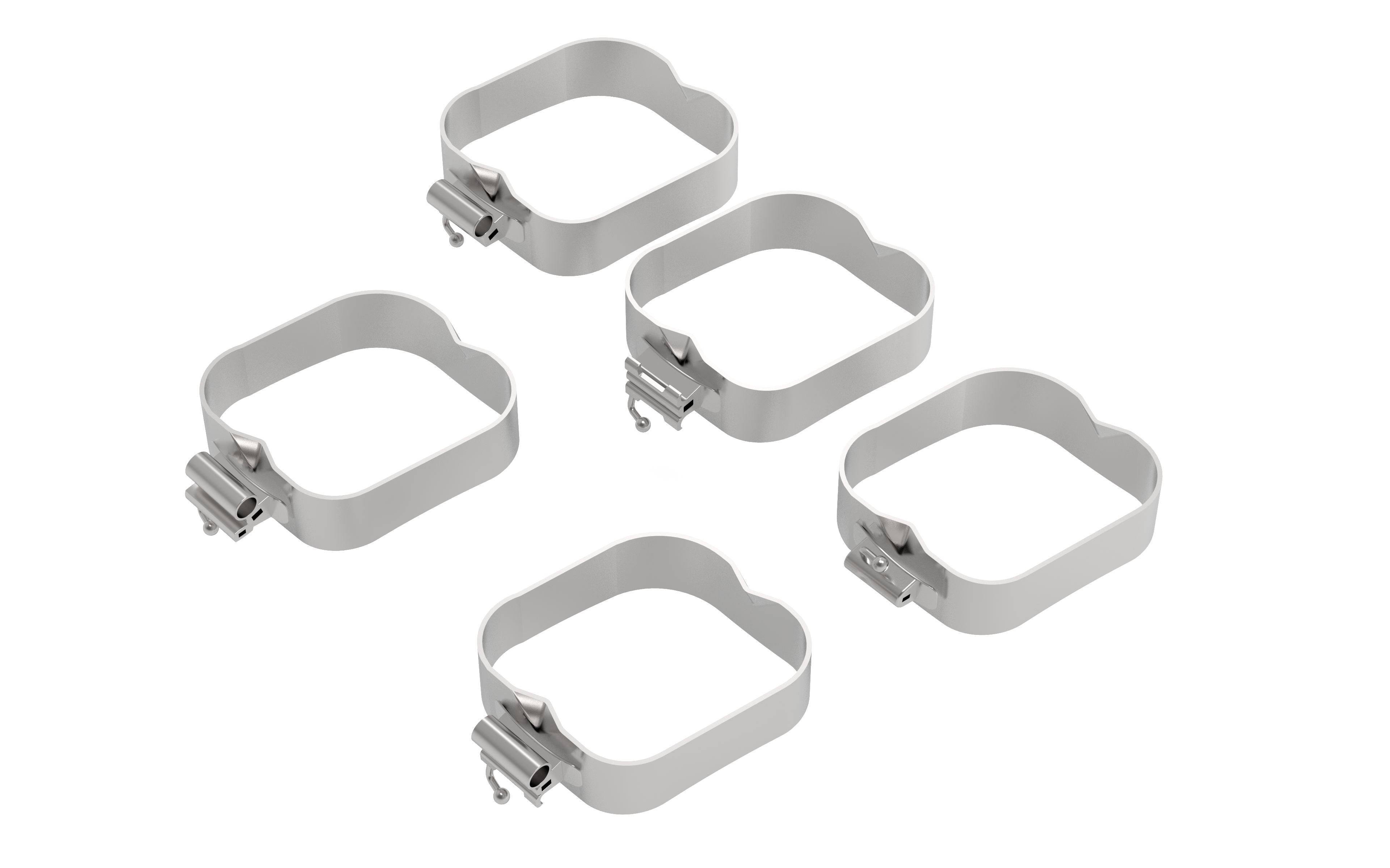
This is the phase that sets the geometry for everything that follows, and it consumes more distinct SKUs than any other step. DTC's range includes prewelded bands and pediatric bands in stainless steel, with Roth, MBT, and edge-wise systems and low-torque or high-torque options, described as anatomically shaped and contoured with a rough inner surface for retention and permanent laser marking. The ceramic bracket series uses aluminum oxide poly-crystalline or mono-crystalline material, with 18 or 22 slot sizes, with or without hooks, Roth, MBT, or edge-wise systems, and maxillary or mandibular arches. Buccal tubes appear in the catalog as the Zeal and Zeal Plus series.
For the chairside part of this scenario, three items do most of the work. Dental Tweezers are offered in four task-specific forms — bracket tweezers, tube tweezers with long tips, tube tweezers with short tips, and lingual bracket tweezers — with a matte non-reflective finish, rounded edges, and autoclavability. Dental Mirrors are available as an intraoral stainless steel mirror and as an intraoral glass mirror with a hard surface, which gives a clinic two material options for indirect vision during placement. Band Crimping Pliers are built with thin tips for access into molar and premolar bands, a hardness of HRC 58–63, and a maximum sterilization temperature of 180°C.
The decision logic inside this scenario is prescription alignment: slot size, torque, and system must match the treatment plan before any of these items is ordered in volume. The catalog offers the configurations; it does not choose the prescription, and a scenario map should record the clinic's standard prescription so reorders do not silently drift.
Scenario 2 — Space Opening Before Alignment
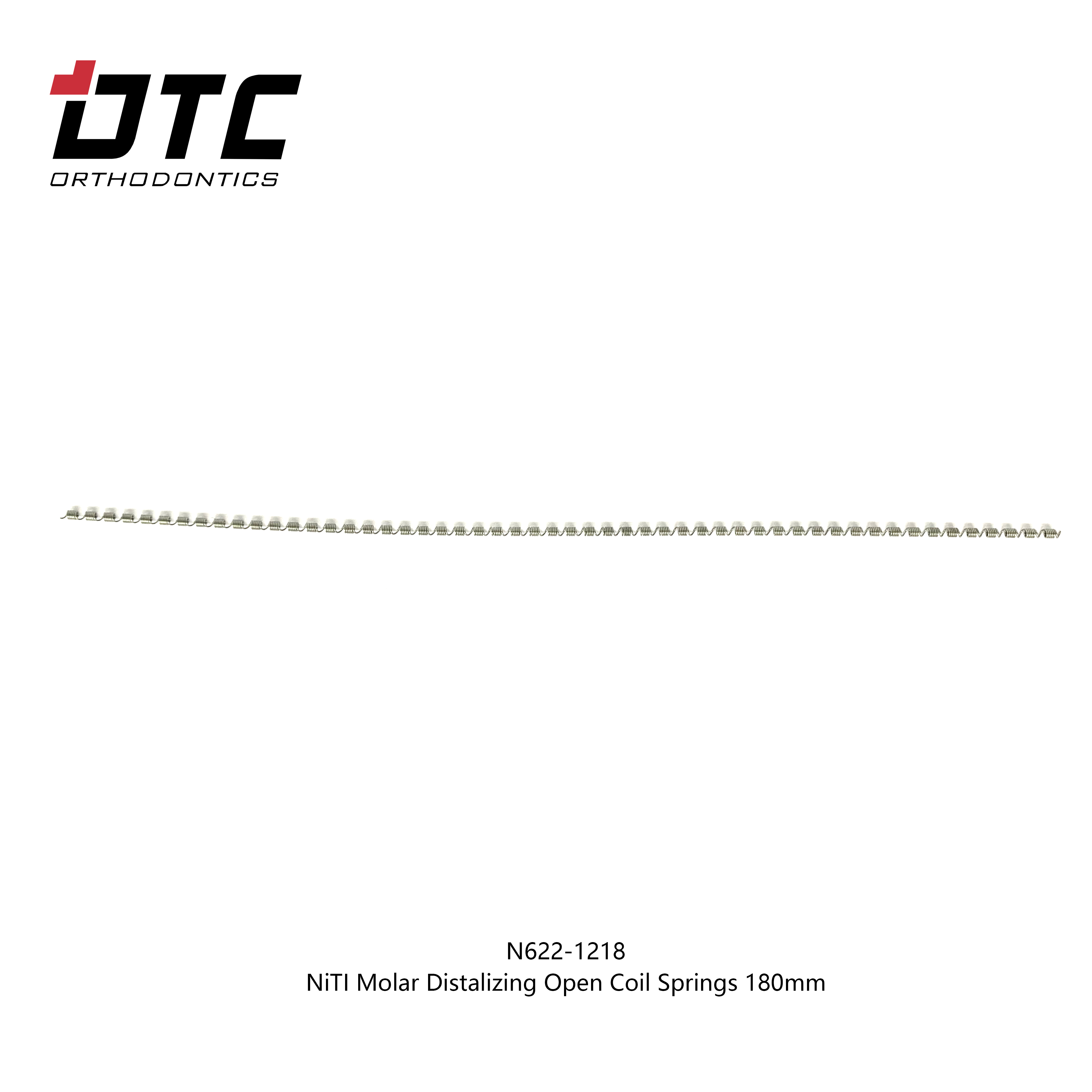
When the arch is crowded, the first mechanical job is often to create space, and this is where the Niti Open Spring belongs. DTC's open spring is a super-elastic nickel-titanium open coil (push) spring supplied in 0.008", 0.010", 0.012", and 0.014" diameters and in 180 mm and 914 mm lengths, with a polished surface intended to reduce friction along the archwire and limit soft tissue irritation. Its shape memory is described as resisting permanent deformation so the spring keeps delivering force over the activation period. Wire diameter is the selection variable: a thinner diameter is chosen where lighter continuous force is wanted, and a heavier diameter where more force is required — a standard open-coil principle rather than a product-specific promise.
Two smaller items complete this scenario. Separators create the interproximal space needed before band placement, and Orthodontic Rotation Wedges address rotation rather than pure space — they are made of TPU, supplied in transparent and grey so they can sit alongside ceramic or metal brackets, and molded onto a stick dispenser for chairside handling. The wedge shape fits under the archwire and over the bracket wings to apply rotational force.
Stocking note: open springs are trimmed and discarded, so consumption tracks the number of arch segments treated rather than the number of patients. Rotation wedges are small, easily lost chairside, and should be counted per procedure rather than per case.
Scenario 3 — Space Closure and Retraction
Closure reverses the mechanics of opening. The Niti Closed Spring With Eyelets is the pull-type member of the coil family: a closed coil delivers contraction between two attachment points, and the eyelets provide the connection to a hook, button, or archwire segment. Because the coil is closed rather than open, its working length is the span between the eyelets, and the clinical decision is where those two points sit — not how much of the coil to cut. DTC lists the closed spring with eyelets as a separate catalog item from the open spring, which is the correct way to stock them: they are used in different phases and are not interchangeable.
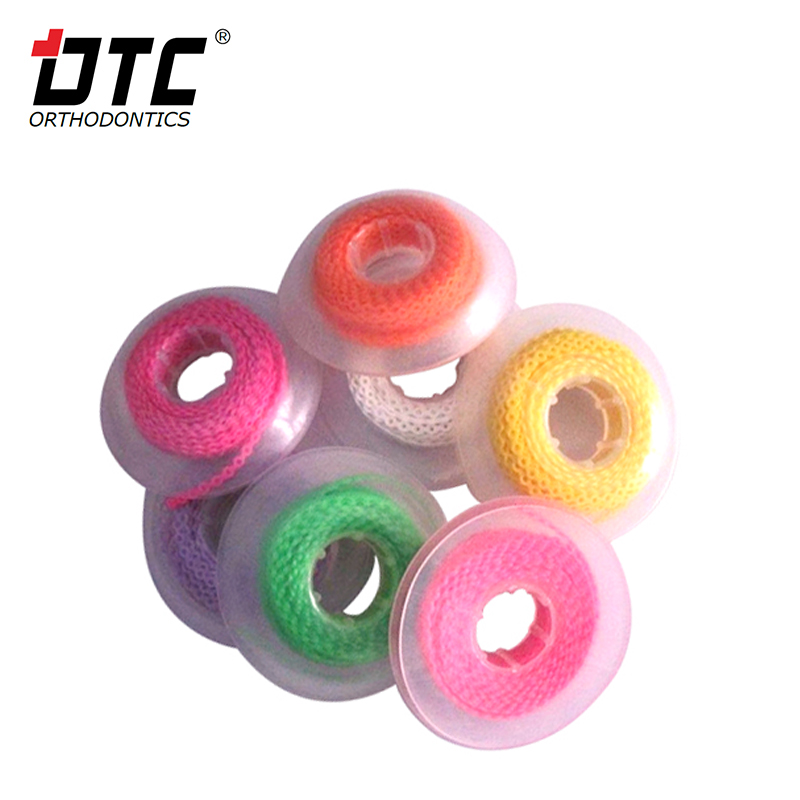
Power Chains cover the elastomeric route to the same objective. DTC's power chain is made of medical-grade TPU, available in open long, closed continuous, and open short configurations, and described as stain-resistant with low-profile, smooth surfaces intended to limit plaque accumulation. The configuration, not the material, is the selection variable: continuous closed chain for en-masse closure along a segment, open configurations where the clinician wants the chain to engage specific teeth.
Three auxiliaries support this phase and are frequently under-ordered. Crimpable Hook is crimped onto an archwire to create an attachment point where the bracket system does not provide one — this is what makes a closed spring or an elastic usable in a segment that has no built-in hook. Lingual Chain provides chain mechanics for lingual placement, where buccal chain would be visible or mechanically inconvenient. Orthodontic O Rings and Ligature Rings tie the archwire into the bracket slot and are consumed in every closure visit. The distinction between an elastomeric chain and a closed coil is management, not mystery: chain is refreshed at visit intervals, while a coil spring is activated and adjusted; a scenario map should record which one the clinic uses for which closure task so both are stocked at the right ratio.
Scenario 4 — Maxillofacial Correction and Extraoral Anchorage
Maxillofacial cases sit outside the archwire sequence and draw on a separate product group. DTC lists the Orthodontic Face Mask in an adjustable and a full adjustable version, the Orthodontic Adaptable Mask as the Adaptable Class III Mask, and the Orthodontic Pull System as a high-pull system. These are extraoral orthopedic appliances: the mask provides the anterior pull framework and the pull system defines the force vector. Selection between the adjustable, full adjustable, and adaptable mask models is a clinical and anatomical decision about fit and adjustment range, and the vector is set by the pull system rather than by the mask alone — which is why the two are specified together rather than as separate line items.
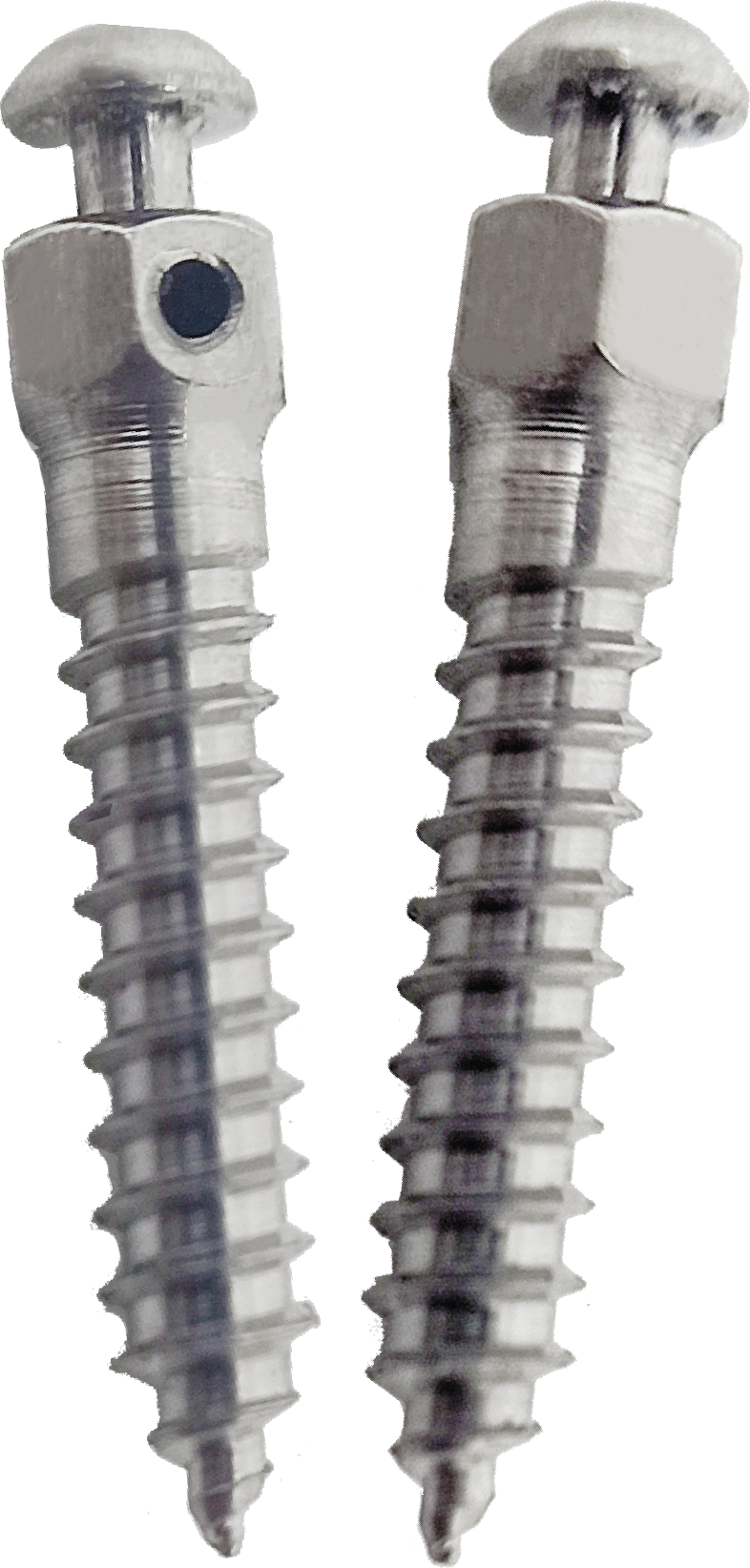
Where skeletal anchorage is part of the plan, the Orthodontic Implant Screw enters the scenario. DTC supplies it in 1.4 mm, 1.6 mm, and 2.0 mm diameters and 6 mm, 8 mm, 10 mm, and 12 mm lengths, in Ti-6Al-4V titanium alloy, with a self-drilling and self-tapping thread intended for insertion without pre-drilling, a mushroom head with a transverse hole for attaching elastics, springs, or wires, and a polished gingival collar. Diameter and length are site decisions; the transverse hole is what connects the screw to the rest of the scenario's mechanics.
One boundary matters here for procurement staff: a supplier provides components and documentation, not treatment protocols. Force levels, wear schedules, and appliance selection remain clinical decisions, and the scenario map should separate what the clinic decides from what the supplier supplies.
Scenario 5 — Finishing and Detailing
Finishing is where individual tooth position is refined, and it is instrument-heavy rather than product-heavy. DTC's pliers range covers the tasks this phase generates: Light Wire Pliers and Light Wire Cutter Pliers for fine wire work, Distal End Cutter Pliers for trimming the distal end of an archwire, Bracket Removing Pliers for debond, Crown and Band Contouring Pliers, and a Crown Trimming Scissor. The Band Crimping and Clear Aligner pliers in the same family share a hardness of HRC 58–63, a maximum sterilization temperature of 180°C, and a stated three-year warranty on sold pliers.
Two auxiliaries reappear in this phase with a different job than in closure. Rotation Wedges can be used to finish a rotated tooth that has not fully settled, and Crimpable Hook can be added late in treatment to give elastics an attachment point for final interdigitation. This is the practical reason hooks and wedges should not be budgeted only against the alignment phase — they are consumed at both ends of treatment.
Chairside Essentials Shared Across Every Scenario
Five item groups appear in all six scenarios, which makes them the safest items to hold as standing stock. Dental Pliers are the largest group: band crimping, distal end cutting, light wire cutting, light wire, bracket removing, crown and band contouring, and clear aligner pliers, all in stainless steel with the hardness and sterilization figures noted above. Needle Holder — supplied as the Mathieu Needle Holder — supports ligature wire placement, where a secure grip and controlled jaw closure matter more than cutting geometry. Dental Tweezers cover grasping and placement across bracket, tube, and lingual work. Dental Retractor covers access and isolation, supplied as a cheek retractor and a lip retractor, which are different access problems and should be stocked as two items. Dental Mirrors cover indirect vision, in stainless steel and in glass with a hard surface.
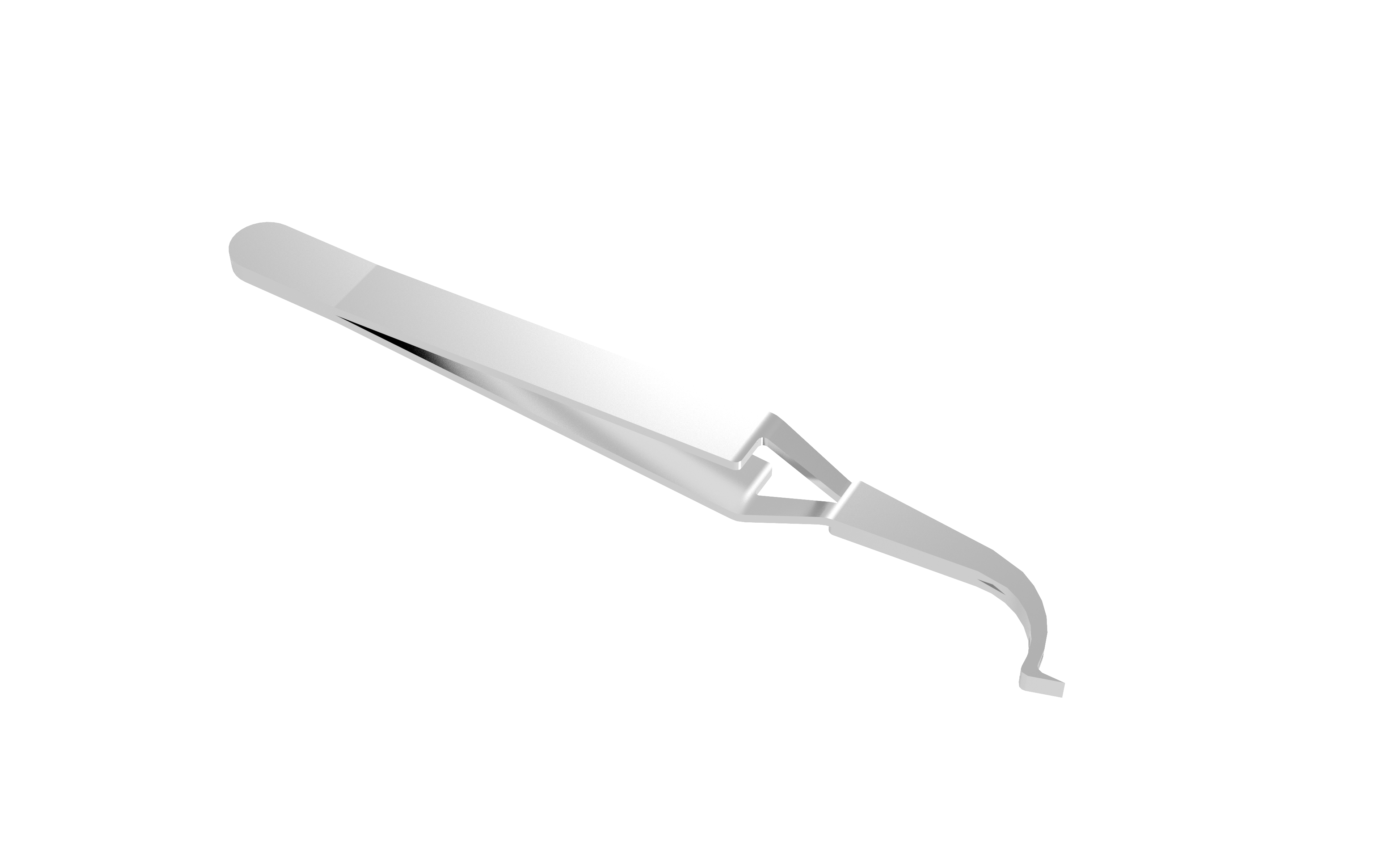
The selection logic inside this group is access, not preference. Long-tip tube tweezers exist because posterior tube placement has a different approach angle than anterior bracket placement; a cheek retractor and a lip retractor solve different retraction problems; a glass mirror with a hard surface and a stainless steel mirror behave differently under repeated handling. Clinics that stock one generic instrument per function usually end up improvising during the procedures where access is hardest.
The Auxiliary Consumption Map: Where Ligatures, Chains, O Rings, and Hooks Are Used
| Auxiliary | Phase where it appears | Function in the scenario | Stocking implication |
|---|---|---|---|
| Ligature Rings | Engagement, every adjustment, retention | Elastomeric tie holding the archwire in the slot | Highest-frequency consumable; scales with visits, not patients |
| Orthodontic O Rings | Engagement, closure, retention | Elastomeric tie; catalogued by DTC as a separate item from Ligature Rings | Standardize one type per clinic to avoid duplicate SKUs |
| Power Chains | Closure, finishing, retention | Continuous elastomeric force along a segment | Three configurations; stock by configuration, not by color alone |
| Lingual Chain | Closure, lingual mechanics | Chain mechanics on the lingual surface | Required only where lingual cases are treated |
| Crimpable Hook | Closure, finishing | Adds an attachment point on the archwire | Low unit cost, high consequence if missing |
The map explains a common stocking error. Ligature Rings and Orthodontic O Rings are both elastomeric ties and both appear as separate DTC catalog items, so a clinic can easily end up with two overlapping SKUs serving one function; choosing one as the standard and keeping the other as a backup is a procurement decision, not a clinical one. Conversely, Crimpable Hook is cheap per unit and easy to skip — until a closure case needs an attachment point that the bracket does not provide.
Specification Checkpoints Before a Scenario Kit Is Approved
| Checkpoint | What to confirm | Scenario it controls |
|---|---|---|
| Bracket slot and prescription | 18 or 22 slot; Roth, MBT, or edge-wise; hook present or absent; arch | Banding and engagement |
| Band torque and system | Low or high torque; Roth, MBT, or edge-wise; prewelded or plain | Banding and engagement |
| Spring type and diameter | Open (push) versus closed with eyelets (pull); 0.008"–0.014"; 180 mm or 914 mm | Space opening and closure |
| Chain configuration | Open long, closed continuous, or open short | Closure and retention |
| Instrument hardness and sterilization | HRC 58–63; maximum 180°C | All instrument scenarios |
| Tweezer type | Bracket, tube long tip, tube short tip, or lingual bracket | Engagement and chairside support |
| Retractor type | Cheek or lip | Access and isolation |
| Implant screw size | 1.4 / 1.6 / 2.0 mm diameter; 6 / 8 / 10 / 12 mm length | Maxillofacial and skeletal anchorage |
From Scenario Map to Purchase Order
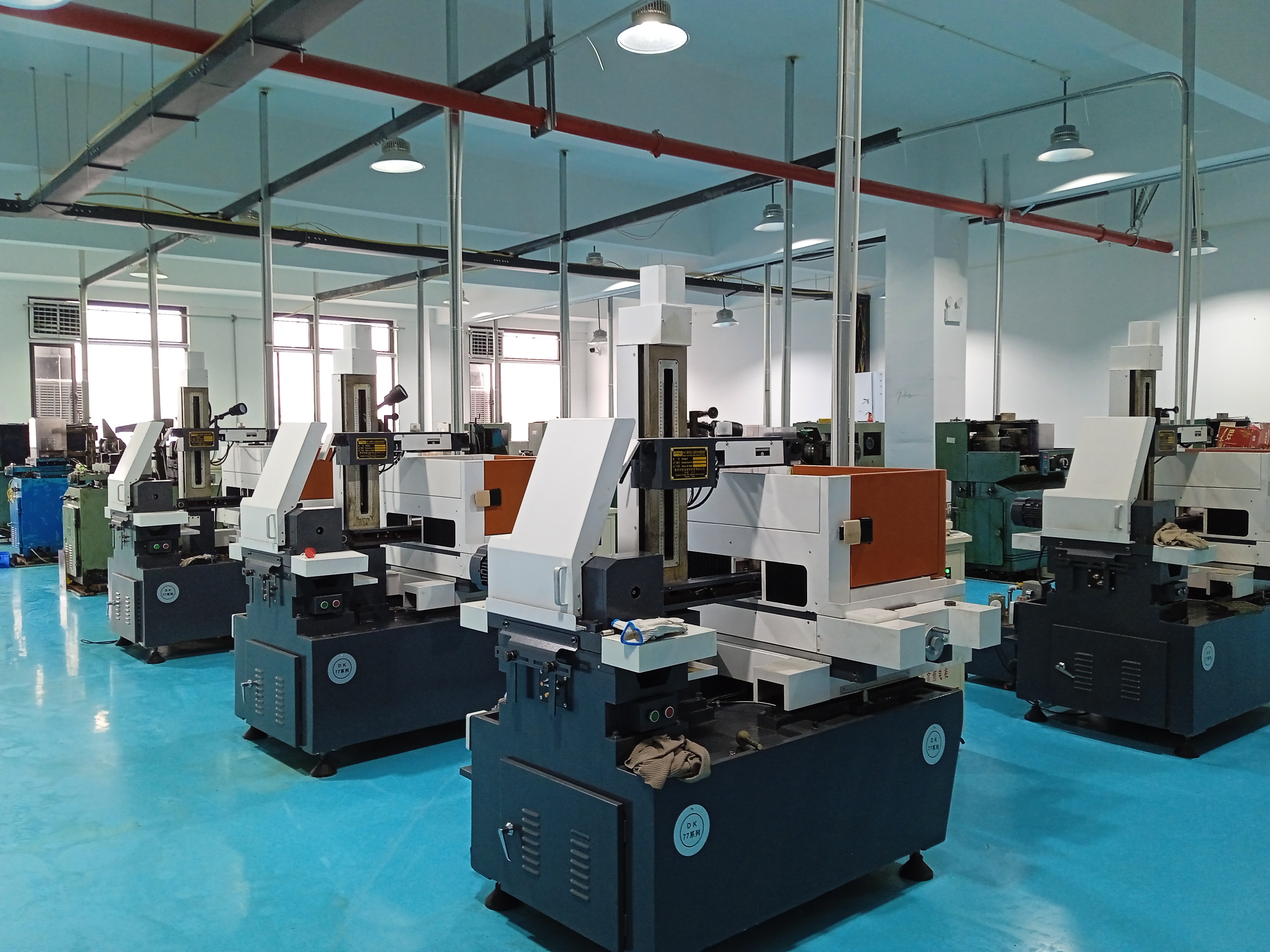
A scenario map becomes useful at the ordering stage, and that is where manufacturer parameters matter. Hangzhou DTC Medical Apparatus Co., Ltd, which trades as DTC Orthodontics, was established in 2004 in Hangzhou, Zhejiang Province, operates a 5,000 m² facility with 150 employees including 30 engineers, reports annual output of 1,000,000 units, and exports about 80% of production to the EU, USA, Middle East, South America, Asia, Africa, and Australia. Its stated capability record lists OEM/ODM production with customization of package, logo, tag, and product, a monthly capacity of 5,000 units, an MOQ of 100 units, and 100% testing. The company states that it holds ISO 13485, CE0197, and FDA certificates and operates its production processes under CE (MDR) and ISO requirements; those claims should be verified against certificate numbers and scopes during supplier approval rather than accepted from a catalog.
Lead time planning splits into two tracks. The company's stated position is that selected standard products are held in safety stock for delivery within about 3–5 business days, while custom-engineered production runs require roughly 2–4 weeks. For a clinic, that split maps neatly onto the scenario framework: standard consumables that recur every visit — ligature rings, O rings, chain, springs in the clinic's usual diameters — can be replenished quickly, while prescription-specific brackets, prewelded bands, and customized packaging need to be forecast against the case pipeline rather than ordered reactively.
The reference patterns DTC reports are consistent with that split. A European distributor working at 5,000 units over a 1–3 year relationship is described as running stable operations, a dental clinic group in Australia, the US, and Canada operates at 500–1,000 units over 2–3 years, and a public hospital group in the Middle East and Asia operates at 3,000 units. These are company-reported references, not independently audited outcomes, but they indicate the order-of-magnitude range the supply model is built to serve.
Frequently Asked Questions
Which certifications and documents should a dental clinic verify before ordering orthodontic supplies?
DTC states that it holds ISO 13485, CE0197, and FDA certificates and that its production processes operate under CE (MDR) and ISO requirements. A clinic should verify four things rather than the headline claim: the certificate number, the certificate scope, the validity dates, and whether the specific SKU being ordered falls inside that scope. In the United States, orthodontic appliances and accessories are addressed under 21 CFR 872.5410, which lists preformed orthodontic bands, orthodontic elastic bands, orthodontic metal brackets, orthodontic wire clamps, orthodontic tubes, and orthodontic wires; because that one category covers several distinct product types, classification and documentation should be confirmed product by product rather than assumed from the general label.
How do I map orthodontic supplies to treatment phases for a clinic stock list?
Build a matrix with treatment phases as rows and chairside tasks as columns, then place each item in exactly one primary cell. The six rows that cover most fixed-appliance work are banding and bracket engagement, space opening, space closure and retraction, maxillofacial correction, finishing and detailing, and retention. Assign each product a primary cell plus the mechanical or access task it performs — for example, Niti Open Spring in space opening as a push coil, Niti Closed Spring With Eyelets in closure as a pull coil, Dental Retractor in the chairside column as an access item. Items that appear in several cells, such as Ligature Rings and Orthodontic O Rings, are flagged as standing stock rather than phase-specific stock.
How should a clinic evaluate an orthodontic supplies manufacturer for procurement?
Five checks cover most of the decision. First, verify manufacturer status rather than trading status: DTC states that it is the manufacturer, invites review of its production line, machinery, and international sales team, and publishes factory photographs and videos on its website. Second, test batch consistency: the company states that it operates Quality Management Systems with direct control over production and quality management and provides 100% testing. Third, check portfolio breadth against the scenario map, since a supplier that covers only brackets forces a second source for springs, chains, and instruments. Fourth, confirm OEM and private-label capability if the clinic or distributor needs branded packaging — DTC lists customization of package, logo, tag, and product. Fifth, confirm after-sales support, which DTC describes as remote support, and ask for comparable references such as the distributor, clinic group, and hospital references summarized above.
What is the minimum order quantity, and how does customization change it?
The capability record lists an MOQ of 100 units with a monthly capacity of 5,000 units, and the company's FAQ notes that the actual MOQ depends on the product and on the customization requested, with standard products carrying a lower threshold than customized items. Three mechanisms are described for bridging high-volume pricing and low-volume needs: split shipments, where a larger volume is produced at a better unit price but released in smaller batches; shared tooling costs, where a higher upfront tooling fee unlocks a lower production MOQ; and standard in-house colors or materials, which avoid custom-sourcing minimums. For a clinic, that means the scenario map's standing-stock items can usually be ordered at the standard threshold, while customized brackets or branded packaging should be planned as a forward commitment.
How are product documentation and technical support handled after an order?
DTC describes a documentation approach built around accessible formats rather than printed manuals alone, including online product manuals, multi-language documentation for global markets, and QR codes that link to the latest version of a document. Technical support is handled by providing manuals online and responding to customer issues; after-sales support is described as remote. For procurement teams, the practical step is to request the documentation package for each product family at the quotation stage and confirm that the language set matches the market where the product will be used.
What lead times apply, and how should a clinic plan the first order?
The company states that selected standard products are held in safety stock for delivery within about 3–5 business days, while custom-engineered production runs require roughly 2–4 weeks. A first order is best planned in three layers: standing stock for items consumed at every visit, phase stock for items tied to the current case mix, and forward commitments for prescription-specific or customized products. Clinics and distributors that want to test the fit can request a scenario-based sample and quotation from DTC Orthodontics, or download the English product catalog to review the full range against the six scenarios described here.
Conclusion
Matching orthodontic supplies to clinical scenarios changes what a supply list is for. Instead of a catalog echo, the list becomes a working map of six phases — banding and bracket engagement, space opening, space closure and retraction, maxillofacial correction, finishing, and retention — with each product attached to the phase where it is consumed and the task it performs there. On that map, Niti Open Spring and Niti Closed Spring With Eyelets sit at opposite ends of space management, Power Chains, Lingual Chain, and Crimpable Hook carry the closure phase, the Orthodontic Face Mask, Orthodontic Adaptable Mask, and Orthodontic Pull System define the maxillofacial scenario, and Dental Pliers, Needle Holder, Dental Tweezers, Dental Retractor, and Dental Mirrors run underneath every phase as shared chairside infrastructure.
The map also produces a clearer procurement question. Rather than asking what a supplier stocks, a clinic or distributor can ask which scenarios a supplier covers, which specifications are documented for each, how batch consistency is controlled, and how quickly standing stock can be replenished against forecast stock. Those are answerable questions — and they are the ones that keep a chairside supply chain aligned with the treatment sequence rather than with a catalog chapter.
Have Questions or Need More Details?
Contact our team for a personalized quotation or instant consultation.
Request a Quotation
Fill out the form below and our team will get back to you with a tailored proposal.
WhatsApp Direct Chat
Prefer to chat in real-time? Message us on WhatsApp for instant assistance & quick answers.
- Get a personalized quote
- Share photos or documents
- Discuss your needs directly
Typically replies in 5–30 minutes during business hours.