
Regional Compliance for Orthodontic Supplies by Product Type
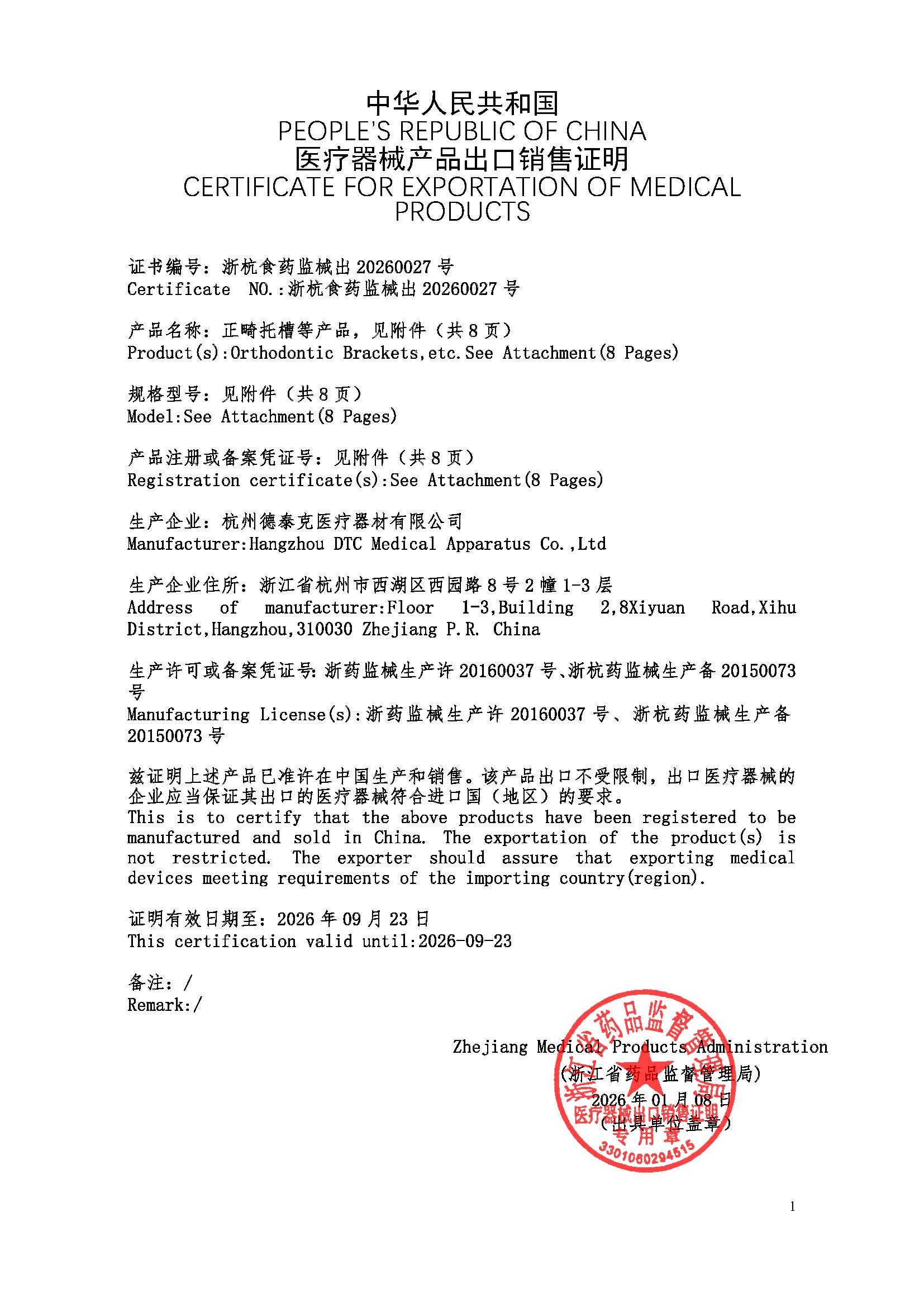
Export documentation is issued against a named product list, not against a whole catalogue.
No single certificate covers an orthodontic catalogue. Compliance documentation for orthodontic supplies is assembled one product family at a time and then matched to the market where the product will be sold, because a quality-system scope line, an EU notified-body letter and a US device listing each answer a different question.
That distinction matters most across the ten families that make up the bulk of a typical order: dental brackets, self-ligating brackets, buccal tubes, dental wires, dental pliers, O rings, power chains, separators, face masks and implant screws. They do not share one intended use, one contact duration or one risk profile, so they cannot share one document set. This guide sets out a product-by-product method for distributors, clinics and hospital procurement teams, using the documentation held by Hangzhou DTC Medical Apparatus Co., Ltd. as a worked example. DTC is an orthodontic manufacturer founded in 2004 in Hangzhou, Zhejiang Province, with a 5,000 m² facility, 150 employees and roughly 80% of output exported to the EU, USA, Middle East, South America, Asia, Africa and Australia.
Why a complete-looking compliance folder can still fail a product check
A distributor usually receives the same folder from every supplier: a quality management system certificate, a European regulatory letter, a US registration confirmation and an export certificate. Every page may be genuine, and the folder may still fail at the point where a specific product meets a specific market.
Four mismatches account for most of these failures:
- Scope mismatch. A certificate covers the product families named on it. A family that is not named, or is named under a different heading, is not covered by that page.
- Market mismatch. A document issued for one jurisdiction does not transfer to another. An EU letter does not satisfy a US importer, and a US listing does not satisfy an EU authority.
- Type mismatch. Certification of a management system, registration of an establishment, listing of a device and authorisation to export are four different instruments with four different meanings.
- Time mismatch. Certificates carry issue and expiry dates. A copy that was current when the supplier relationship began may not be current at the next order.
None of these is visible on the front page of a certificate. All of them are visible in the scope, market and validity lines — which is why documentation review is a line-by-line exercise rather than a folder check.
Why product type changes the documentation
Device classification generally follows intended use, the type and duration of body contact, and whether the device is invasive or implanted. Four practical questions follow from that principle, and each one moves a product into a different documentation category:
- What does the item touch, and for how long? A bonded bracket sits in the mouth for the length of treatment; a separator is removed within days; an elastomeric chain is replaced at intervals.
- Is it reused? A plier is reprocessed between patients and needs material and sterilization information; an O ring is discarded.
- Does it enter bone or soft tissue? An implant screw used for temporary anchorage is placed in bone, which is a different conversation from a buccal tube bonded to a molar.
- Is it worn outside the clinic? A face mask is used at home against the skin, so the file has to serve the patient as well as the clinician.
The clinical requirement behind all four is consistent: biocompatibility, corrosion resistance, adequate bond strength, precise slot dimensions and smooth edges, supported by conformity with medical device regulations such as ISO 13485, FDA requirements and CE marking. What changes is the evidence used to demonstrate it for each family.
The four document types and the claim each one actually makes
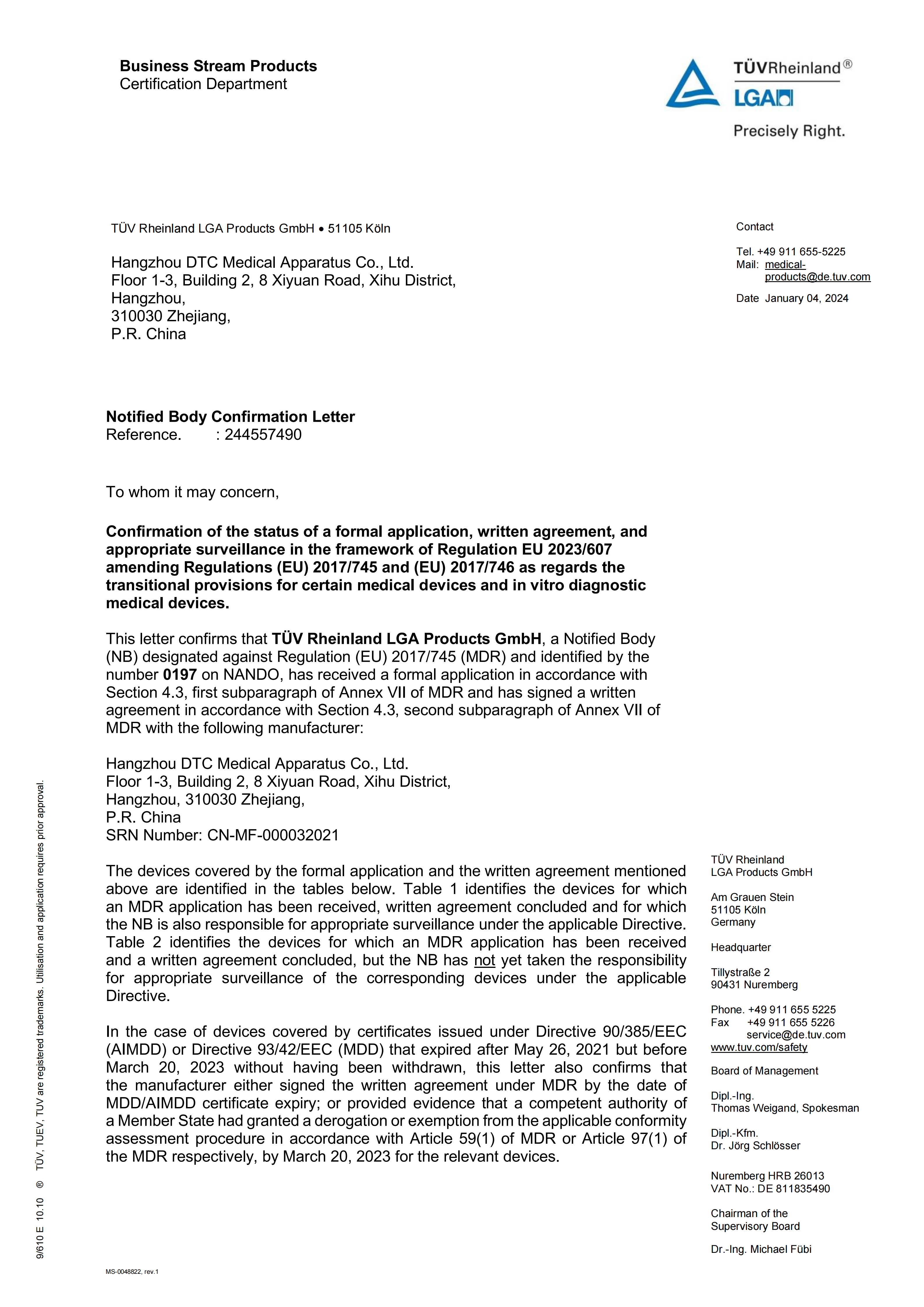
An EU notified-body confirmation letter is issued for a defined list of device families and a defined validity period.
1. Quality management system certificate (ISO 13485)
DTC holds EN ISO 13485:2016 certification, certificate number SX 2184523-1, issued by TÜV Rheinland LGA Products GmbH on 22 April 2024 and valid to 8 May 2027. The recorded scope covers design and development, manufacture and distribution of orthodontic brackets, orthodontic bands, orthodontic tubes, orthodontic wires, lingual buttons, crimpable hooks, orthodontic pliers and dental mirrors (reflectors).
What this proves is that a management system is certified for a defined set of activities and product families. What it does not do is approve any individual product for sale in any market. The scope line is a list, and the list is the boundary.
2. EU MDR notified body confirmation letter
DTC's file includes a notified-body confirmation letter, number 244557490, from TÜV Rheinland LGA Products GmbH, described as an MDR application confirmation for Class IIa medical devices. It references Regulation (EU) 2017/745, Regulation (EU) 2023/607 and Directive 93/42/EEC, was issued on 4 January 2024 and runs to 31 December 2028. Its scope names six families: orthodontic brackets, orthodontic tubes, lingual buttons, crimpable hooks, orthodontic wires and orthodontic bands.
Six names is the whole point. If the product you are buying is not on that list — O rings, power chains, separators, face masks or implant screws, for example — this letter is not the document that answers your question, and a separate product file should be requested. That is a statement about the scope of one document, not about the compliance of any product.
3. US FDA registration and device listing
DTC holds FDA registration number 3009955691 under 21 CFR Part 807, issued on 12 January 2026 and current to 31 December 2026. The listed categories include Tube, Orthodontic (Dental Tubes; Buccal Tubes), Aligner, Bracket, Orthodontic and Bracket, Metal, Orthodontic (Dental Brackets), Band, Preformed, Orthodontic (Dental Bands), Spring, Orthodontic and Mirror, Mouth (Dental Mirror).
Part 807 covers establishment registration and device listing. A listing number is not a premarket clearance or approval, and it should never be presented as one. A US buyer evaluating a specific device should ask separately which premarket pathway applies to that device.
4. Export sales certificate
DTC holds a Certificate for Exportation of Medical Products, number Zhe-Hang Food & Drug Medical Device Export No.20260027, issued by the Zhejiang Medical Products Administration on 8 January 2026. Its product list is specific: orthodontic brackets, orthodontic buccal tubes, orthodontic pliers, dental tweezers, oral mirror, dental force gauge, bracket positioning gauge, arch turret, dental implant spanner and orthodontic bonding tray.
An export certificate authorises export against a named product list and a defined validity window. It does not replace the importing country's own registration, and like any dated document it must be checked for the version currently in force before it is relied on in a tender or a customs file.
The ten families: what changes from one line to the next
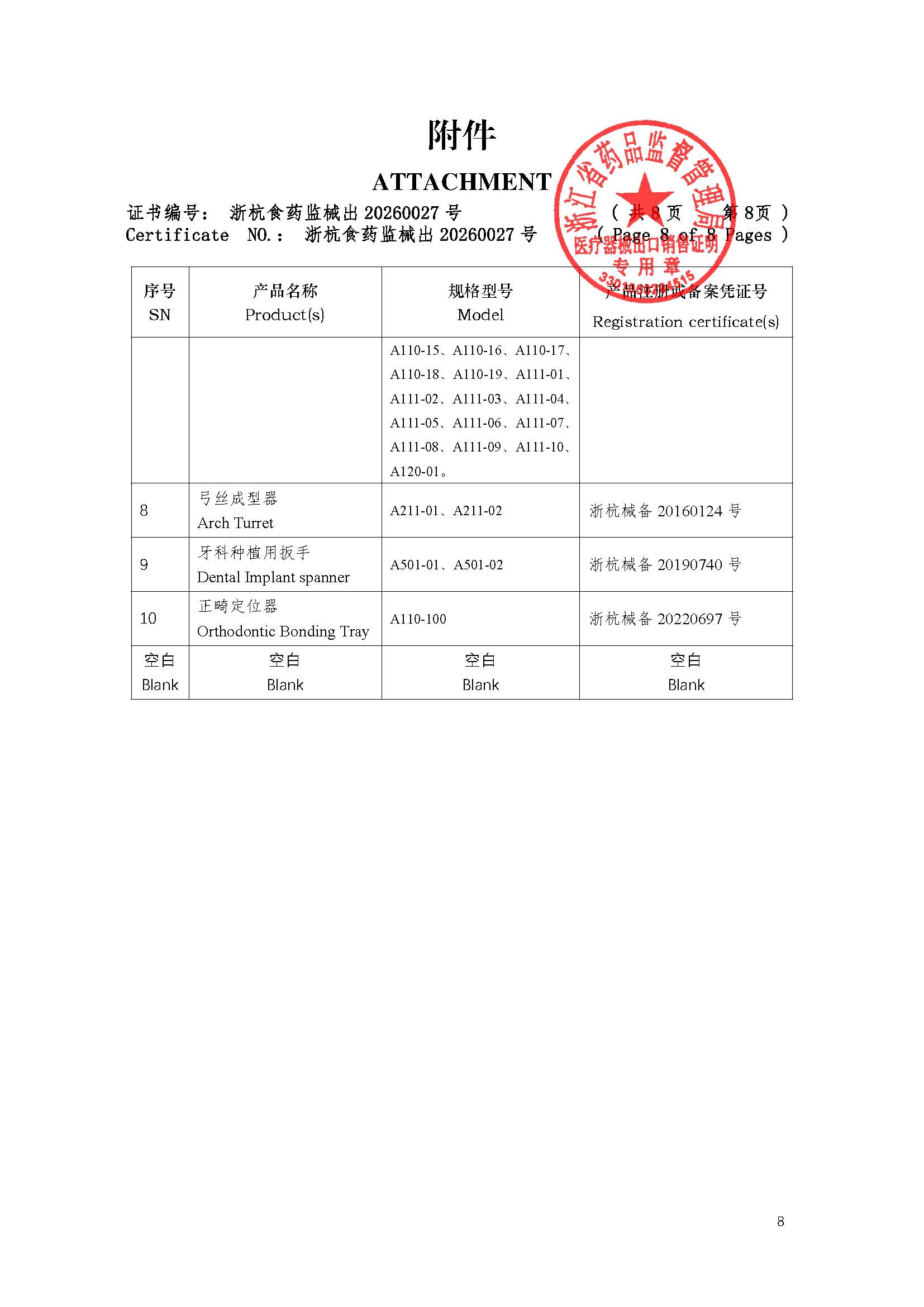
Scope pages list product categories by name — the name is what has to match your purchase order.
Bonded appliances: brackets, self-ligating brackets, buccal tubes
Dental brackets are the family most often assumed to define the whole file. DTC's metal ranges are recorded with a slot size of 22 for the Monoblock Series and 18 or 22 for the Zeal Series, with low- and high-torque options, Roth and MBT systems, maxillary and mandibular versions, in 17-4PH stainless steel. That sentence alone shows why a bracket order is a configuration rather than a single product: slot, torque, prescription and arch are selected separately. A file that names orthodontic brackets without the configuration range is a starting point, not a match.
Self-ligating brackets add a mechanism. The IN-Tendo JK-SL Series is a lingual self-ligating bracket with a slot size of 22, low- and high-torque options, Roth and MBT systems and a passive self-ligation design in 17-4PH stainless steel. For a distributor the documentation question is structural: is the closing mechanism covered inside the bracket scope entry, or is it treated as a separate component? Ask, and get the answer in writing rather than inferring it from the product name.
Buccal tubes are habitually treated as a bracket accessory. Regulatory lists do not always agree with that habit: the MDR confirmation letter above names orthodontic tubes as their own entry, separate from brackets, and the US listing names Tube, Orthodontic as its own category. A tube is documented as a tube.
Archwires and instruments: dental wires, dental pliers
Dental wires. DTC's range includes CuNiTi arch wires in round and rectangular cross-sections, and a stainless steel range with square, oval and natural arch forms in round and rectangular sections for upper and lower arches. The alloy designation is the fact that has to travel with the wire: nickel titanium and copper nickel titanium behave differently and are documented differently, and a file that omits the section range cannot be matched against the sizes on your purchase order.
Dental pliers.Bracket removing pliers are recorded as stainless steel with a hardness of HRC 50–55 and a maximum sterilization temperature of 180°C. Instrument documentation is about reuse: what the instrument is made of, how it is cleaned and sterilized, and whether a validated cycle count is available. Note also where instruments sit in the document set — pliers are named in the ISO 13485 scope and in the export certificate's product list, but they are not among the six families in the MDR confirmation letter. For an EU order, that is the exact question to put to the supplier.
Elastomeric auxiliaries: O rings, power chains, separators
Power chains are recorded as TPU, described in the product data as medical-grade polyurethane, in three configurations: open long, closed continuous and open short. O rings are a separate line with their own force and colour requirements. For both, the documentation question is material rather than mechanical: the grade of elastomer, the colourant, biocompatibility evidence and the storage conditions the file assumes. Storage matters because elastomers are sensitive to heat and time, and the file should state what conditions the product was assessed under.
Separators are single-use items with a short dwell time. Their file is short but not optional: material, single-use labelling and pack configuration, so that a clinic can confirm what it is placing and a distributor can confirm what it is storing.
Extraoral and bone-anchored: face masks, implant screws
Face masks in DTC's range include adjustable and fully adjustable face masks and an adaptable Class III mask, with a high-pull system among the available pull systems. These are worn at home against the skin, so the documentation set has to cover what the patient contacts and how the patient is instructed, not only what the clinician does in the chair.
Implant screws are the family where a catalogue-level certificate is least likely to be sufficient. DTC's orthodontic implant screw is made of titanium alloy Ti-6Al-4V, is self-drilling and self-tapping, and is supplied in diameters of 1.4 mm, 1.6 mm and 2.0 mm and lengths of 6 mm, 8 mm, 10 mm and 12 mm, with a mushroom head and a transverse hole for attaching elastics, springs and wires. Because the device is placed in bone for temporary anchorage, the file should carry material traceability and the exact dimension range, and the supplier should confirm whether screws are supplied sterile or require reprocessing before use.
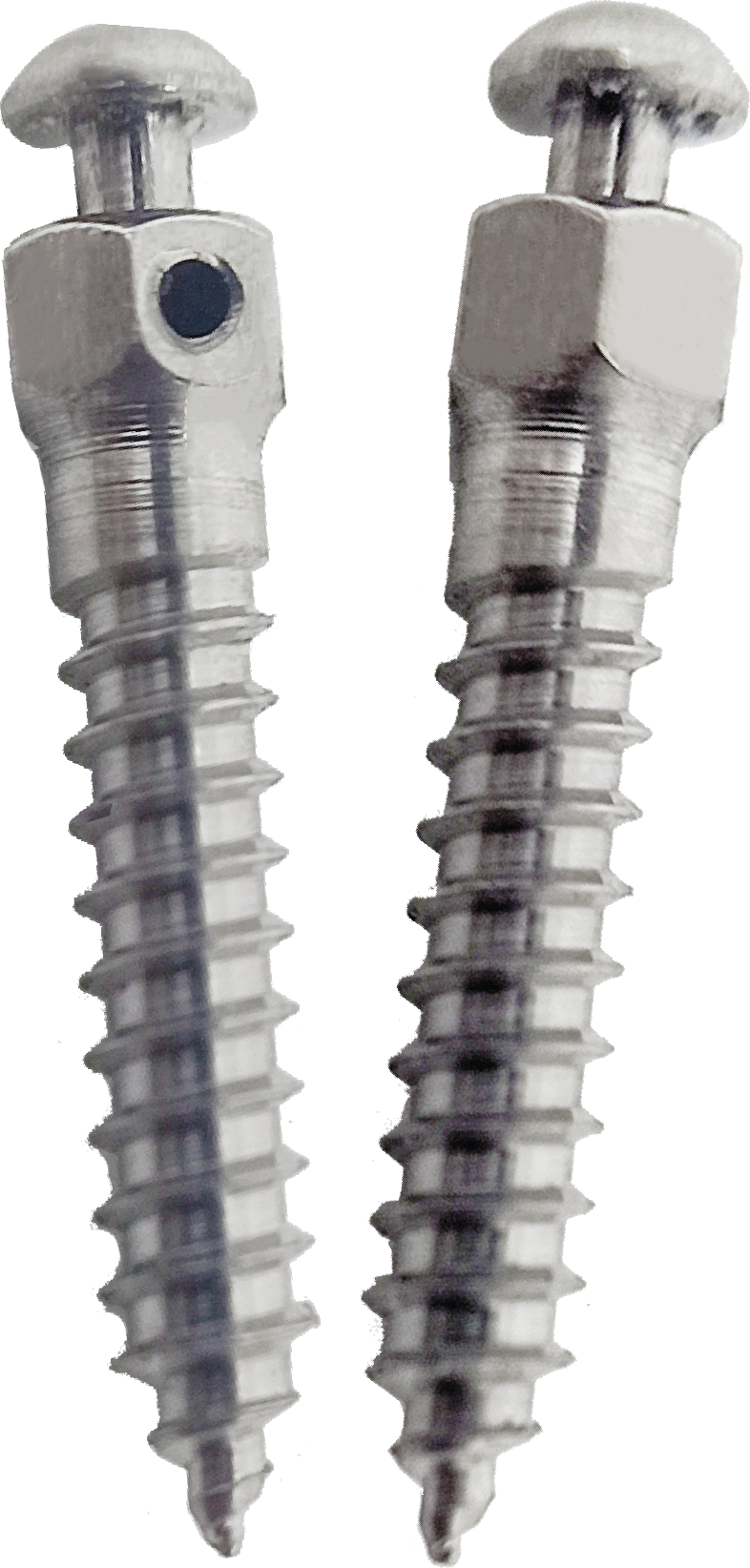
Bone-anchored items such as implant screws sit furthest from a bonded-appliance certificate scope.
Step by step: building a per-product, per-market file
The sequence below works for a distributor building a first file and for a clinic auditing a supplier it already uses.
- List the order by intended use, not by price. Group items as bonded appliances, archwires, reusable instruments, elastomeric auxiliaries, extraoral appliances and bone-anchored devices.
- Fix the destination market for each line. A single shipment can contain items bound for different jurisdictions. Record the market next to the product, not next to the purchase order.
- Match the scope line to the exact product name. Compare the wording on the certificate with the wording on your order. Brackets, tubes, wires, bands, pliers and mirrors are separate entries in most document sets.
- Identify what the document is. Decide whether you are looking at a management-system certificate, a notified-body confirmation, an establishment registration and listing, or an export certificate — and record which claim it supports.
- Check issue and expiry dates, and the version. Keep dates in a register rather than in a folder, and re-request documents before renewal dates rather than after a shipment is held.
- Confirm the legal manufacturer. The company named on the certificate should be the company manufacturing and invoicing the goods. If a trading intermediary appears instead, ask who the legal manufacturer is.
- Request the market-specific layer. Labelling in the required language, the in-market responsible entity and any national registration evidence are destination requirements; they should be requested per market, not assumed from the EU or US file.
Use cases: where the product-by-product approach pays for itself
A European distributor extending from brackets into auxiliaries. A distributor whose file was built around brackets and tubes adds O rings, power chains, separators and implant screws to the next order. The bracket pages do not answer for the new lines. DTC's recorded distributor relationships in European markets cover 5,000-unit quantities over one to three years, and the practical lesson from long-running accounts is that the file has to grow with the catalogue.
A clinic importing directly for the first time. Clinic accounts recorded in Australia, the US and Canada run at 500–1,000 units over two to three years. At that volume the clinic is usually the importer of record and needs to know which documents it must hold itself, particularly for bone-anchored screws and reusable instruments.
A public hospital tender with line-item requirements. Hospital procurement evaluates each line separately; a tender response that presents one certificate for a mixed basket invites clarification at the worst possible moment. Matching a document to each line before submission is faster than defending a generic pack afterwards.
Product-by-product documentation map
| Product family | What drives the documentation | What to request before ordering |
|---|---|---|
| Dental brackets | Long-term bonded appliance; slot, torque and prescription vary by order | Bracket family named in the scope; material declaration; confirmation that the ordered configuration range is covered |
| Self-ligating brackets | A closing mechanism is added to the bracket | Confirmation that the mechanism sits inside the bracket entry, or a separate entry for it |
| Buccal tubes | Listed as its own device family in EU and US documents | A tube-specific entry, not coverage inferred from brackets |
| Dental wires | Alloy and cross-section determine behaviour and traceability | Alloy designation (CuNiTi, stainless steel) and the size range on file |
| Dental pliers | Reusable, sterilizable instrument | Instrument entry in the scope, material, maximum sterilization temperature, reprocessing information |
| O rings | Elastomeric auxiliary, replaced at intervals | Elastomer grade, biocompatibility evidence, storage conditions |
| Power chains | Elastomeric, supplied in several link configurations | Material grade and the configuration list matching the order |
| Separators | Single-use, short dwell time | Single-use labelling, material, pack configuration |
| Face masks | Extraoral appliance, skin contact, home use | Skin-contact material, patient instructions, component list |
| Implant screws | Placed in bone for temporary anchorage | A separate product file, material traceability for Ti-6Al-4V, dimension range, sterile or non-sterile status |
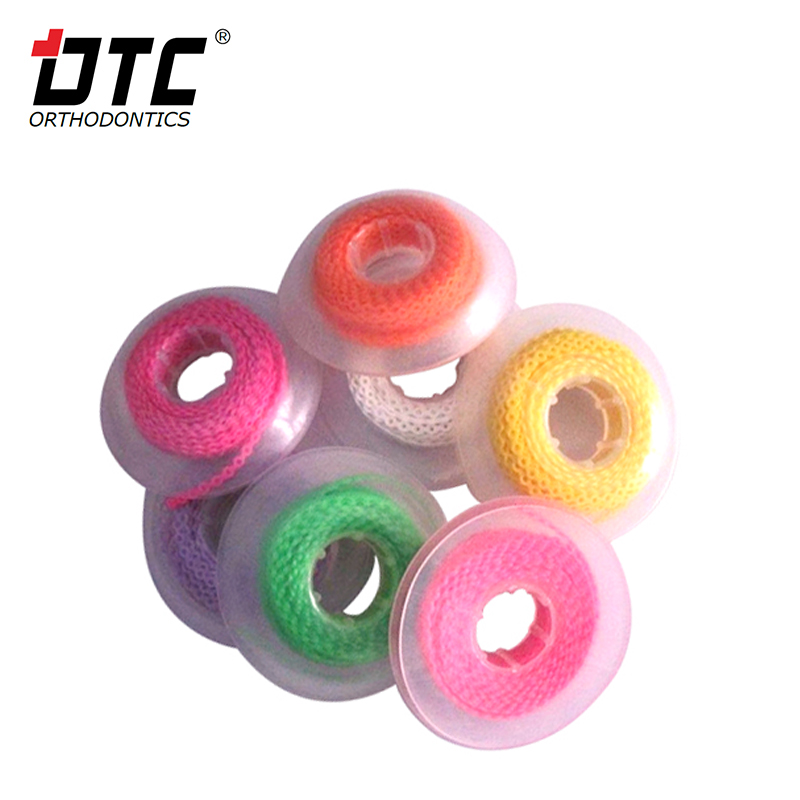
Elastomeric auxiliaries are documented on material and storage, not on mechanical performance alone.
Frequently asked questions
What should a distributor check first in an ISO 13485 certificate from an orthodontic supplies manufacturer?
Three things: the scope line, the issuing body and the validity dates. DTC's certificate SX 2184523-1 was issued by TÜV Rheinland LGA Products GmbH on 22 April 2024 and is valid to 8 May 2027, with a scope covering design and development, manufacture and distribution of orthodontic brackets, bands, tubes, wires, lingual buttons, crimpable hooks, orthodontic pliers and dental mirrors. The certificate is evidence about a management system within that scope; it is not a product approval and it does not by itself authorise a sale in a particular market.
Does an EU MDR confirmation letter cover every orthodontic product in a catalogue?
No. A notified-body confirmation letter applies to the device families and classification it names. DTC's letter 244557490, issued by TÜV Rheinland LGA Products GmbH and valid to 31 December 2028, lists six families: orthodontic brackets, tubes, lingual buttons, crimpable hooks, wires and bands. Products outside that list — separators, face masks or implant screws, for example — require separate product-specific evidence, which should be requested rather than assumed.
Which orthodontic products most often need a separate document file?
The ones furthest from the bonded-appliance core. Bone-anchored implant screws need material traceability and a dimension range in addition to any family-level certificate. Reusable instruments such as pliers need reprocessing and sterilization information, and in DTC's document set they appear in the ISO 13485 scope and the export certificate but not among the six MDR-listed families. Elastomeric auxiliaries such as O rings and power chains are documented on material grade and storage rather than mechanical specification.
Can a manufacturer supply OEM or private-label orthodontic supplies, and what is the minimum order?
DTC operates OEM and ODM production with customisation of packaging, logo, tag and product. The recorded minimum order quantity is 100 units, monthly capacity is 5,000 units, and every unit is tested before dispatch. Customisation affects both the minimum quantity and the documentation, because a private-label product introduces a second brand name into the labelling and must be reflected in the file.
How long do production and documentation take?
DTC's recorded production lead time is 20–30 days for manufacturing orders, while selected standard products are held in stock and can be dispatched within 3–5 business days. Documentation is provided online so that manuals and product information stay current, and after-sales support is handled remotely. Because export certificates and registrations are time-limited, the document set should be re-confirmed at each order rather than carried forward from the previous one.

Reusable instruments are documented for reprocessing: material, hardness and sterilization limits.
Where can a distributor obtain the full documentation set for a product list?
Start from two lists: the products you intend to buy and the markets you intend to sell them in. With those, a manufacturer can return the matching scope pages, validity dates and product-specific evidence instead of a generic folder. DTC publishes product manuals online and supports distributor requests directly; the English catalogue can be downloaded from the DTC product catalogue, and documentation questions can be sent to jaymie@dtchz.com or +86 136-0051-7451.

Manufacturing site behind the documentation: Hangzhou DTC Medical Apparatus Co., Ltd.
Conclusion
Compliance documentation for orthodontic supplies behaves like a map, not a stamp. Each product family occupies its own position on that map, each market asks a different question of it, and each certificate covers only the territory named in its scope line. A distributor who reads brackets, tubes, wires, pliers, elastics, separators, face masks and implant screws as one block will eventually meet a document that covers half of them.
The method is straightforward and does not require a regulatory department: list the products by intended use, record the destination market beside each line, match the exact wording of the scope, check the dates, and confirm who the legal manufacturer is. Done once, that register becomes the working file for every subsequent order — and the difference between a folder that looks complete and a file that actually covers the shipment.
Have Questions or Need More Details?
Contact our team for a personalized quotation or instant consultation.
Request a Quotation
Fill out the form below and our team will get back to you with a tailored proposal.
WhatsApp Direct Chat
Prefer to chat in real-time? Message us on WhatsApp for instant assistance & quick answers.
- Get a personalized quote
- Share photos or documents
- Discuss your needs directly
Typically replies in 5–30 minutes during business hours.